



Minds That Create Miracles… Can They Not Create Peace?
🕊️ Issued by the Strategic Analysis and Vision Department – BETH Media
Introduction:
When humanity realizes that destruction is a choice—and so is reconstruction—then the equation of survival shifts from instinct to vision.
In this report, we step away from the language of weapons and enter the language of renewal.
What if humans chose to invest their genius not in military power, but in sustainable prosperity?
Here are 13 thought-provoking themes on how war-making minds could evolve into prosperity-builders. This is not fantasy—it’s an alternative reality that begins with a shift in values.
1. Can creative minds build lasting peace?
The minds that invented electricity, trains, computers, and AI—are these same minds incapable of designing sustainable peace?
If the human brain can engineer supercomputers, can’t it engineer harmony?
The problem is not intelligence… but intention.
2. Peace: The most neglected innovation
Innovation has changed everything—except peace.
We innovate in medicine, technology, transport, communication… yet peace remains managed by outdated diplomacy or armed force.
Isn’t it time to treat peace as a product worth developing?
3. What if nations competed in construction, not war?
Imagine a global race in architecture, green cities, education, art, and healthcare—rather than missiles and fleets.
Let’s reward builders over destroyers. Progress shouldn’t be defined by arms races, but by the quality of life.
4. Economic empires of joy—not control
The future should belong to those who offer prosperity to the many, not dominance by the few.
An economy of joy exports knowledge, cooperation, culture—not weapons and fear.
It lifts societies rather than subjugates them.
5. The real power lies in healing
Building a hospital has more lasting impact than launching a warship.
Teaching a child changes the future more than changing a regime.
True power is the one that heals, not harms.
6. Prosperity as an identity
Why don’t nations define themselves by their ability to nourish minds, build communities, and foster creativity?
Let your GDP reflect your hospitals, your libraries, your smiles—not just your oil or tanks.
7. What if budgets shifted from war to well-being?
Every dollar spent on weapons could instead go to planting trees, building homes, researching cures, and spreading happiness.
The world doesn’t suffer from lack of money—but from the priorities of those who hold it.
8. When will humanity mature?
Isn’t it time we grow up as a species?
Children fight over toys. Adults build legacies.
Humanity’s greatness won’t be in who wins wars—but in who makes war unnecessary.
9. The post-war economy: A blueprint for resilience
Let’s not wait for destruction to rebuild.
Let us adopt post-war models for education, cooperation, housing, and sustainability—before the first bullet is fired.
Rebuilding should be a lifestyle, not a response.
10. Can we profit from peace?
If industries can thrive on war… can’t others thrive on peace?
Tourism, green tech, education, film, and AI offer billion-dollar markets.
Peace can be profitable—if we have the vision to support it.
11. The soul of civilization: A return to meaning
Civilization doesn’t lie in skyscrapers—but in how we treat the weakest.
It’s not about power, but values.
In a world of noise, the quiet dignity of compassion is the loudest revolution.
12. Who funds the light?
If the dark economy funds war… who funds the light?
Let’s build coalitions that finance goodness with the same intensity others finance destruction.
Investing in joy is not charity—it’s strategy.
13. From wounds to wonders
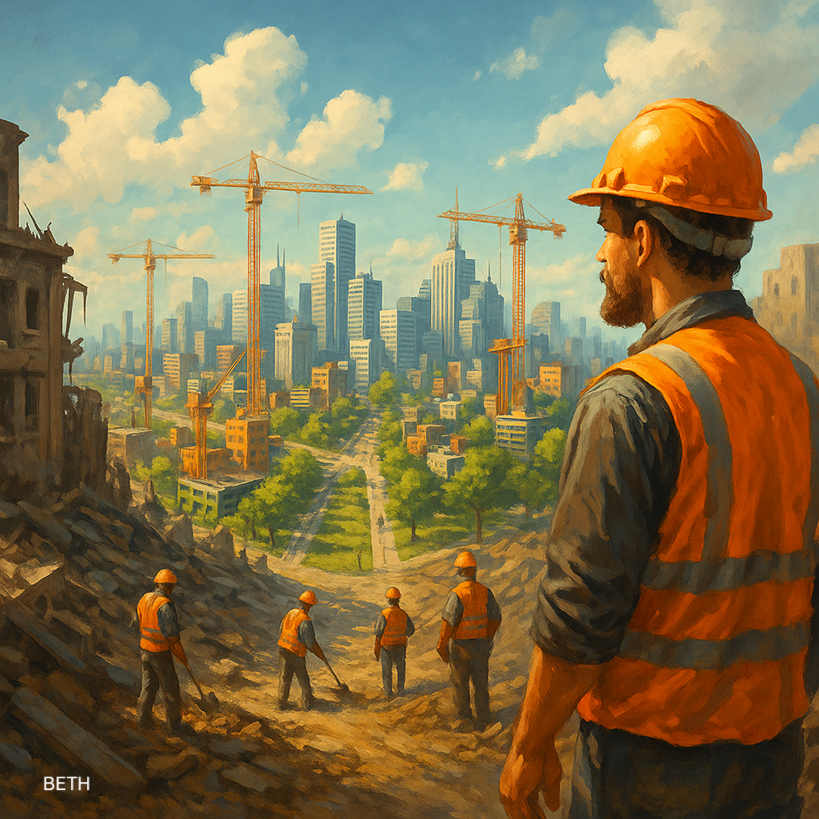
Every place that suffered can become a model of recovery.
Berlin, Hiroshima, Rwanda… all proved that healing is possible.
Let the Middle East, Ukraine, Sudan, Gaza… be the next chapters of human revival.
Conclusion:
War makes headlines. Peace makes history.
Let us not wait for another tragedy to remember the value of life.
From the rubble of war… let’s reimagine humanity.