The Economy of Blood: Who Controls the Theatre of War?
🕊️ Issued by the Department of Analysis and Vision – BETH Media
🔍 Introduction:
In a world where conflict is managed with cold calculation rather than heated battlefields, wars today resemble a grand stage moved by unseen hands — sometimes media, sometimes money, sometimes generals.
This report does not merely ask: Who profits from war?
It investigates intent, deconstructs symbolic geography, and reframes scenes of bloodshed from the perspective of those who see them not as tragedies… but as financial opportunities.
Here, we present 13 analytical axes, each revealing a layer of the shadow economy of war, in a global system that smiles at blood more than it weeps for it.
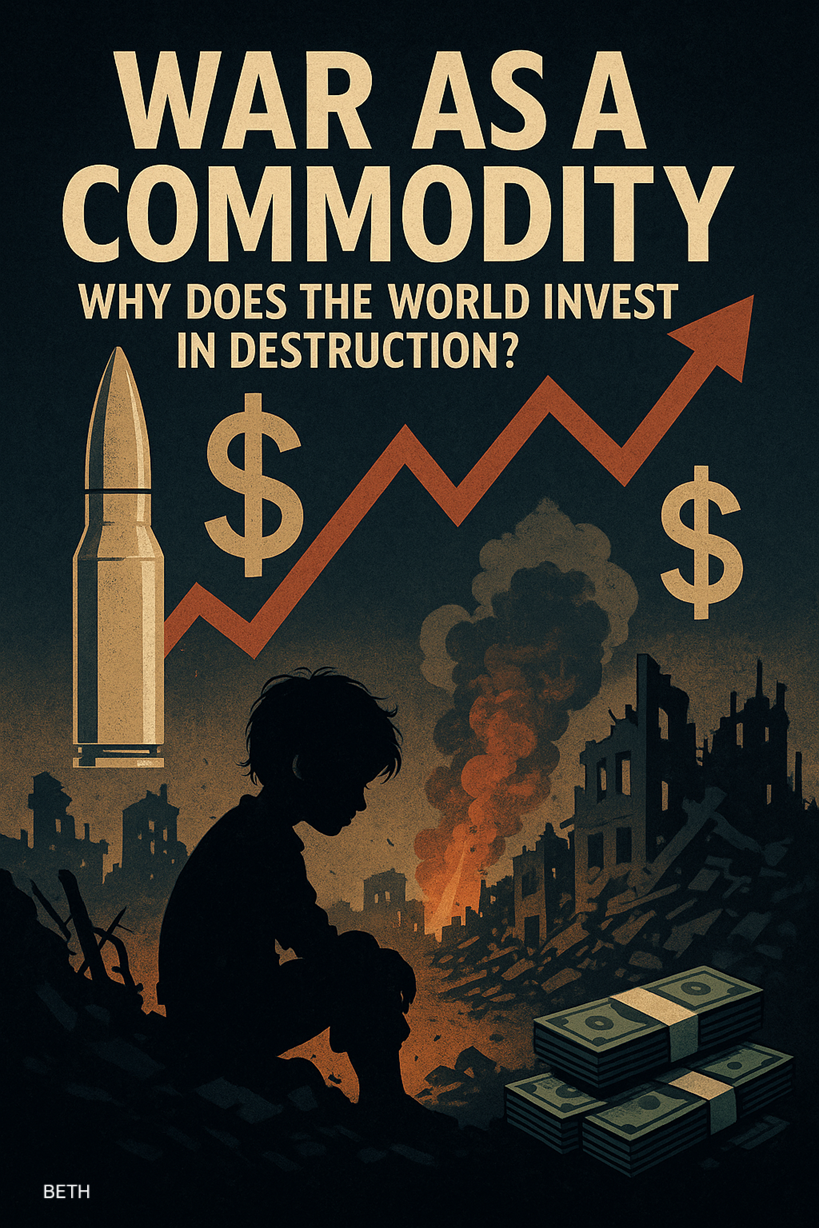
1️⃣ War as a Commodity: Why Does the World Invest in Destruction?
In today’s world, wars are no longer just fought with weapons — but managed like spreadsheets.
A war is not just a tragedy… it's an investment opportunity.
Destruction is no longer measured by casualties, but by contract value.
Geography isn’t redrawn with blood alone… but recalculated in stock markets.
2️⃣ Wars… An Endless Economic Cycle
Wars today are not explosions — but business models.
They start with political sparks, escalate into armed conflict, amplified by media, and end in donor conferences… until the cycle begins anew.
In each phase, a silent winner emerges:
A weapons company doubling profits
A bank funding reconstruction
A media platform maximizing viewership
Lobbyists selling influence in the name of “stability”
3️⃣ Who Profits from Destruction?
Arms Manufacturers:
Promote war as a strategic necessity, and create demand before the first shot is fired.
Black Markets:
Thrive where nations collapse, and flags blur into interests.
Reconstruction Giants:
Rebuild what was destroyed — through loans that crush victims under their weight.
Dominant Media:
Shape the narrative not based on suffering — but on who funds the lens.
4️⃣ War… as Media Content
In economic theory, there's something called the emotional commodity — a product sold through feeling.
War today is content: minds are programmed, emotions are drained, masses are mobilized… then distracted.
Ironically, those producing the “war content” are far from frontlines — but very close to trading terminals.
5️⃣ The Victim Funds the Crime
When a war ends… the profits don’t.
The race to rebuild begins — not to aid the wounded, but to safeguard influence.
Loans come under the label “relief,” while conditions arrive under the banner of “reform.”
What’s never openly said:
The one who starts the war often owns the bricks for rebuilding.
6️⃣ The Conclusion: Commodities Without Conscience
When war becomes a commodity, it loses all humanity.
And when the world reacts to a broken child like it reacts to a stock ticker — rising or falling —
The true catastrophe isn't war itself… but the minds that promote it as a viable asset class.
7️⃣ When the Economy Smiles at Blood
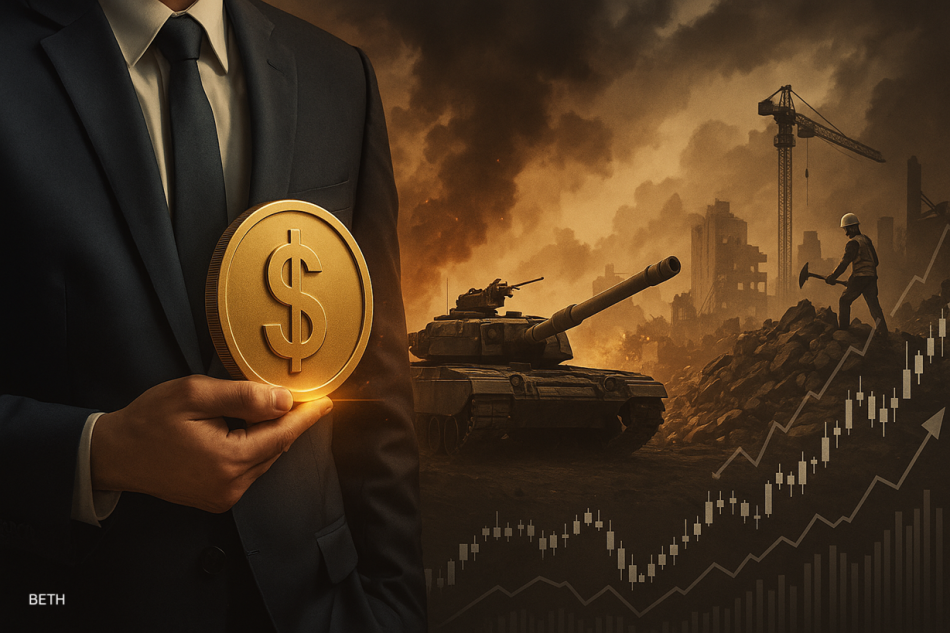
Wars don’t just leave rubble behind — they leave dividends.
When markets rally at the first explosion, we know a shadow economy is feeding on fear.
That smile… is not joy — but profit.
8️⃣ A War for Balance… or for Chaos?
Many wars are branded as missions to "restore balance" — yet the truth lies in reorganizing power for hidden players.
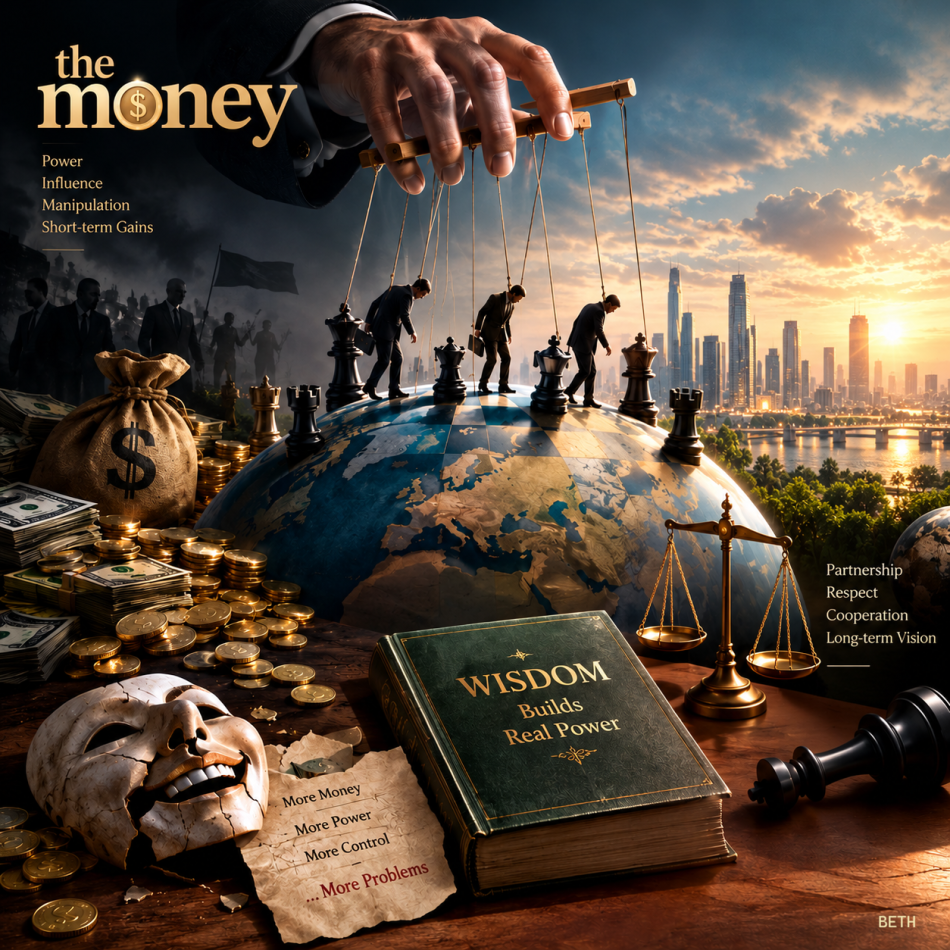
Those who seek chaos don’t want destruction alone — they want to redesign the board, at the people’s expense.
9️⃣ The Firestarters Behind the Glass
The ones who ignite wars rarely appear on screen — they stand behind bulletproof glass.
They write the script, sell the tickets, and never inhale the smoke.
They move fronts like chess pieces, where blood becomes a tool of negotiation.
🔟 The Silent Engine of Wars
Not all engines make noise.
Banks, secret contracts, private security firms — all operate in silence under the umbrella of "strategic interests."
It’s a war with no flag — but perhaps the strongest impact of all.
1️⃣1️⃣ When Weapons Become Currency
In some regions, weapons are not just used for fighting — but for negotiation, acquisition, and leverage.
A bullet carries diplomatic weight; a tank equals political clout.
Weapons here aren't tools of war… but units of trade in the grey economies of power.
1️⃣2️⃣ Blood for Sale: Who Buys?
When human lives become auctionable assets, a hidden market is clearly in motion.
"Buyers" may be states, dealers, corporations — but all approach war as a calculated investment: cost, return, and acceptable risk.
1️⃣3️⃣ The View from Above: Wars as Yielding Assets
Zoom out, and you’ll see that many wars today are managed like investment portfolios.
Risk is assessed, returns projected, and losses pushed onto victims.
Those who own the aerial view don’t see blood — they see fluctuating financial graphs.
🎯 Final Word:
This isn’t just a report on war.
It’s a reflection on a world that now sees war as growth.
And when tragedy becomes a line item in profit ledgers, peace will only return when humanity, not capital, returns to the center.