



Day 209: Maneuvering Until the Elections
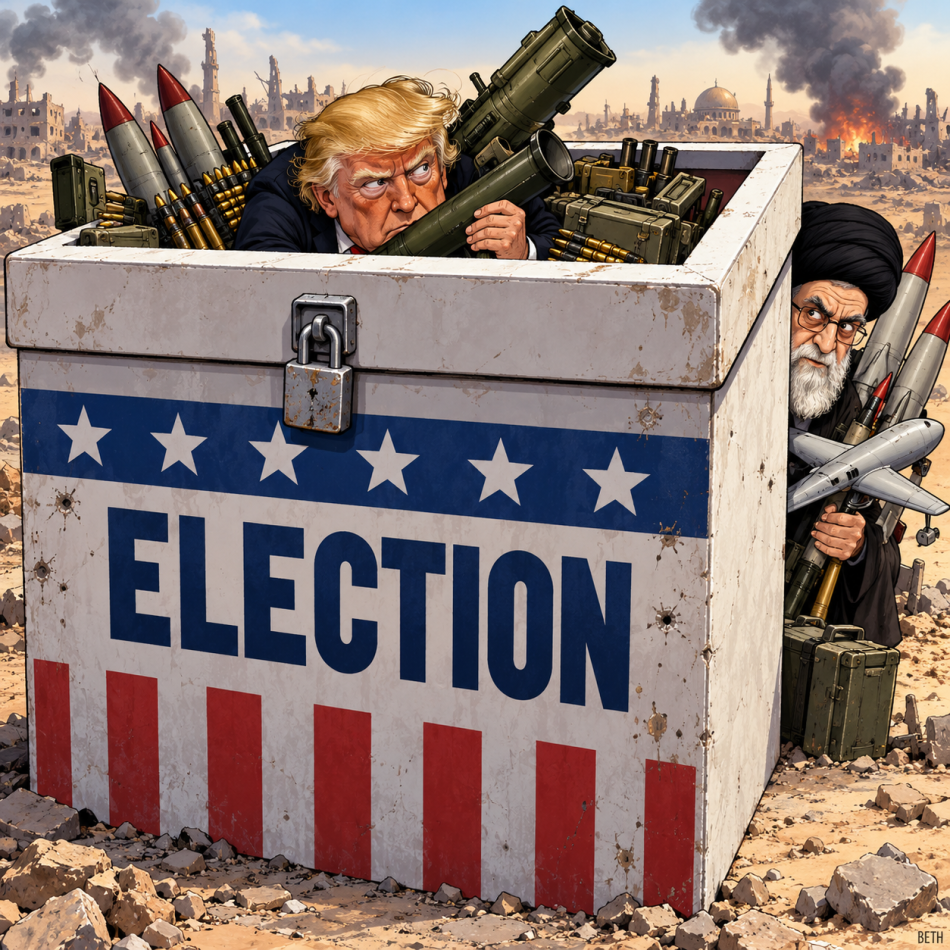
Washington and Tehran repeat the same positions, while political moves take place behind the scenes; and the real test of any agreement does not stop at Hormuz, but extends to Yemen, Iraq, and Lebanon
September 30, 2026
Prepared and Analyzed | Strategic Media Department – BETH Agency
The war entered its 209th day with more talk and little change.
Iranian Foreign Minister Abbas Araghchi received the American response to the Iranian proposal, which he is set to discuss in Tehran, while mediators continue their efforts between the two sides. The proposals being circulated link the reopening of the Strait of Hormuz and a halt to military operations with measures related to sanctions and the nuclear file, but disagreement remains over the conditions and the order of their implementation.
Therefore, the public statements so far appear closer to repeating positions than to announcing a real shift.
But behind these statements, broader movement is taking place.
In Yemen, the U.S.-Iranian mediation coincides with a UN effort to contain the escalation, while the Houthis and Bab al-Mandab have become a direct part of the regional calculations; reports on the negotiations say that Tehran has expressed its readiness to help reduce the escalation.
In Iraq, the withdrawal of U.S. forces is completed today, in a shift that rearranges the security and political balance and leaves the issue of Iran-linked factions facing a new test within the Iraqi state.
As for Lebanon, it too enters the calculations; the latest Iranian proposal included a halt to hostilities there, while the issue of Hezbollah and the arrangements in the south remain among the files that have yet to reach a stable settlement.
Here, the picture appears larger than an American response awaiting an Iranian answer.
Washington and Tehran are not negotiating over Hormuz alone, but over the shape of the next phase in the region.
For this reason, Day 209 will remain a day of words without actions, unless the arenas of confrontation themselves begin sending different signals.
After the Elections
The U.S. midterm elections may be the dividing line between two stages of the war.
Before them, Washington remains more sensitive to fuel prices, the cost of the war, and the reaction of the American voter, which gives the current mediation efforts additional room to move. After November 3, however, the American decision may become less directly tied to electoral calculations, allowing priority to return to the terms of the settlement itself: Hormuz, the nuclear program, sanctions, and then the roles of Iran and its allies in Yemen, Iraq, and Lebanon.
Here, two possibilities emerge, with no outcome certain: either Washington and Tehran use the coming weeks to reach an initial understanding before the elections, or the stalemate continues and the heavier files move to the period after them.
In the second case, the question will not only be: Will the negotiations continue?
Rather: Will their terms remain the same?
The elections will not end the war on their own, but they may end one of the most important time constraints currently shaping Washington’s decisions.