



Council of Ministers Chaired by the Crown Prince: Hormuz and Bab al-Mandab for Free Navigation
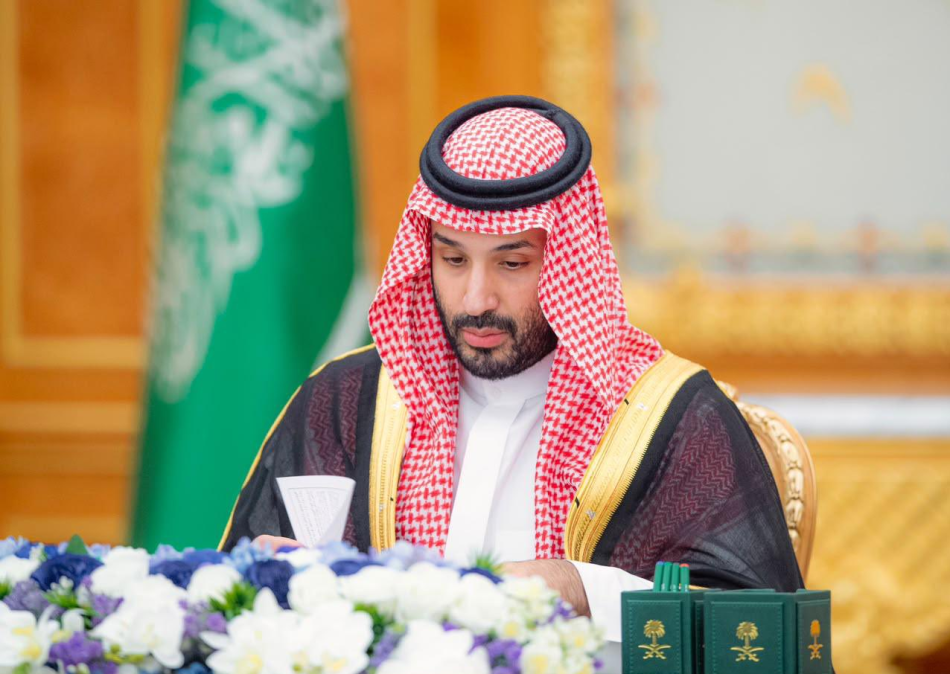
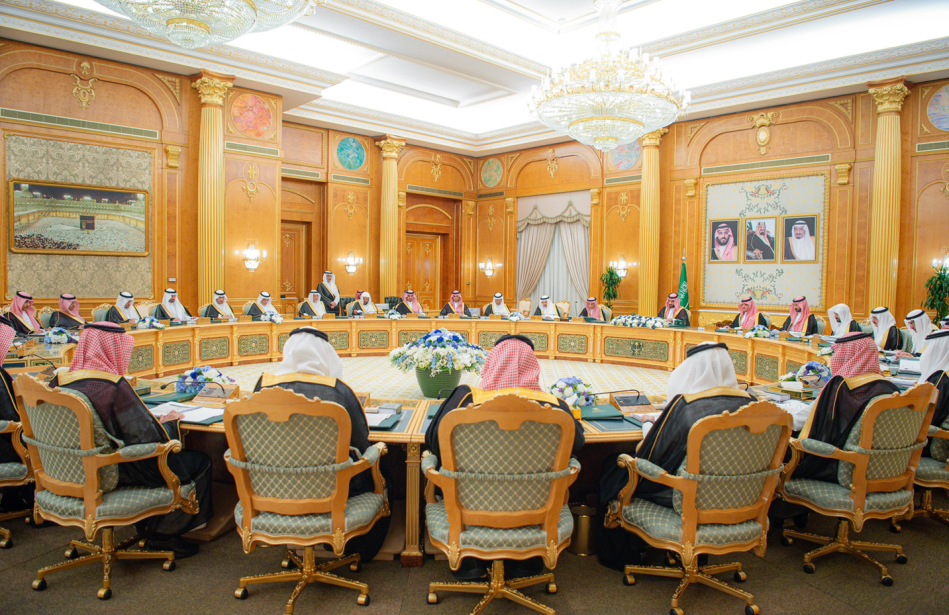
The Council affirms its rejection of using vital waterways for pressure or threats, commends the progress of the Makkah Joint Defense Agreement toward military cooperation and collective deterrence, and approves a package of decisions covering visas, governance, anti-corruption, and the protection of public facilities
Riyadh | BETH
Crown Prince and Prime Minister Mohammed bin Salman chaired the Council of Ministers session held today, Tuesday, in Riyadh, which addressed parallel political, security, and regulatory files, led by maritime security, the development of the Makkah Joint Defense Agreement, positions on Yemen and Palestine, in addition to a number of domestic and international decisions.
At the beginning of the session, the Crown Prince briefed the Council on his phone calls with Russian President Vladimir Putin, Emir of Qatar Sheikh Tamim bin Hamad, and Chairman of Sudan’s Transitional Sovereignty Council Abdel Fattah Al-Burhan, as well as his meeting with UAE Vice President Sheikh Mansour bin Zayed, and what those contacts covered regarding bilateral relations, regional developments, and efforts to strengthen regional and international security and stability.
Hormuz and Bab al-Mandab
The Council of Ministers stressed the need to guarantee freedom of navigation in the Straits of Hormuz and Bab al-Mandab, the Red Sea, and the Gulf of Aden, and to restore conditions in the Strait of Hormuz to what they were before February 28, without fees or restrictions, while rejecting the use of maritime waterways as a tool for pressure, threats, or harming the interests of states.
The Council also welcomed the UN Security Council’s condemnation of the continued Houthi attacks on the Kingdom and commercial vessels, and the threat they pose to navigation in the Red Sea and Bab al-Mandab.
The Makkah Agreement Advances
The Council commended the progress made in establishing the General Secretariat of the Makkah Joint Defense Agreement, forming its committees and working groups, and the steps taken by Saudi Arabia, Türkiye, and Pakistan to move from political agreement toward military coordination, integration, deterrence, and collective defense. The three countries had already begun, during the meeting of chiefs of staff in Riyadh, translating the agreement’s commitments into practical military cooperation.
The United Nations and Palestine
The Council praised the Kingdom’s participation in the high-level week of the United Nations General Assembly and its role in supporting multilateral action, diplomacy, and humanitarian response. It also considered Saudi Arabia’s financial support for programs of the United Nations Counter-Terrorism Centre an extension of the Kingdom’s efforts in this field.
On the Palestinian issue, the Council strongly condemned Israeli attacks on Al-Aqsa Mosque and attempts at expansion at the expense of the legitimate rights of the Palestinian people, and reaffirmed the two-state solution and the establishment of an independent Palestinian state on the 1967 borders with East Jerusalem as its capital.
Decisions
The Council of Ministers approved eleven decisions:
Approval of a Saudi-Turkish agreement on mutual exemption from visa requirements for holders of diplomatic and special passports.
Authorization for the Minister of Culture to discuss with the U.S. side a draft memorandum of understanding between the Saudi Ministry of Culture and the Smithsonian Institution.
Authorization for the Minister of Health to discuss with Djibouti a draft memorandum of understanding on health cooperation.
Approval of a memorandum of understanding between the Saudi Oversight and Anti-Corruption Authority and Syria’s Central Authority for Control and Inspection in the field of preventing and combating corruption.
Continuation of the membership terms of members of the Supreme Judicial Council, the Administrative Judicial Council, the Public Prosecution Council, and the Investigation and Criminal Prosecution Unit Council at the Oversight and Anti-Corruption Authority until successors are appointed, with amendments to the relevant regulations.
Approval of the governance framework for reviewing requests for the transformation of government entities, in accordance with the rules regulating the treatment of employees and workers in sectors targeted for transformation and privatization.
Designation of mosques and their facilities as public facilities subject to the Public Utilities Protection Law until the Endowments Law comes into force.
Authorization for the Minister of Finance, Chairman of the Board of the Zakat, Tax and Customs Authority, to approve lists of prohibited, restricted, and special-nature goods adopted within the framework of the Gulf Cooperation Council.
Approval of the final account of King Faisal University for a previous fiscal year.
Issuing the necessary directives regarding annual reports of a number of entities, including the General Authority for Awqaf, the Saudi Red Sea Authority, the National Center for Waste Management, the Center for Support of Development Authorities and Strategic Offices, and King Abdulaziz University.
Approval of the promotion of Talal bin Abdullah Al-Ghamdi to the position of Office Director at Grade 14 at the Ministry of Environment, Water and Agriculture, and Abdulilah bin Khashman Al-Absi to the position of Financial Adviser at Grade 14 at the Ministry of Finance.
The Reading
Today’s session brought together external security and internal organization: protecting Hormuz and Bab al-Mandab, transforming the Makkah Agreement into a practical defense structure, reaffirming the position on Palestine and Yemen, and domestically regulating government transformation, protecting public facilities, and expanding international partnerships.
The clearest message is: the Kingdom is moving simultaneously to protect maritime routes, build deterrence, and develop state institutions.