


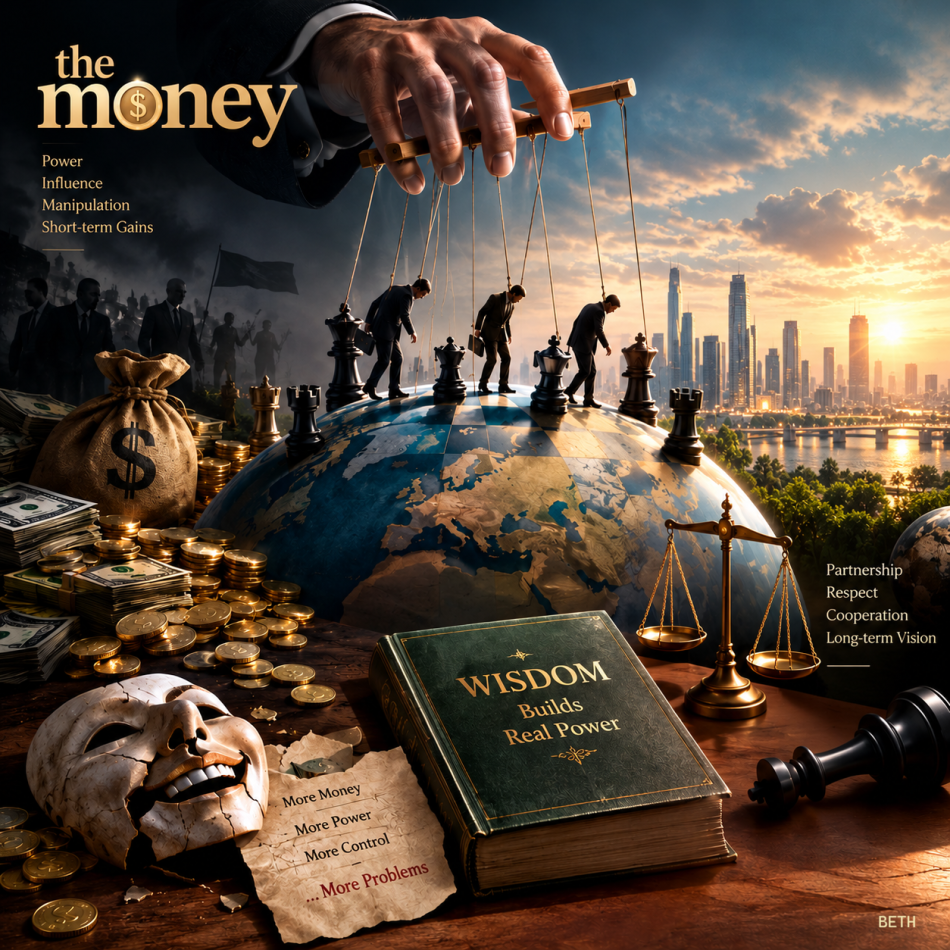
World Press Today — September 29 | BETH Eyes
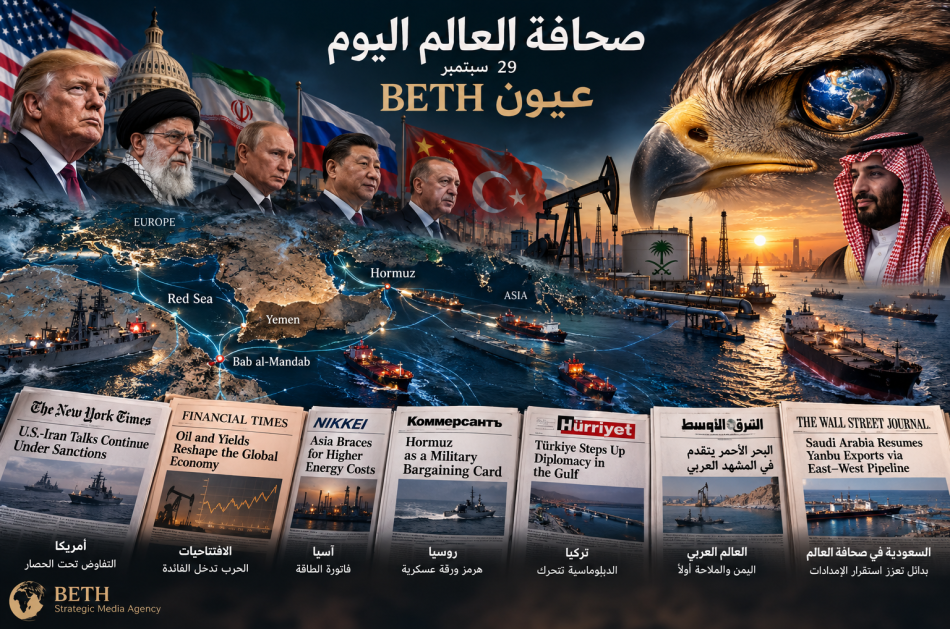
Hormuz is reshaping the global economy, Asia is calculating the cost of energy, Russia is watching the balance of power, and Türkiye is moving diplomatically.. while Saudi Arabia advances in the international press as its role in energy and maritime security expands
Prepared and analyzed by | Strategic Media Department – BETH Agency
Supervised by: Abdullah Al-Omirah
Washington | Negotiations Under Blockade
The American press is focusing on today’s paradox: negotiations are continuing, while Middle Eastern exports are approaching pre-war levels, gradually reducing the value of Iran’s Hormuz card. Saudi Arabia’s resumption of exports from Yanbu through the East–West Pipeline has emerged as a key factor in this equation.
Asia | The Energy Bill
Asian markets declined with rising oil prices and U.S. bond yields, while the Hormuz crisis extended to gas; Qatar extended force majeure on shipments destined for Asian countries, including Pakistan and Bangladesh, increasing the continent’s sensitivity to any additional disruption.
Moscow | Hormuz as a Military Card
The newspaper Kommersant highlighted the continuing field tension in the strait, including Iran’s announcement that it had seized an American underwater drone, and presented Hormuz as an arena for both military and political bargaining.
Ankara | Diplomacy Moves
The Turkish press followed Foreign Minister Hakan Fidan’s movements in the Gulf, with clear focus on the security of Hormuz and the Red Sea, and on Türkiye’s role in seeking exits from regional crises rather than merely observing them.
The Arab World | The Red Sea Moves Forward
Arab coverage gave greater space to Yemen and maritime security; Faisal bin Farhan’s visit to Washington was read in the context of escalating fighting in Yemen and the direct threat to the Red Sea and Bab al-Mandab.
Editorials and Analysis | The War Enters Interest Rates
The Financial Times observed the strongest correlation between oil prices and U.S. bond yields since 1990; meaning that Hormuz is no longer moving energy alone, but has begun to directly affect inflation, interest rates, and the cost of borrowing globally.
Saudi Arabia in the World Press
The most prominent image today is Yanbu and the East–West Pipeline: Saudi Arabia is appearing not only as an oil producer, but as a country that possesses logistical alternatives that reduce dependence on Hormuz and restore part of the stability of global supplies.
BETH Eyes
The global headline today is not the war alone, but who possesses the alternatives.
Saudi Arabia appears at the intersection of three files: energy, the Red Sea, and the reshaping of maritime security.