



Day 206: The Houthis Continue Their Provocations
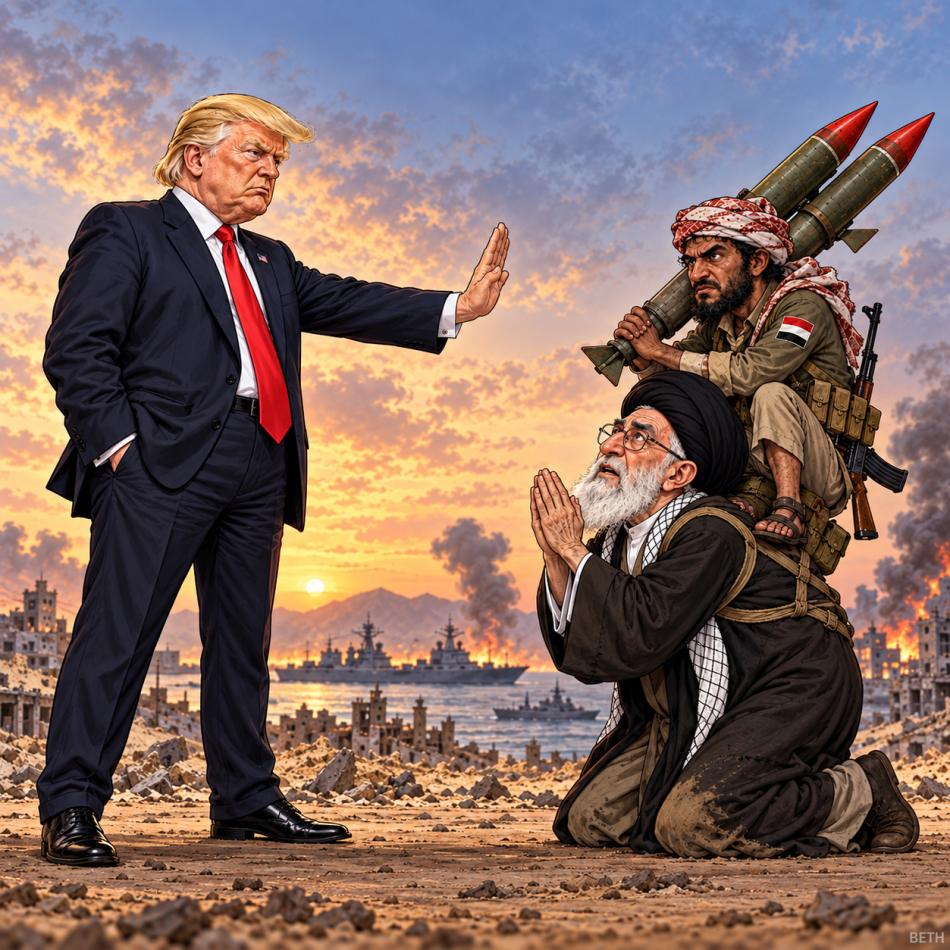
Two drones intercepted near Riyadh and two ballistic missiles toward Khamis Mushait; Gulf, Arab, and international support for Saudi Arabia’s right to protect its security, while the Yemen front escalates and the Hormuz track stalls
September 26, 2026
Prepared and Analyzed by | Strategic Media Department – BETH Agency
The war entered its 206th day with new developments inside Saudi Arabia and Yemen, alongside a further setback in the U.S.-Iranian negotiation track over the Strait of Hormuz.
Saudi air defenses intercepted two Houthi drones near Riyadh and two ballistic missiles heading toward Khamis Mushait, as attempts to expand the scope of targeting inside the Kingdom continued.
At the same time, recent days have seen the consolidation of a Gulf, Arab, Islamic, and international position supporting Saudi Arabia and its right to take the necessary measures to protect its security and sovereignty. The Gulf Cooperation Council affirmed the full support of its member states for the Kingdom, while the Arab League and the Organization of Islamic Cooperation renewed their solidarity with it. The Security Council, meanwhile, affirmed Saudi Arabia’s inherent right to self-defense and condemned the continuing Houthi attacks.
In Yemen, the pace of military operations increased across several fronts, with government forces moving against Houthi positions and supply lines, alongside continued attempts by the militia to expand and approach sensitive areas linked to Bab Al-Mandab and Marib.
As for the U.S.-Iranian track, it recorded a new setback today, as President Donald Trump rejected Iran’s latest proposal to halt the fighting and reopen the Strait of Hormuz within seven days in return for lifting the blockade on Iranian ports, easing some economic restrictions, and resuming nuclear negotiations.
Analysis
What is new on Day 206 is not merely the continuation of the attacks, but the expansion of the targeting toward Riyadh, coinciding with the start of the practical activation of the Makkah Agreement and a rise in the level of external political support for Saudi Arabia.
This is gradually changing the nature of the confrontation.
Saudi Arabia is not facing the threat within a purely national framework; rather, it is doing so within an emerging regional defense circle, a broader international position recognizing its right to protect its security, and an increasingly active Yemeni front.
At the same time, Washington’s rejection of the Iranian formula makes it more difficult to separate Hormuz from the other fronts, because the failure of negotiations keeps the tools of regional escalation open.
Outcomes and Expectations
The most likely course in the coming days is a continued raising of defense and deterrence levels inside Saudi Arabia, in parallel with increased operations aimed at reducing the Houthis’ ability to launch attacks and maneuver inside Yemen.
Military coordination under the Makkah Agreement is also likely to expand, particularly in intelligence, surveillance, air defense, and capability integration.
As for Hormuz, it has taken another step backward today; after Iran put forward a specific formula, Washington’s rejection returned the file to its old equation:
Negotiations continue, but the conditions of both sides still prevent a result from being reached.