



Day 204: The War Searches for a Way Out
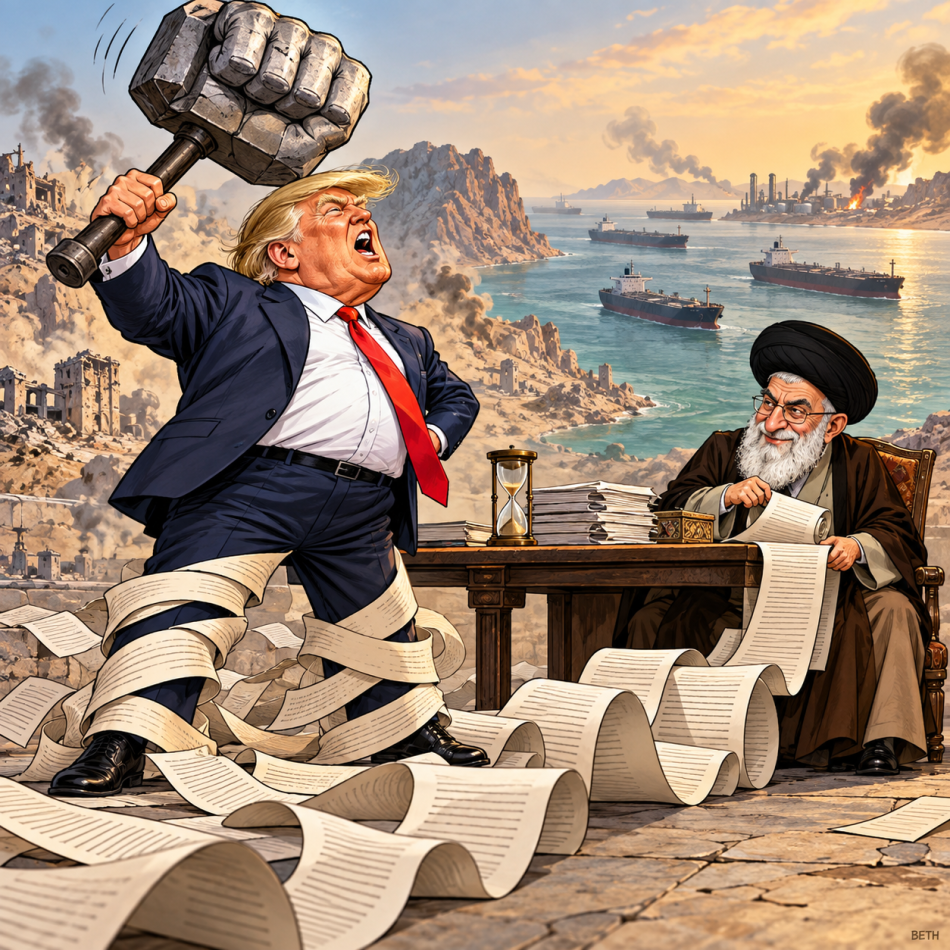
U.S.-Iranian contacts in New York after 204 days of war; Saudi Arabia thwarts targeting attempts and retains the right to respond, while Hormuz remains a key pressure card as major powers move toward testing the terms for an end
September 24, 2026
Prepared and analyzed by | Strategic Media Department – BETH Agency
The war entered its 204th day carrying, for the first time in a while, simultaneous signs of a search for a political way out, without the tools of military pressure coming to a halt.
U.S. envoy Steve Witkoff confirmed that American and Iranian officials held lengthy indirect talks on the sidelines of the United Nations General Assembly meetings in New York, while President Donald Trump said another round is expected soon. No details were announced about what was discussed or whether the talks produced preliminary understandings.
This alone represents a shift.
After more than six months of war, Washington and Tehran have moved from exchanging messages through intermediaries to directly testing the terms of a settlement, while military operations, sanctions, and pressure on navigation remain part of the negotiation itself.
Saudi Arabia Thwarts the Attacks
On the Saudi front, Houthi attempts to target cities and sites inside the Kingdom with missiles and drones continued.
The forces intercepted a ballistic missile heading toward Riyadh on September 19 without any damage being recorded, after intercepting other attempts targeting Bish, Taif, Farasan, and Yanbu. The Coalition Command confirmed that it is monitoring the sources of the threat and that it has the right to take the necessary measures to deter the attacks.
Before that, Saudi Arabia declared that its security and the safety of its territory and assets are a fixed principle that cannot be compromised, and that its right to defend its sovereignty, citizens, and vital interests is firmly established under international law.
This is the central point in reading the scene:
Saudi Arabia is not waiting for anyone to defend it; rather, it is managing the threat militarily and politically according to its own timing and calculations.
As for the American, Arab, Islamic, and European positions issued over the past few days, they add international political support to Riyadh’s position and condemn the targeting of its territory, without changing the fact that the decision to respond and Saudi Arabia’s military capability remain in the Kingdom’s hands.
In New York, Saudi Arabia, Turkey, Pakistan, and Egypt affirmed the continuation of coordination among them, condemned the attacks on the Kingdom, and affirmed their support for its security and territorial integrity.
The Security Council also condemned the Houthi attacks, affirmed Saudi Arabia’s right to defend itself, and called for strengthening the implementation of the arms embargo imposed on the Houthis and stopping the flow of weapons and financing to them.
Hormuz Remains the Knot
The strait remains one of the most important keys to the war.
Washington wants to restore freedom of navigation on a stable basis, while Iran is using its ability to threaten maritime traffic as a negotiating card and a tool of economic pressure.
The current reality does not indicate that Hormuz has returned to normal; but it is also no longer a card that can be controlled in the same way it appeared during the first weeks of the war.
The U.S. military presence, operations to protect navigation, and pressure on Iranian capabilities around the strait have gradually changed the equation.
Therefore, the question is no longer only:
Will Hormuz be opened?
Rather:
Who will determine the rules of passage through it after the war?
This is an issue larger than Iran and the United States; because it affects China, the Gulf states, and the entire global economy.
Washington Changes the Question
Before the General Assembly, Trump did not speak about a final military victory as much as he presented Iran with two choices: an agreement or continued pressure. At the same time, his envoys entered into talks with it.
The combination of the two tracks is deliberate.
Washington wants Iran to reach a settlement while understanding that the continuation of the war will not restore the balance that existed before it.
For this reason, strikes, sanctions, the sea, and Yemen will remain tools of pressure even during negotiations.
China Watches
China remains the largest party that is difficult to exclude from any long-term arrangement.
Beijing depends on the stability of energy flows from the Gulf, and it has major economic interests with Iran and the countries of the region; therefore, the continued threat to Hormuz harms its interests even if its political position differs from Washington’s.
China does not need to become an official mediator in order to have an influence.
It is enough for restoring the stability of energy and navigation to become a shared interest between powers that disagree on many other issues.
Here, one of the most important paradoxes of this war may emerge:
U.S.-Chinese competition may continue, but Hormuz could push the two sides toward a point of common interest.
BETH Reading
After 204 days, the picture of the war has begun to change.
Iran is no longer facing American pressure alone; it is facing a navigation crisis, sanctions, economic pressure, and fronts linked to it from Yemen to Iraq.
The United States, despite the continuation of its military capability, also has an interest in preventing a war with no time limit and in restoring stability to energy markets.
Saudi Arabia, meanwhile, is dealing with the Houthi front as a direct threat to its sovereignty, and is leaving the timing and nature of the response to itself, while the circle of condemnation and international political support around it expands.
This distinction is important.
International support increases the Houthis’ isolation, but it is not a substitute for Saudi power or for the Saudi decision.
What Are We Watching?
During the coming phase, there are three indicators more important than statements:
First: whether the U.S.-Iranian talks move from sounding out positions to negotiations over specific terms.
Second: whether escalation in Hormuz declines in parallel with the negotiations, or whether Tehran uses it to raise the price before an agreement.
Third: how Saudi Arabia will deal with the continuation of Houthi attempts, and whether it moves from interception and deterrence to expanding the targeting of the sources of threat inside Yemen.
The war has not reached its end.
But after 204 days, the clearest question has become:
What price will each side pay for it to stop?
In conclusion
The world today faces a striking equation:
Massive U.S. military power, a decline in Iranian capabilities according to American assessments, and a continuing threat of further strikes.
On the other side, negotiations that do not stop, and broad room granted by Washington to Tehran to maneuver, evade, reintroduce conditions, and delay a resolution.
Here lies the paradox of Day 204:
If Washington possesses this military superiority, and says that most Iranian capabilities have been destroyed, why are the negotiations still proceeding at the same pace?
Perhaps the issue is no longer about the ability to continue the war, but about the political and economic price Washington wants to extract before deciding how to end it.