


Day 203: Iran and Yemen Take Center Stage at the United Nations
Trump targets Tehran from the General Assembly podium as the Iranian president arrives in New York amid diplomatic contacts; meanwhile, several countries affirm Saudi Arabia’s right to defend itself, while Hormuz, Bab al-Mandab and energy remain at the forefront of the crisis
September 23, 2026
Monitoring and Analysis | Strategic Media Department – BETH Agency
The war enters its 203rd day with much of its political weight shifting to New York.
At the United Nations, U.S. President Donald Trump defended the war against Iran, described Tehran as “the world’s leading sponsor of terrorism,” and renewed his pledge to prevent it from acquiring a nuclear weapon, while keeping the door open to an agreement.
Meanwhile, Iranian President Masoud Pezeshkian arrived in New York to take part in the General Assembly as political contacts intensify around ending the war and reopening negotiating channels.
Trump Puts Iran Before the World
Trump devoted a major part of his speech to Iran, arguing that it was no longer the dominant power it once was in the Middle East and calling for greater economic isolation.
But his speech combined two parallel tracks: political and military escalation, while preserving the possibility of a settlement.
After the address, Trump said U.S. and Iranian officials had held talks lasting around three hours in New York, indicating that public threats had not halted political contacts behind the scenes.
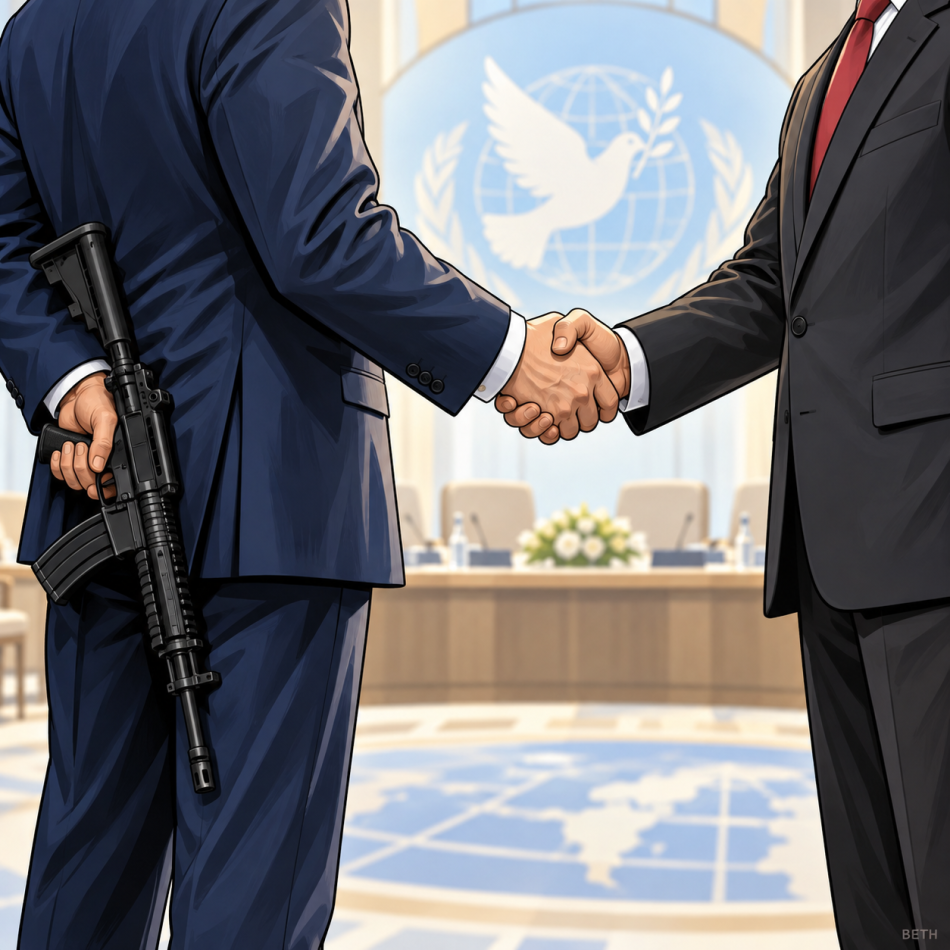
New York has therefore become a venue for confrontation and negotiation at the same time.
The Iranian Delegation in New York
Pezeshkian is scheduled to address the General Assembly on Wednesday, with expectations that he will focus on the war, sanctions and Tehran’s position on negotiations, while presenting Iran’s narrative before participating world leaders.
The Iranian delegation arrived in New York carrying a message built around two parallel ideas: rejecting surrender under war, while not closing the door to a political settlement.
For that reason, the Iranian president’s speech is expected to be one of the key moments of Day 203 — not only because of its content, but because it follows Trump’s address directly and comes as the parties assess whether the ongoing contacts can develop into an actual negotiating track.
Saudi Arabia.. The Right to Self-Defense
On the sidelines of the General Assembly meetings, the foreign ministers of Saudi Arabia, Egypt, Türkiye and Pakistan reaffirmed their full support for the Kingdom’s sovereignty, security and territorial integrity, and condemned the latest Houthi attacks against Saudi Arabia.
The joint statement affirmed Saudi Arabia’s inherent right to defend itself, its territory and its people in accordance with international law and the Charter of the United Nations, while also stressing the importance of protecting the security, safety and freedom of maritime navigation.
This formulation gives the Saudi file significance beyond a bilateral response to the Houthis; it directly links the Kingdom’s security with the security of maritime routes and regional stability.
Yemen in the International Spotlight
Yemen is also strongly present on the international agenda.
In a recent briefing to the Security Council, the United Nations said the situation around Bab al-Mandab had become more volatile, with intensified fighting along the western coast and its spread to several fronts, while commercial shipping in the Red Sea continues for now despite elevated risks.
The importance of the Yemen file is increasing because it is no longer separate from the wider war.
Houthi attacks on Saudi Arabia, their movements near Bab al-Mandab, and the disruption in Hormuz make the Red Sea and the Gulf parts of a single equation involving energy, international trade and the security of maritime routes.
Hormuz Remains the Biggest Test
Despite attention shifting to the United Nations, the Strait of Hormuz remains the most economically sensitive factor.
Any prolonged disruption in the strait has direct consequences for oil flows, insurance and shipping costs, making maritime security part of political and military calculations in New York and beyond.
Hormuz is therefore no longer simply an issue between Washington and Tehran; it has become a matter affecting both energy producers and importers, as well as global supply chains.
The World Watches Two Tracks
The war is moving today along two simultaneous tracks.
Outside New York, the fronts and risks continue in Hormuz and Yemen.
In New York, statements, meetings and political contacts are intensifying.
This is the central paradox of Day 203:
The wider the war expands on the ground, the greater the need to keep negotiating channels open.
That does not mean a settlement is close.
The ongoing talks, the speeches by Trump and Pezeshkian, and regional positions remain, for now, at the stage of testing intentions and conditions, rather than forming an agreement.
BETH Analysis
Day 203 does not present a single military turning point as much as it reveals a change in the shape of the war.
Iran has become a major subject at the General Assembly.
Saudi Arabia has received publicly declared regional support — following earlier international backing — for its right to defend itself.
Yemen and Bab al-Mandab have moved more clearly into the international security agenda.
And Hormuz remains the factor connecting the war to the global economy.
The most important development, however, is that escalation and negotiation are now moving in parallel.
Trump raises the tone of his rhetoric before the world while contacts with Iranian officials continue.
Tehran publicly rejects Washington’s conditions, yet comes to New York to participate in the political discussion.
This makes the central question of Day 203:
Can New York move from being a platform for recording positions to a place where a path toward ending the war begins?
So far, the answer remains unresolved.
But the battlefield is no longer the only place where decisions are being shaped.