



Day 200: Pressure Before the End
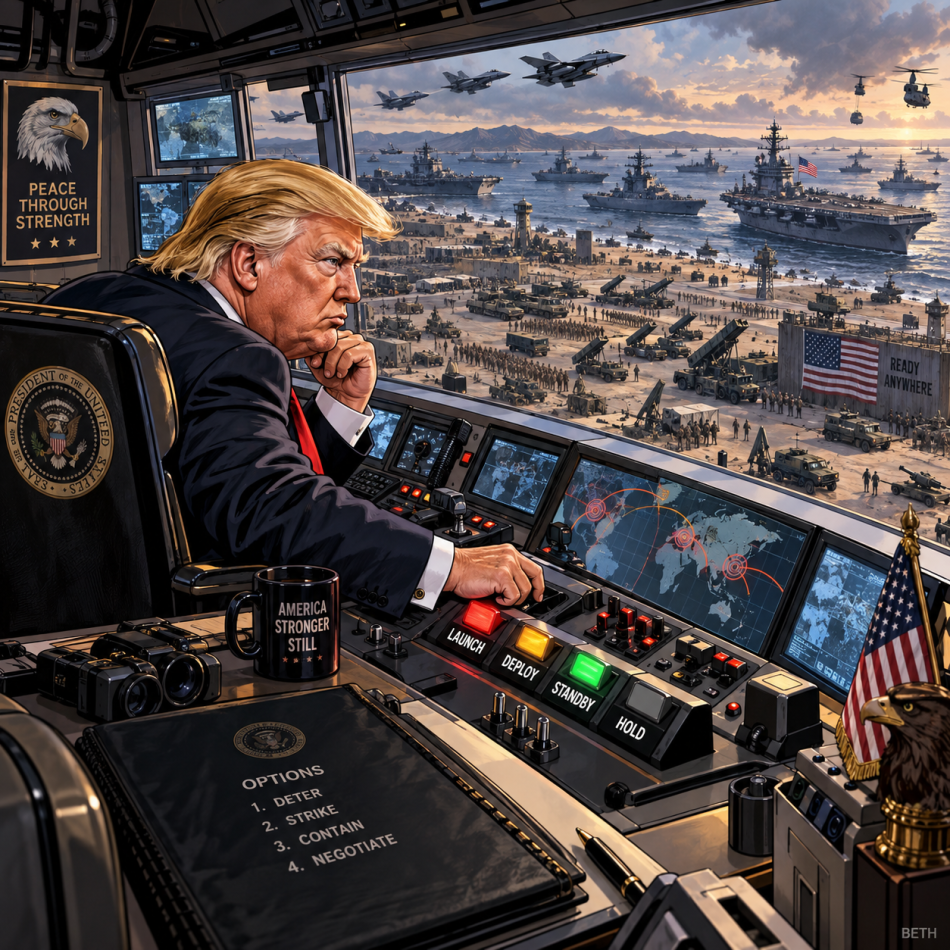
Trump returns to the White House amid warnings of rapid escalation .. Iran raises the ceiling of its conditions for negotiations .. Israel shortens its U.S. presence .. the Houthis open a broader front against themselves .. while Saudi Arabia and the Red Sea move to the center of decision-making in the next phase
September 20, 2026
Follow-up and Analysis | Strategic Media Department – BETH Agency
The U.S.-Iran war entered its 200th day, but the scene today is slightly different.
The parties are no longer moving only in the field; they have also begun moving to arrange what comes before the next decision.
Washington warns.
Tehran sets conditions.
Israel shortens its movements.
And Yemen grows hotter.
Washington: Readiness Rises
U.S. President Donald Trump cut short his stay at Camp David and returned to the White House on Saturday evening, without the White House announcing a political reason for the change. The return coincided with broad U.S. security warnings in a number of Middle Eastern countries about the “possibility of escalation”, along with warnings about possible airspace closures and flight disruptions if the confrontation expands.
Iran: Negotiations with High Conditions
Secretary of Iran’s Supreme National Security Council Mohsen Rezaei announced that Tehran had informed Washington, via Qatar, of seven conditions for beginning negotiations. But what he has directly announced so far are three main demands: ending the war on all fronts, releasing frozen Iranian funds, and ending the U.S. naval blockade.
The Iranian message says:
We want negotiations.
But Iran is still acting arrogantly and maneuvering..
Raising the ceiling of the conditions does not necessarily mean that Tehran expects all of them to be accepted; in negotiations, nor does it mean that it is the stronger party that decides what it wants.
The most important point here is that U.S. pressure has turned the language of war into a language of begging for an end.
This alone is a development worth following.
Israel: Reducing Movement
Israeli Prime Minister Benjamin Netanyahu shortened his upcoming visit to the United States and canceled the Texas stop and a meeting that had been scheduled with Elon Musk. He is set to arrive in New York on Thursday, deliver his speech before the General Assembly, and return to Israel the same day. According to the current schedule, no meeting with Trump is planned during the visit.
Perhaps shortening the visit is linked to a military decision.
But the timing makes it a signal worth monitoring.
Israel remains a major party in the war.
This raises an important question:
Is Israel preparing for a new round, or is it leaving Washington to manage the phase before deciding its next step?
Saudi Arabia: Moving Toward Deterrence
Yesterday, Saudi air defenses intercepted a ballistic missile launched by the Houthis toward Riyadh, while attempts to target Baish, Taif, Farasan and Yanbu were also thwarted. The coalition said it has the right to take whatever measures it deems appropriate to deter Houthi behavior in accordance with international law.
This statement is more important than the Houthi narrative itself.
Because the established event is:
An attempt to target the capital and Saudi cities and facilities was thwarted.
Not the success of the Houthis in achieving their declared objectives.
At the same time, Turkey offered its readiness to meet Saudi military needs under the joint defense agreement, adding a new dimension to Saudi deterrence.
Yemen: The Ground Is Moving
On the ground, the Houthis are trying to control the western coast and areas of Bab al-Mandab, while the Yemeni government is launching counterattacks and clashes are expanding in Marib, Lahj, Al-Jawf, Hajjah, Al-Bayda and Saada. The United Nations confirms that the fighting has intensified and that the front has become more closely connected to Red Sea security.
Here, the meaning of the war in Yemen changes.
The conflict is no longer merely an internal dispute over a city or governorate.
Every kilometer near Bab al-Mandab carries a value that goes beyond Yemen, because it lies beside one of the most important trade routes in the world.
Yemen is therefore entering a phase in which the local battlefield becomes part of international security.
Abdul-Malik al-Houthi: Fear of Being Targeted
Reports speak of Abdul-Malik al-Houthi becoming more isolated, with tighter security measures and no public appearances, amid fears that the Houthi leadership could be targeted.
What can be said is that targeting leadership figures has become a real element in this war, following the killing of prominent Iranian figures during the confrontation, which is pushing the various parties to change their patterns of communication, movement and public appearance.
What Do the Indicators Say?
The scene on Day 200 presents four signals:
America is raising its level of readiness, but it has not announced the opening of a new Yemeni front.
Iran is talking about negotiations, but it is starting from a high ceiling of conditions.
Israel is reducing its external movement, without announcing a direct security reason.
And Saudi Arabia has moved in its rhetoric from intercepting attacks to affirming the right to deterrence.
The Next Phase
Three paths have become clearer:
A strike or an additional military round that raises pressure before the negotiations America wants, not Iran.
Separating the Yemen front from the larger war through deterrence arrangements in Bab al-Mandab and the Red Sea.
And we may see escalation and negotiations at the same time.
This is not a contradiction.
In wars, the final strikes of the stronger side.. and here the balance of power favors America and its allies, are often part of the negotiations themselves.
Conclusion
On Day 200, the war appears closer to the stage of defining the shape of the ending than to the beginning of a new open-ended phase.
The end, if it is approaching, will not necessarily come quietly.
In the evening, after Iran sensed the danger of the circle closing around it, it appears to have tasked one of its proxies with making a provocative statement through an American news agency.
The Houthis Raise the Tone of Their Threats
Mohammed al-Bukhaiti, a member of the Houthi Political Bureau, said in an interview with the Associated Press that his group had warned other countries against joining Saudi Arabia in the fighting inside Yemen. He claimed that the Houthis are capable of fighting on several fronts, and also spoke of indirect contacts with Washington through Oman, asserting that his group does not target American or international ships in Bab al-Mandab, with the exception of what he described as ships linked to Saudi Arabia.
What Does He Want From the Statement?
More important than the words themselves is why they are being said now.
The message appears to be directed at three parties at the same time:
To the Houthi domestic audience: To show that the group remains capable of threatening and operating on more than one front, and to raise morale at a moment when military and political pressures on it are widening.
To the countries surrounding Saudi Arabia: An attempt to raise the cost of any potential participation in the confrontation through advance threats, before regional political and military arrangements turn into practical steps.
To Washington: To separate the confrontation with Saudi Arabia from the confrontation with the United States, and to deliver a clear message: we do not want to open a new American front. The existence of contacts through Oman gives this part of the message greater political weight than the rest of the statements. American reports have confirmed the existence of contacts and talks through Muscat in recent days.
BETH Analysis
Here, power should not be measured by the size of the statement.
Militias often use threats and declarations of capability as part of psychological warfare, while the capabilities of states and regular armies are measured by sustained operational action, chains of command, resources, and the ability to endure a prolonged war.
Al-Bukhaiti’s statement therefore does not, by itself, change the balance of power, nor does it mean that the group has opened a new front.
But it reveals something more important:
The Houthis want to appear more dangerous than the equation itself allows, and to prevent their opponents from forming a coalition against them before a broader battle begins.
From this perspective, the value of the news lies not in the threat itself, but in the need to issue it now.