



Day 198: The Pressure of War Continues
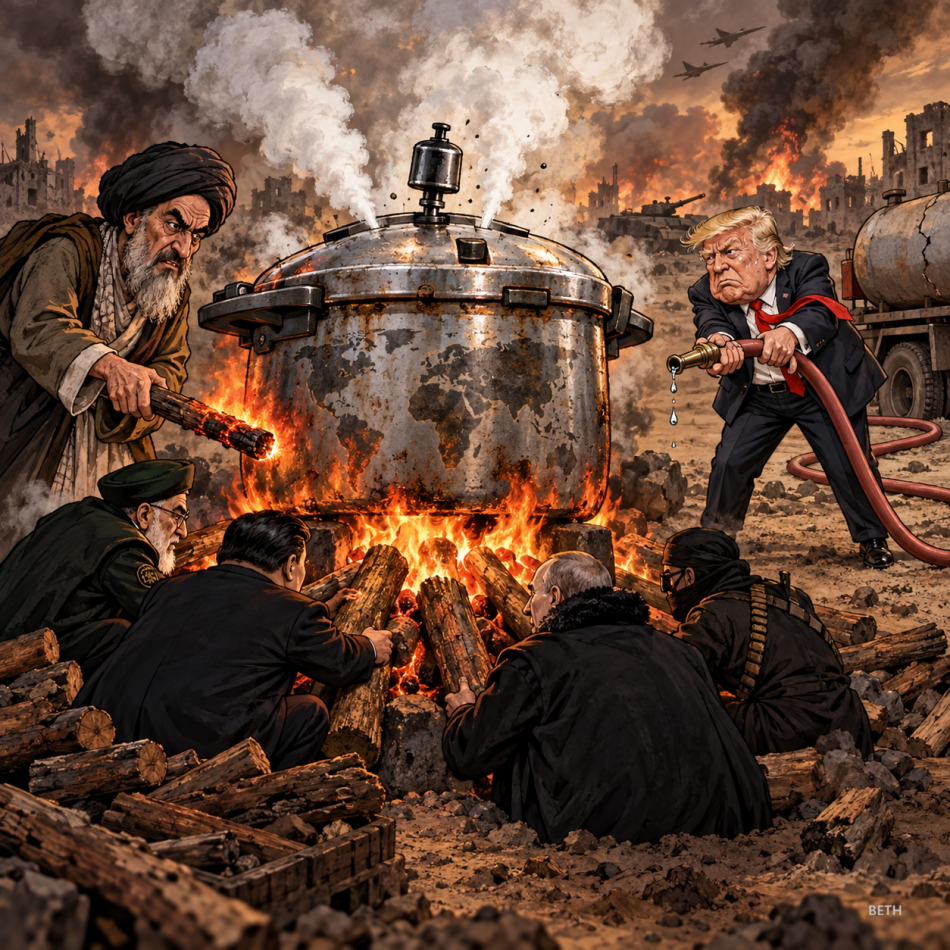
Hormuz remains nearly closed, attempts by the Houthi militia to expand the Red Sea front, and a strong confrontation by the Yemeni army. Saudi Arabia redirects its exports, while Tehran shifts from the rhetoric of resilience to apologizing to the people; meanwhile, the cost of war spreads to oil, interest rates, and international politics
September 18, 2026
Follow-up and Analysis | Strategic Media Department – BETH Agency
The U.S.-Iran war entered its 198th day with no clear political breakthrough, but with a more important shift:
The war is no longer putting pressure on one side alone; it has begun putting pressure on the world at the same time.
Hormuz: Only Four Ships
Four commercial ships crossed the Strait of Hormuz on Thursday, compared with an average of around 16 ships during the past ten days, while some crossings remained outside tracking systems because identification devices were switched off. Before the war, the strait carried around one-fifth of global oil and gas trade.
In Bab al-Mandab, 23 ships crossed, below the ten-day average of around 26, while military developments in Yemen increased the risks facing the alternative route for Gulf exports.
Saudi Arabia Changes Course
Saudi Arabia moved quickly to reduce the impact of disruption to Red Sea exports.
According to trade sources, Aramco sold around 60 million barrels from Ras Tanura for loading during September and October, to be transferred through ship-to-ship operations off the Omani port of Sohar, while the Kingdom works to restore part of the damaged capacity of the East-West Pipeline.
Work is also proceeding rapidly to restore the East-West Pipeline within six weeks.
This move helped calm the market, with Brent falling by around 2% to nearly $102.5 per barrel, though it remained above the $100 mark, meaning that fear has eased but has not ended.
Iran Apologizes
Inside Iran, one of the most important political signals in weeks emerged yesterday evening.
Iranian First Vice President Mohammad Reza Aref said the government apologizes to the people and feels ashamed because citizens’ incomes, particularly those of salaried workers, are no longer sufficient to cover living expenses.
This statement does not mean an admission of defeat, but it does mean something else:
The war has entered the home of the Iranian citizen.
When the authorities move from talking about resilience to apologizing over living conditions, the social crisis becomes part of the battle itself.
The issue is therefore no longer merely sanctions or inflation figures, but the regime’s ability to keep society capable of bearing the cost.
Yemen: The Second Front
In Yemen, the Houthis continued their escalation along the western coast and Bab al-Mandab, alongside the launch of missiles and drones toward Saudi cities and sites, while Saudi Arabia carried out strikes on Houthi positions inside Yemen in response to the escalation.
Italy Enters Bab al-Mandab
Italian Defense Minister Guido Crosetto announced that Rome is preparing to send warships to protect Italian commercial vessels crossing Bab al-Mandab, stressing that his country would not wait for a joint European decision if disruption to navigation continues.
He explained that the priority is to restore shipping traffic and prevent higher transport costs and delays from affecting the Italian economy.
The Sea Heats Up Further
Iran’s Islamic Revolutionary Guard Corps announced that it had targeted an oil tanker flying the Togolese flag in the Strait of Hormuz, while the United Kingdom Maritime Trade Operations said it had received reports of other incidents in the strait, including tankers being hit and fires breaking out, with no human casualties reported.
Meanwhile, South Korea announced that it is considering expanding the mission of its naval unit in the Gulf of Aden to protect commercial vessels and oil routes, while Seoul stressed that it does not intend to become militarily involved in the war itself.
In Yemen, the International Organization for Migration said the latest fighting had displaced 112,000 people inside the country within two weeks, while nearly 3,000 people fled by sea to Djibouti.
Analysis:
These three developments show that the war is expanding on two fronts at the same time: militarily across maritime routes, and humanitarianly on land. The greater the pressure on Hormuz and Bab al-Mandab, the higher the likelihood that they will shift from commercial corridors into international arenas for protection and deterrence.
Washington: The War Approaches the United Nations
Trump is due to arrive next week for meetings of the United Nations General Assembly, as the war enters its seventh month and pressure on Washington increases amid the continuing rise in energy costs and the widening effects of the conflict.
Trump said two days ago that the war would end “soon,” before renewing his threat of powerful strikes against Iran to force it into submission.
This escalation in rhetoric may be part of an attempt to raise pressure to the maximum before any possible settlement.
The United States has still not reached an agreement with Iran, while maritime routes continue to operate below their normal capacity.
The War Enters the Banks
The expanding cost of the war is no longer visible in oil alone.
The Bank of England warned that inflation could exceed 4% early next year, while investment banks expect a British interest-rate increase in November if energy pressures continue. The Bank of Japan has also raised interest rates to their highest level in 31 years.
The war is therefore moving through a clear chain:
Maritime routes → energy → inflation → interest rates → the economy.
What Comes Next?
Three signals are worth watching today:
The first: the extent to which Saudi Arabia can restore a larger share of the East-West Pipeline’s capacity, easing pressure on its exports, after the announcement that the pipeline will return to full-capacity pumping within six weeks.
The second: will China’s message to Iran turn into real pressure, or remain a diplomatic attempt?
And the third, and most important:
Was the Iranian government’s apology to the people merely an economic acknowledgment, or the beginning of a new language aimed at reducing the cost of the war and avoiding the outbreak of demonstrations?
Because when a war reaches the point at which a government apologizes for the living conditions of its citizens, it has moved from an external confrontation to an internal test of endurance.