



Day 197: The War Narrows the Passageways
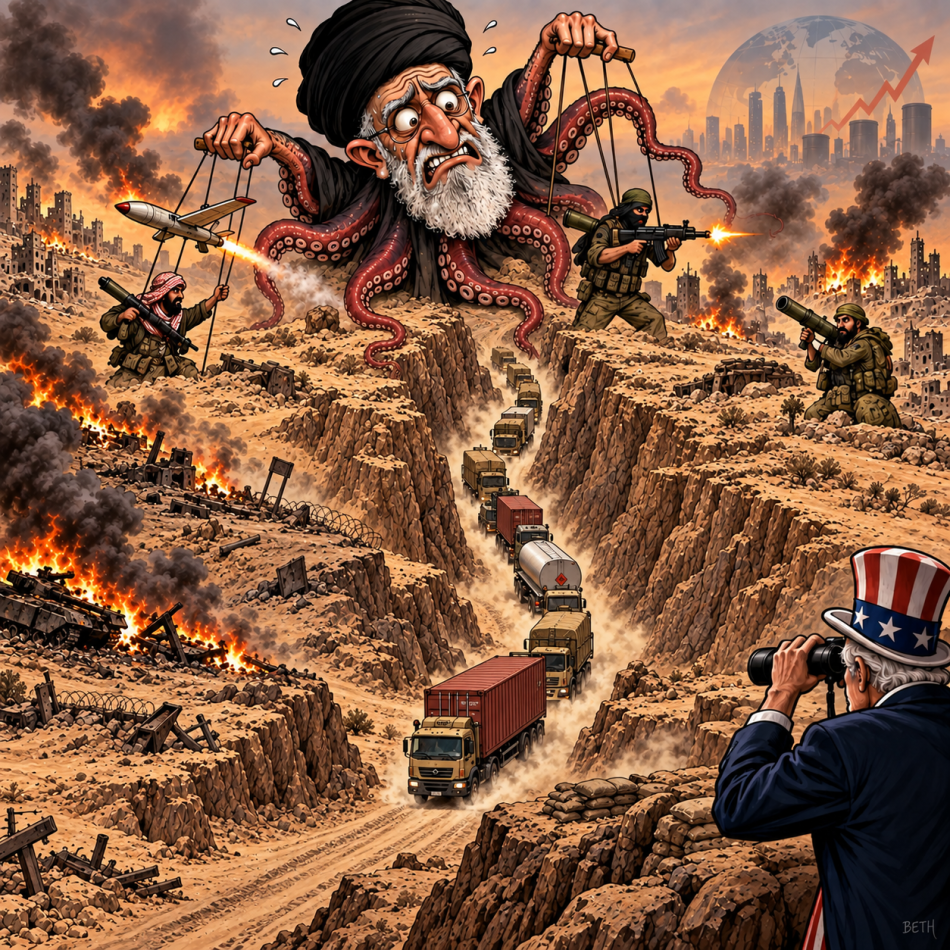
Hormuz falls to just three ships, and Bab al-Mandab comes under increasing pressure; Trump speaks of an approaching end, while the Yemen front expands and the cost of war spreads to energy, interest rates, and markets
September 17, 2026
Monitoring and Analysis | Strategic Media Department – BETH Press
The U.S.-Iran war entered its 197th day in a more complex form; while U.S. President Donald Trump expressed hope that the war may be nearing its end, maritime routes and markets showed that the crisis remains far from stable.
Hormuz: Just Three Ships
Commercial ship traffic through the Strait of Hormuz fell yesterday to just three vessels, compared with 12 the previous day and far below the roughly 17-ship average of the past ten days. These figures do not include vessels that may have crossed after switching off their identification systems.
The indicator here is clearer than the statements: the strait is no longer a normal trade route, but a zone of risk.
The Gulf and Energy
Oil prices declined this morning, but Brent remained above $103 a barrel, after Saudi Arabia eased some supply concerns by offering additional cargoes to Asia through the Oman route.
Meanwhile, the impact of the war is appearing more broadly in the gas market; Asian demand for liquefied natural gas is expected to decline for a second year after disruptions to Gulf supplies pushed spot prices to twice their pre-war levels.
Yemen: The Front Expands
In Yemen, pressure continues around the western coast and Bab al-Mandab, with vessel traffic through the strait falling to 21 ships yesterday, from 24 the previous day.
Iran: Negotiating Under Pressure
Trump said Iran wants a deal and expressed hope that the war may be nearing its end. But limited traffic through Hormuz, along with continued sanctions and economic pressure, means negotiations remain part of the war for now, not an alternative to it.
Iraq: Oil Searches for an Exit
Iraq continues to pay the price of its geography. Its exports have declined during the war, while the UAE’s ADNOC has expanded purchases of Iraqi crude and used its fleet and logistics capabilities to facilitate transportation amid disruption in Hormuz.
Iraq here is not only a military front; it is an economy trying to find a safe route to market.
Lebanon: The Post-War Phase Is Already Being Discussed
In Paris, European and Arab military leaders are meeting to discuss the future of security in southern Lebanon as the UNIFIL mission approaches a reduction, amid discussions over strengthening the Lebanese army or finding alternative international arrangements.
The implication is that Lebanon has begun discussing the shape of the day after, while the regional war itself has not yet ended.
Iran’s Arms: The War Spreads
Iran does not confront its adversaries only from within its own borders.
A significant part of its regional power was originally built around moving confrontation into other arenas; through the Houthis in Yemen, armed factions loyal to it in Iraq, and Hezbollah in Lebanon.
In the current war, this model is becoming even clearer.
In Yemen, the Houthis are no longer merely a political ally of Tehran; regional and Iranian sources have spoken of a direct role by the Revolutionary Guard in managing their operations through weapons, planning, and advisory support.
In Iraq, armed factions run by the Revolutionary Guard continue to resist efforts to place weapons exclusively under state control.
As for Hezbollah, despite the attrition and strikes it has suffered, it still retains a military structure and weapons outside the control of the Lebanese state.
Over decades, Iran built an armed network tied to it ideologically, financially, militarily, and strategically, through which it can widen the conflict and raise the cost of targeting it directly.
Whenever pressure intensifies on Iran in Hormuz and at home, it directs its affiliated militias to move and shift part of the battle toward the Red Sea, Iraq, Lebanon, and Saudi Arabia’s borders.
So how far can Tehran use them to open new fronts without those same fronts turning into a burden on it?
America and the World
The Federal Reserve raised interest rates, pushing the dollar to a seven-week high, while other central banks monitor the impact of energy prices and inflation.
Here, the effect of the war moves from maritime routes to the price of money itself.
Have the parties begun searching for an end to the war, or merely for a less costly way to continue it?