



Council of Ministers Chaired by the Crown Prince: Defense Is a Right
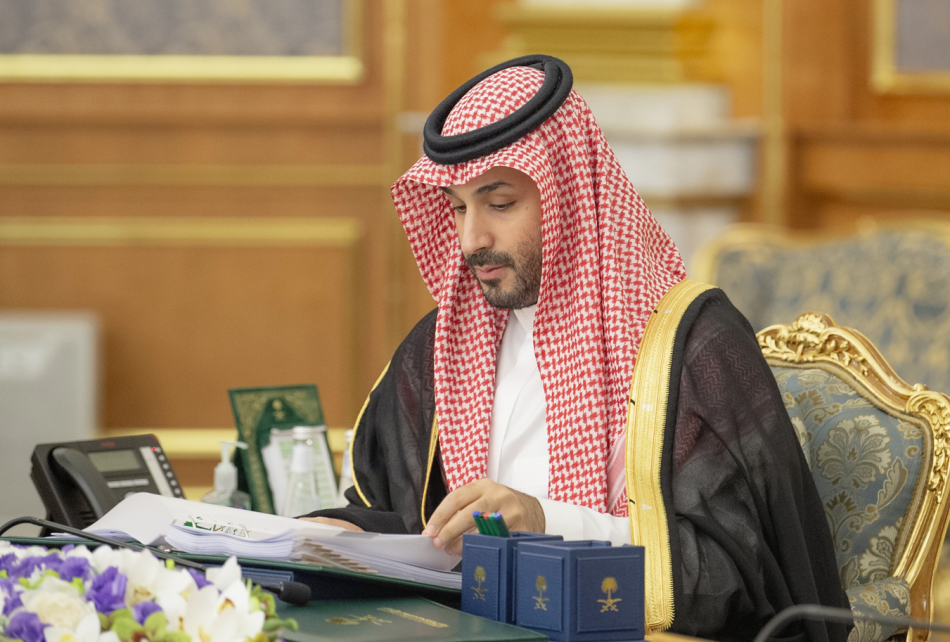
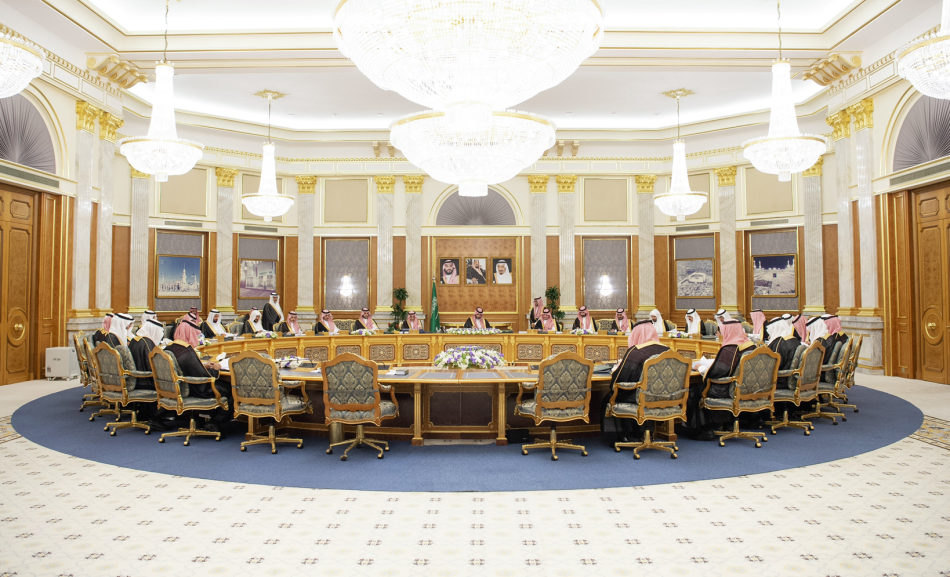
The Council of Ministers elevates the response to Houthi attacks to the level of an explicitly declared sovereign right; it affirms that the Kingdom’s security and capabilities “cannot be compromised,” and invokes the UN Charter and international law after the Crown Prince reviewed the results of his meeting with the CENTCOM commander
Jeddah | BETH
Prepared and analyzed by | Strategic Media Department – BETH Agency
Supervised by: Abdullah Alomairah
The Saudi Council of Ministers affirmed today, Tuesday, the Kingdom’s legitimate right to defend itself and protect its sovereignty, citizens, residents, and vital interests, while condemning in the strongest terms the continued Houthi attacks on civilians and civilian objects.
The position came in language that goes beyond the usual condemnation, as the Council stressed that the Kingdom’s security, territorial integrity, and national capabilities are “a firmly established principle that cannot be compromised,” and explicitly linked the right of self-defense to the Charter of the United Nations and the provisions of international law.
Before the Statement.. a Military Meeting
At the beginning of the session, Crown Prince Mohammed bin Salman briefed the Council of Ministers on the results of his meeting with U.S. Central Command commander Admiral Brad Cooper, as well as on the substance of the phone call he received from Pakistani Prime Minister Mohammed Shehbaz Sharif, and the discussions with both sides regarding the latest developments in the region.
The order of the statement here is important.
The reference to the meeting with the CENTCOM commander came immediately before the declaration of the Saudi position on the Houthi attacks and the Kingdom’s right to defend itself; the statement does not reveal military decisions, but it confirms that the assessment of developments is taking place at the highest levels of political and security decision-making.
A Message Beyond the Houthis
The choice of the phrase “its legitimate right to defend itself” carries greater weight than a mere pledge to respond.
Saudi Arabia is not describing the attacks as an internal Yemeni development, but as a threat to its sovereignty and vital interests, and it places any move to protect them within the framework of international law.
This is important as the confrontation moves into a phase in which the Yemen fronts intersect with Red Sea security, Bab al-Mandab, and pressure on Saudi energy facilities and cities.
In other words:
Riyadh is drawing the political and legal foundation before the coming days reveal the form of military handling of the threat.
Dialogue Does Not Cancel the Response
At the same time, the Council of Ministers affirmed the Kingdom’s continued efforts to consolidate security and peace through dialogue and international cooperation.
There is no contradiction between the two messages.
The statement combines diplomacy in managing crises with the right to use the tools of the state to protect its territory when it comes under attack.
This balance may be even more significant at the present moment: the Kingdom is not pushing toward expanding the war, but it is making clear that avoiding escalation does not mean accepting attacks.
Energy Is Changing
In another file that extends what the Energy Minister revealed yesterday, the Council of Ministers affirmed the Kingdom’s continued progress toward building a more diversified and sustainable national energy mix, including the addition of nuclear energy within a solid regulatory framework consistent with international obligations.
The reference follows Prince Abdulaziz bin Salman’s announcement of the results of the uranium exploration program, reinforcing the Kingdom’s direction toward expanding its concept of energy from oil and gas to nuclear energy, minerals, and strategic resources.
The Economy.. an Important Decision
The Council of Ministers also approved the National Strategy for Entrepreneurship and Small and Medium Enterprises, one of the most important economic decisions of today’s session.
The decision moves the SME and entrepreneurship file from a collection of programs and initiatives into a unified national strategic framework, at a stage in which Vision 2030 is focused on maximizing the impact of the private sector, investment, and new growth opportunities.
The decisions also included investment cooperation with Ireland, cooperation in mineral resources with Kazakhstan, and adding the Ministry of Investment to the Permanent Anti-Money Laundering Committee.
Council Decisions
The Council of Ministers approved the National Strategy for Entrepreneurship and Small and Medium Enterprises, and approved adding the Ministry of Investment to the membership of the Permanent Anti-Money Laundering Committee.
The decisions also included:
- Authorizing the Minister of Investment, or his delegate, to discuss with the Irish side a memorandum of understanding to promote direct investment.
- Approving a headquarters agreement between the Kingdom and the Institute of Internal Auditors.
- Approving a Saudi-Kazakh memorandum of understanding in the field of mineral resources.
- Authorizing the Chairman of the Board of Trustees of the King Fahd National Library, or his delegate, to discuss with the Bahraini side cooperation between the Library and the Bahrain Center for Strategic, International and Energy Studies.
- Authorizing the Chairman of the Board of the Insurance Authority, or his delegate, to discuss with the Kuwaiti side cooperation and the exchange of information in the fields of insurance and reinsurance.
- Approving the final accounts of King Abdulaziz University for a previous fiscal year.
- Issuing the necessary directives regarding a number of annual reports of government entities.
- Approving the promotion of Mohammed bin Ali Al-Shehri to the position of Director General at Grade 14 in the Ministry of Human Resources and Social Development.
BETH Reading
The most prominent political message in today’s session remains in the sequence of three adjacent signals:
The Crown Prince’s meeting with the CENTCOM commander.
The condemnation of the Houthi attacks.
And the affirmation of the Kingdom’s right to defend itself under international law.
These signals are not enough to say that a specific military decision has been taken; but they do say something clearly:
Saudi Arabia is no longer presenting the attacks merely as incidents to be contained, but as a breach of sovereignty that requires the state to protect its territory and vital interests.