


Day 195: From Containment to Retaking the Initiative?
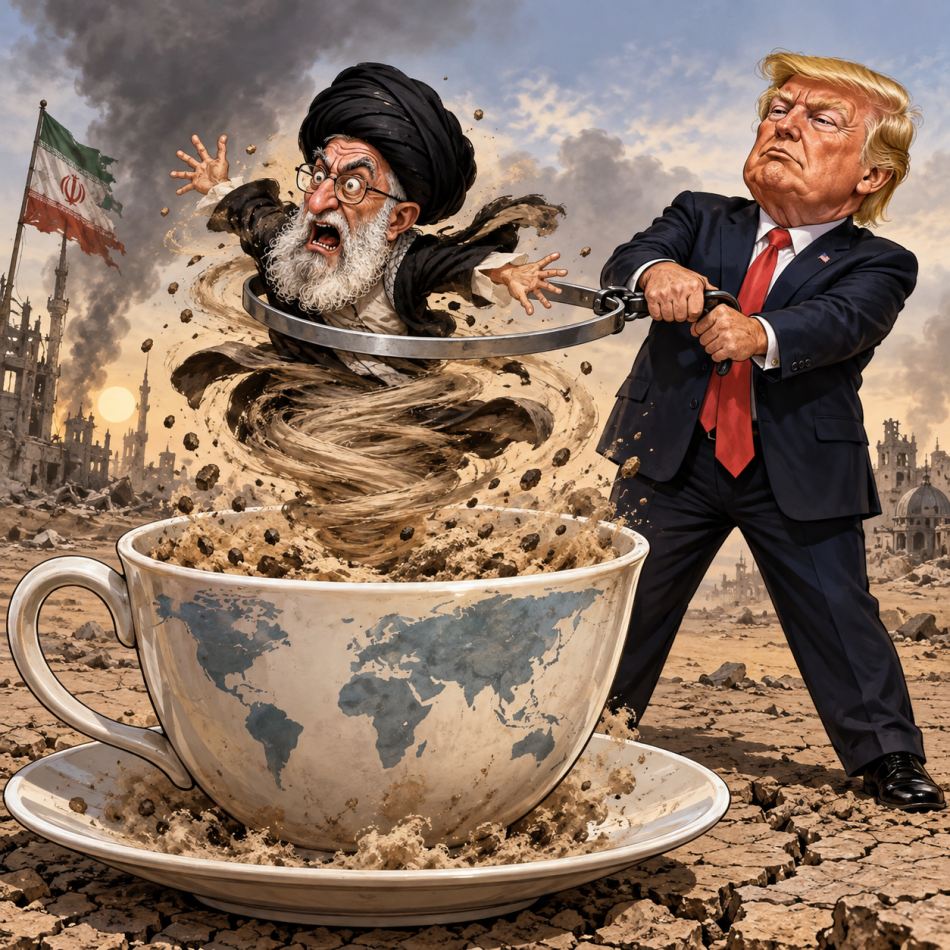
Yemeni forces retake positions west of Taiz and continue advancing under air cover, while Crown Prince Mohammed bin Salman’s meeting with the CENTCOM commander raises the level of coordination at a sensitive moment; Hormuz grows more congested, and Tehran raises the ceiling of its rhetoric after Washington backed away from rushing toward an agreement
15 September 2026
Prepared and analyzed by | Strategic Media Department – BETH Agency
The most important information on the morning of Day 195 is not a new Iranian statement, nor another figure on vessel traffic in Hormuz.
It is that the Yemeni battlefield has begun moving in the opposite direction.
The Yemeni Armed Forces announced the recapture of positions infiltrated by the Houthis west of Taiz, and an advance toward Ghayl Bani Omar, along with the retaking of positions overlooking Jabal Jardan in Al-Shamayatayn district, in conjunction with airstrikes on Houthi gatherings and reinforcements. These moves extend earlier operations in Al-Kadhah, Al-Jawf and Al-Hodeidah, suggesting that what is happening is no longer merely the repelling of scattered attacks.
And this is where today’s reading begins.
The Houthis advanced rapidly in recent days, benefiting from surprise and the breadth of the front; but holding ground is different from reaching it.
The more Houthi movement shifts from mountains and fortified positions to open roads, coastlines and areas that can be monitored, the greater its need for supply lines, and the greater, in turn, the opportunities to target it from the air.
Therefore, the question is no longer only: how far have the Houthis advanced?
Rather:
Has the Yemeni army and the coalition now begun the phase of retaking what was lost?
Taiz Reveals the Shift
Taiz matters because it is not merely a local front.
Advancing west of it puts pressure on the routes linking the interior to the coast, and threatens the Houthis’ ability to consolidate any gains toward Mokha and Bab al-Mandab.
Since the beginning of September, government forces have announced operations on more than one axis, seizing new positions, downing drones, and striking Houthi gatherings and reinforcements. Notably, Presidential Leadership Council Chairman Rashad Al-Alimi spoke early of “seizing the initiative” in Al-Jawf, Al-Bayda, Taiz and Al-Hodeidah.
The term matters.
There is a difference between defending a position and attempting to retake the initiative.
What will determine the credibility of this shift is not statements, but the Yemeni forces’ ability in the coming days to continue advancing, link the fronts, and prevent the Houthis from consolidating new supply lines.
A Meeting That Cannot Be Read in Isolation
In the midst of this scene, Crown Prince Mohammed bin Salman received in Jeddah the commander of U.S. Central Command, Admiral Brad Cooper.
The Saudi statement said the meeting discussed bilateral relations and regional developments. That is the official information that can be stated with certainty.
But the analysis begins with the timing.
The CENTCOM commander does not come to Jeddah at an ordinary moment; the region is living through a U.S.-Iran confrontation, Hormuz is disrupted, Saudi Arabia has come under attack, Yemen has returned to open war, and Bab al-Mandab has once again entered military calculations.
Therefore, we do not need to invent what happened behind closed doors to understand the significance:
The level of coordination has risen.
Most likely, what now matters to both sides is not only intercepting missiles and drones, but the broader picture: reconnaissance, early warning, troop movements, protection of energy routes, and reading what is happening in Yemen within the wider regional theater.
Here, an important point emerges:
What we may be witnessing now could be a phase of preparing the battlefield more than a rush toward a major battle.
Successful military operations do not usually begin with the assault; they begin by depriving the adversary of movement and supply, then choosing the right place and time to push in ground forces.
Hanish.. The Narrative Is Not the Fact
For that reason as well, reports of Houthi control over the two Hanish islands should not be treated as though they are an established military fact.
Some news agencies and media outlets published the claim today, but the sources repeating it rely to varying degrees on parties to the conflict, while the military situation along the coast remains fluid.
Even if Houthi groups reached an island or a coastal position, reaching it is one thing, and maintaining sustainable military control is another.
Islands and exposed coastal positions require supply, protection, and the ability to withstand air and naval superiority.
BETH therefore treats this for now as a battlefield claim that requires proof, not as a final map of control.
That is the difference between following a war and being drawn into its propaganda.
Hormuz: The Crisis Is Real.. Victory Is Not
In the east, the congestion continues.
Ship-tracking data cited by Reuters showed that only four commercial commodity vessels passed through Hormuz on Monday, compared with ten the previous day, and an average of around 125 crossings per day before the war.
This is a dangerous development for the global economy.
But it does not automatically mean that Iran has “won.”
Closing a route through which you can hurt your adversaries does not become a strategic victory unless it produces a political outcome better than the cost you yourself are paying.
Muscat Strikes at the Iranian Plan
The Oman meeting scheduled for 14 September was an opportunity for Tehran to move the Hormuz crisis from a reality imposed by force to a regional arrangement discussed with it and giving it a new negotiating position.
But the postponement, and the possibility that it may not be held in its original format, struck this plan at a sensitive point; Iran can disrupt the strait on its own, but it cannot grant itself regional legitimacy to manage it alone.
It wanted to move from:
“Iran disrupts passage”
to:
“Iran is an essential party in regulating passage.”
That is a huge political difference.
But the absence of Gulf consensus, the Saudi objection, and Bahrain’s refusal to participate before restoring relations with Tehran kept the crisis in its original form: Iran is a party to the problem, not the authority for the solution.
So far, there is no U.S.-Iran agreement, no lifting of sanctions, no normal return of Iranian trade, and no stable settlement for Hormuz.
More precisely:
Iran succeeded in creating a crisis; it has not yet proved that it succeeded in turning the crisis into a gain.
That is a major difference.
Tehran Heads to Beijing
Iranian Foreign Minister Abbas Araghchi’s visit to China on Wednesday comes at a time that does not appear diplomatically ordinary.
Tehran needs Beijing now more than at any recent time: as a market for its oil, a source of political cover, and a channel capable of influencing Washington.
But the paradox is that China itself does not benefit from disruption in Hormuz; it wants Iranian oil, but it also wants the strait open.
The visit therefore appears to be an Iranian attempt to secure continued Chinese support and prevent Beijing from shifting from political partner to a pressuring mediator pushing Tehran toward de-escalation.
The approaching meeting between Trump and Xi adds another dimension: Iran does not want to become a file discussed between the two major powers without first securing the boundaries of the Chinese position.
Tehran Answers a Question Trump Is No Longer Asking
Here, the response of Supreme National Security Council Secretary Mohsen Rezaei becomes interesting.
Rezaei said:
“No negotiations before Iran’s conditions are met.”
He added that the equations surrounding oil and the straits had changed, warning that attempts to contain the damage would not stop what is coming.
Taken alone, the statement makes Tehran look like the party holding the upper hand.
But placing it beside Trump’s words changes the picture.
The U.S. president had said that Iran wanted an agreement, that he would not sign “a worthless agreement,” and then, when asked about Iran’s talks with Gulf states over Hormuz, simply said:
“I don’t care. It is up to them.”
Here lies the paradox:
Washington says it is not rushing toward an agreement.
Tehran responds that it will negotiate only on its conditions.
But saying “I will not negotiate unless...” is not closing the door to negotiation.
It is an announcement that the door exists, with an attempt to raise the price of entry.
That is familiar negotiating language more than a declaration of final strength.
Defiance or Leverage?
Iran’s ability to inflict harm should not be underestimated.
It has the geography of Hormuz, missiles, armed militias, and the ability to raise the cost of war for the region and the world.
But power is also measured by something else:
What has it achieved with these tools?
If a state ends up disrupting chokepoints, draining its trade, exposing its allies to strikes, and then still has as its ultimate objective a return to the negotiating table it says it rejects, then the scene is far more complicated than the image of “the party that imposed its will.”
Tehran may now be trying to preserve the highest possible level of political and military noise so that it does not enter any future settlement appearing to be the party in retreat.
That does not mean it has no cards.
It means that possessing leverage is not the same as winning the game.
Bab al-Mandab Before the Security Council
The UN Security Council will hold an emergency session today, Tuesday, at 19:00 GMT, to discuss developments in Bab al-Mandab.
The significance of the session is that it moves the file beyond the limits of the Yemeni war into a direct international responsibility to protect one of the world’s most important trade routes. The Council has previously discussed the impact of attacks on navigation, but the escalation of fighting along the coast and the rising level of threat to the passage make today’s debate closer to a practical question: How can Bab al-Mandab be prevented from becoming a leverage card similar to Hormuz?
The discussions are expected to focus on protecting freedom of navigation, intensifying pressure on the Houthis, and supporting the Yemeni government, with the possibility of pushing toward tougher measures if the threat to ships expands or comes close to actually disrupting passage.
But the real test will not be the strength of the statement issued by the Council, but whether it turns into political cover for international action to protect the passage before the Hormuz experience is repeated.
The Real Battle in Yemen
The Yemeni scene can now be reduced to a race:
The Houthis are trying to turn their rapid advance into fixed ground.
The Yemeni government and the coalition are preventing that advance from becoming a new reality.
If the Houthis succeed in consolidating their lines, removing them becomes longer and more costly.
But if their supply lines are struck, and Yemeni forces continue advancing from Taiz and other fronts, the gains that appeared large only days ago could turn into a military extension that is difficult to defend.
This may explain the intensity of current air activity.
What matters is not how many airstrikes are carried out.
What matters is:
What are they hitting?
If the focus is on reinforcements, command centers and supply routes before ground forces advance, then we are looking at a pattern different from mere punitive retaliation.
BETH Reading
Perhaps the most important feature of Day 195 is that the war has entered a phase of separating reality from noise.
Iran wants Hormuz to appear as proof of its strength.
The Houthis want their moves along the coast to appear as a new map.
But the ground says that Yemeni forces are moving in the opposite direction, the skies are witnessing escalating air operations, and the level of Saudi-U.S. coordination has risen.
At the same time, Washington does not yet appear compelled to accept Iran’s conditions merely because Tehran has announced them.
This does not mean the battle has been decided.
It means that the phase in which a surprise military move was enough to manufacture the image of a victor is beginning to end.
Now comes the harder test:
Who can hold what they have gained?
Who can finance the war?
Who can protect their routes?
And who can turn military power into a political outcome?
Expectations
The more likely scenario in the coming days is that air operations against Houthi movements and supply lines will intensify, in parallel with a push by Yemeni forces to retake more positions west of Taiz and link the pressure to other fronts.
The western coast will be the most important test, because forces that expand rapidly become more dependent on long and exposed supply routes.
In Hormuz, Iran will continue trying to raise the value of the strait as a negotiating card, but continued congestion without a political gain will gradually begin to turn the card itself into a burden on Tehran, its allies, and its trading partners.
The most important possibility, however, is that what we are now seeing in Yemen is the beginning of a calculated transition from repelling the attack to retaking the initiative.
If that is confirmed in the coming days, the question will no longer be:
How far have the Houthis advanced?
Rather:
How far can they be pushed back before the map of the war changes again?
Questions After 195 Days
Where Does Iran’s Strength Come From?
Iran’s strength does not come from being stronger than the United States, nor from conventional military superiority that allows it to confront Washington as an equal.
The real source of its strength is that, over decades, it has mastered raising the cost of confronting it.
Geography gives it Hormuz.
Missiles give it reach.
Armed groups give it fronts that do not directly bear its name.
And its ability to endure sanctions and crises gives it more time than its adversaries expect.
But more important than all of that is that it does not always need to defeat its adversary; sometimes it is enough to make defeating it extremely costly.
That is what makes powers larger than Iran take it into account.
Iran cannot defeat the United States militarily, but it can make war with it painful for oil, navigation, military bases, allies and markets.
Here lies its real strength:
Not in its ability to win the war, but in its ability to complicate winning it for others.
Yet this strength carries its own weakness within it as well; because it depends on the adversary continuing to fear the cost. If the other side finds ways to reduce that cost, or if Iran’s tools of pressure begin turning into a burden on its economy and allies, the value of that strength begins to erode.
What Has the War Produced?
After 195 days, there is no complete victor.
The United States has displayed overwhelming military superiority, but it has not yet been able to restore Hormuz to normal.
Iran has managed to disrupt the passage and unsettle markets, but it has not converted that into an agreement that delivers its demands.
The Houthis have widened the circle of confrontation, but their expansion has brought greater military pressure upon them and opened the way for Yemeni forces to reorganize against them.
And the Gulf states have once again discovered that energy security does not depend only on wells and pipelines, but on chokepoints, geography, alliances, and the state’s ability to protect its entire network.
The war therefore has not produced a decisive outcome; but it has shattered many illusions.
It shattered the illusion that military superiority alone is enough.
It shattered the illusion that disrupting chokepoints means possessing them.
And it revealed how tightly interconnected the region is; a strike in Hormuz raises prices in Asia, a move in Yemen worries Europe, and a small drone can summon a meeting between some of the world’s highest military leadership.
How Does It End?
Based on the current indicators, and according to what has been publicly announced, the war does not appear headed toward a complete military victory for one side, nor toward a declared Iranian surrender; unless the U.S. president changes his tactics and carries out what he has hinted at for after the elections.
The most likely ending will come when both sides conclude that the cost of continuing has become greater than the value of the cards they are still trying to improve.
Washington wants an Iran that is less capable of threatening chokepoints, farther from a nuclear weapon, and weaker in its use of regional proxies.
Tehran wants to emerge from the war without the image of defeat, with sanctions relief and guarantees that allow it to tell its public that it did not retreat for nothing.
That is why the ending may ultimately be a settlement that no one fully likes, but that prevents everyone from losing more.
The real test will be in its details:
Will Hormuz return to normal?
Will Iran’s ability to use the strait as a pressure card decline?
Will Houthi escalation end and the Yemeni state return to effective control?
And what will Tehran receive in return?
After 195 days, the war appears to have approached a stage in which the question is no longer:
Who can strike more?
Rather:
Who can emerge from the war having achieved something that justifies everything they paid during it?
That may be the hardest dilemma for Iran in particular.
Proving that you can disrupt the world is one thing.
Proving that all this disruption led you to a better outcome is something else entirely.
And the Iranian People?
The factor that remains difficult to measure is Iran’s domestic front. The regime may endure strikes and sanctions, but it becomes more fragile if the cost of war turns into internal anger, and society begins to see the crisis as the result of the authorities’ choices rather than only the actions of their adversaries.
If external pressure meets fractures within state institutions and a broad popular movement, the war may not end with an agreement with the regime, but with a change of the regime itself.
But that remains a possibility, not an inevitable outcome; because external war may unite society behind the state just as much as it may push society against it.
Who Reads the Street First?
Across Iranian history, the street has not merely been a backdrop to politics; it has often been the moment when the authority of power falls before power itself falls.
But the question this time is not:
Is the street boiling?
The boiling already exists.
The question is:
Who will read the moment of boiling before the other?
The regime, and offer concessions that save it?
The opposition, and turn protest into an alternative?
Or the establishment itself, and decide that Iran’s survival is more important than the survival of the regime in its current form?
Revolutions do not begin on the day people take to the streets; they begin on the day the regime discovers that the people have gone out, and it no longer knows how to send them back.