


Saudi Arabia Opens Its Uranium Map
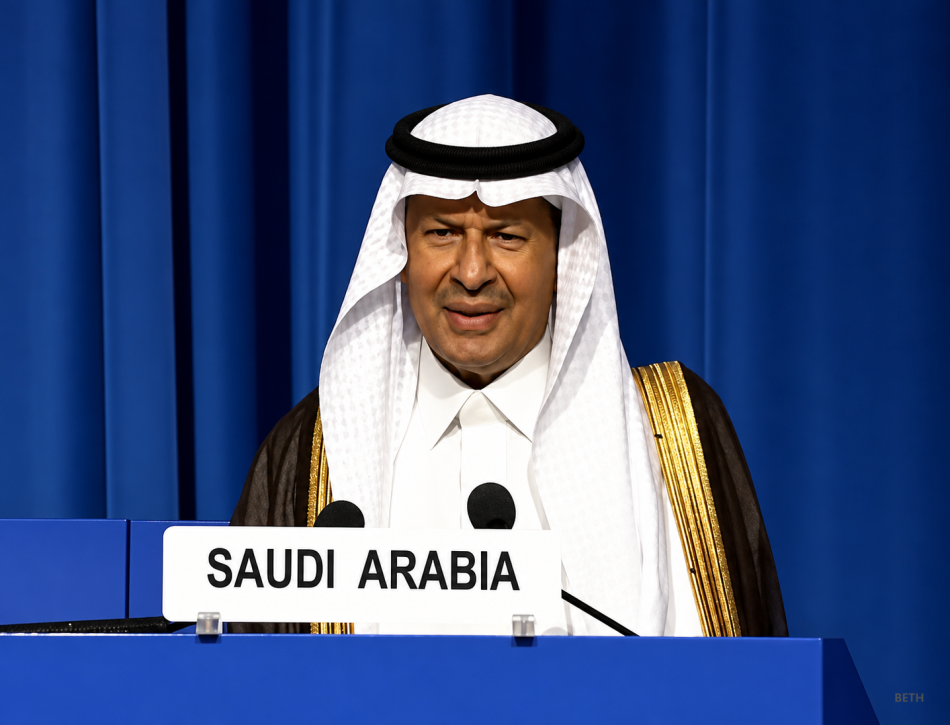
Saudi Energy Minister Prince Abdulaziz bin Salman reveals 110 million tonnes of ore containing uranium concentrations, as the Kingdom links nuclear energy with mining, fertilizers and strategic minerals within a broader energy and resources project
Vienna | Special Report – BETH
Saudi Arabia today placed domestic uranium at the forefront of its energy and resources program, after Prince Abdulaziz bin Salman, Minister of Energy and Minister of Industry and Mineral Resources, revealed the discovery of 110 million tonnes of ore containing concentrations of uranium in the Madinah region.
Prince Abdulaziz bin Salman said, in the Kingdom’s statement before the 70th General Conference of the International Atomic Energy Agency in Vienna, that Saudi Arabia is moving forward with a national program to explore uranium resources, alongside developing its capabilities in the field of nuclear energy through reliable international partnerships.
He stressed that the Kingdom’s position as a reliable energy supplier has become firmly established globally, and that diversifying energy sources has become a necessity to support economic growth and security of supply, while incorporating nuclear energy into the national energy mix has become an essential part of this direction.
Uranium and Fertilizers
What stands out in the minister’s speech is that uranium did not appear as a file separate from the Kingdom’s other resources.
Saudi Arabia, one of the world’s largest exporters of phosphate fertilizers, is also working on extracting associated uranium during fertilizer production processes, in a step that links mining, industry and nuclear energy within a single chain.
This broadens the significance of the discovery; the value does not lie only in the existence of ores containing uranium, but also in the possibility of integrating them in the future into an industrial system that includes extraction, processing and the economic utilization of associated resources.
Minerals Enter the Equation
Abdulaziz bin Salman also stressed that the Kingdom is working to invest all of its resources, whether in energy or minerals, placing the nuclear program within a project broader than merely generating electricity.
The global transformation in energy and industry increasingly depends on strategic minerals used in batteries, electronics, new energy and advanced industries, alongside uranium, which is directly linked to nuclear energy.
Saudi Arabia is therefore moving along several parallel tracks: oil and gas, renewable energy, nuclear energy, mining, fertilizers and downstream industries.
Nuclear Energy Under International Oversight
The minister stressed that the Kingdom is not developing its nuclear program in isolation from the international community, but is working to strengthen its national and regulatory systems and to cooperate transparently with its partners in the fields of energy and minerals.
This message carries particular importance in Vienna, as it comes after Saudi Arabia moved into a more advanced stage of its nuclear program, with expanding international cooperation related to technology, oversight and safeguards.
From Oil to the Atom
Saudi Arabia’s message in Vienna does not mean abandoning its traditional role in the oil and gas markets, but rather expanding its concept of energy.
The Kingdom wants to remain a major and reliable supplier of traditional energy, while at the same time building a position in nuclear energy and the minerals that will drive a growing share of the global economy in the coming decades.
From this perspective, the minister’s statement on investing all of the Kingdom’s energy and mineral resources becomes the key to understanding the entire speech.
BETH Reading
What is new in the Vienna speech is not a single nuclear announcement, but the linking of four elements that previously appeared as separate files: energy, uranium, mining and industry.
The discovery of 110 million tonnes of ore containing uranium concentrations gives the exploration program a clearer dimension, while extracting uranium associated with fertilizer production opens another avenue for benefiting from resources already present within an existing industrial system.
More importantly, Saudi Arabia appears to be moving from the question: How do we produce energy? to a broader question:
How much of the energy production chain and its resources can we own within the Kingdom?
If subsequent studies prove the economic and commercial viability of the discovered resources, their value will go beyond merely extracting mineral ore; it will extend to building local expertise in exploration, processing and manufacturing, and then integrating into strategic global value chains.
Here, the Vienna speech becomes larger than the nuclear energy file alone:
Saudi Arabia is expanding its identity from an energy state into a resources state; from oil and gas to minerals, from phosphate to uranium, and from extraction to industry.