



Day 185: Trump Moves Closer to the Mountain
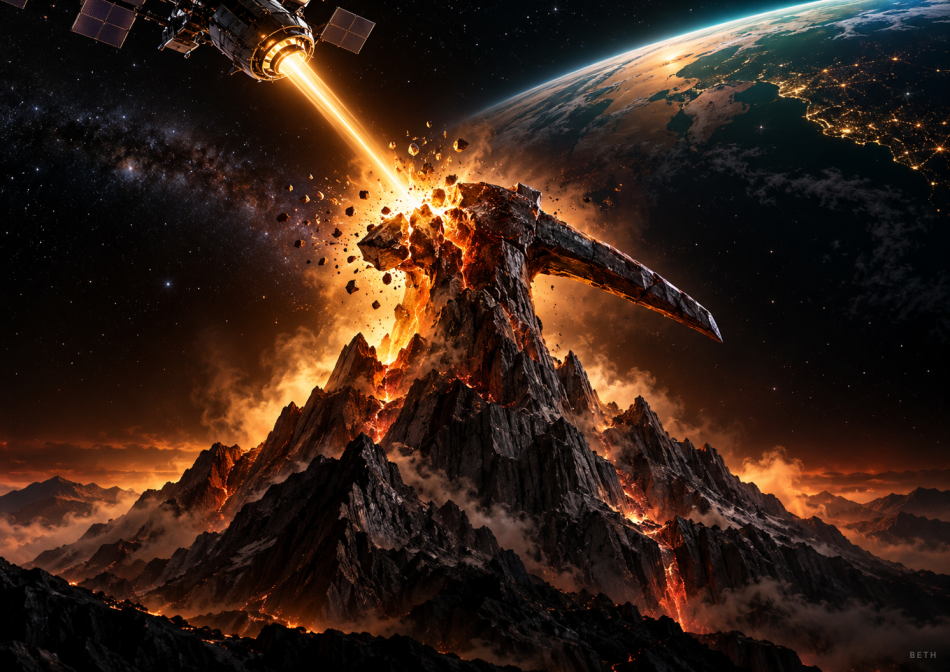
Trump puts one of Iran’s most heavily fortified nuclear sites under threat, as Washington widens its financial squeeze and traffic through Hormuz remains severely depressed
September 5, 2026
Prepared and analyzed by | Strategic Media Department – BETH Agency
The U.S.-Iran war entered its 185th day as President Donald Trump brought the nuclear file back to the forefront, saying the United States could soon strike “Pickaxe Mountain” near the Natanz facility.
The site contains deeply buried and heavily fortified tunnel complexes. Threatening it signals that Washington is no longer focused only on Iran’s military capabilities around the Strait of Hormuz, but is once again pointing directly at what remains of Iran’s underground nuclear infrastructure.
The Nuclear File Returns
Trump’s threat comes as the United States, Britain, France and Germany move inside the International Atomic Energy Agency to push its Board of Governors toward referring Iran’s case to the UN Security Council.
The move follows Iran’s continued restrictions on inspectors’ access to damaged nuclear sites and the agency’s inability to verify Iran’s enriched uranium stockpile, including material previously enriched to 60%.
Washington is therefore advancing on two parallel tracks: military pressure on what remains underground, and international pressure on what remains of the program at the diplomatic table.
The Squeeze Reaches the Banks
On the economic front, the U.S. Treasury imposed sanctions on Turkey’s Golden Global Bank and two affiliated companies, accusing them of helping move Iran-linked funds and convert oil revenues into cash and gold.
The step carries added significance because it targets an institution in a NATO member state, suggesting that Washington is expanding its pursuit of Iranian financial networks even inside allied economies.
The economic pressure is increasingly visible. Reuters data indicate that sanctions and the blockade have sharply reduced Iranian oil exports, putting direct pressure on foreign-currency revenues and the domestic economy.
Hormuz Remains Nearly Still
In the Strait of Hormuz, traffic remains far below normal levels.
Kpler data recorded only four commodity vessels passing through on Thursday, compared with a 10-day average of about 15, while before the war the strait handled roughly 125 commercial vessels per day.
The figures do not include ships crossing with tracking systems switched off, but they still show that the world’s most important energy corridor has yet to return to anything resembling normal activity.
Three Rings of Pressure
On Day 185, the U.S. strategy appears increasingly clear:
The mountain pressures the nuclear program, the banks pressure the money, and the fleet pressures the oil.
The American question is no longer:
Where do we strike Iran?
It has become:
What does Iran still have that can be denied to it?
If Trump’s threat against “Pickaxe Mountain” turns into an actual strike, the war will enter a new phase. The target would no longer be a missile platform or a Revolutionary Guard base, but one of the last heavily fortified symbols of what remains of Iran’s nuclear program.
Trump is moving closer to the mountain — and with it, closer to a decision that could define the next phase of the war.
Strikes Reach the Tankers
The United States expanded its response to Iran today by targeting three Iranian oil tankers after a missile attack on two U.S. warships in the region.
Washington said one tanker was destroyed and two others were put out of service, while Iranian reports said another tanker was hit near Kharg Island, Iran’s most important oil export hub.
Comment:
The shift is significant. Washington is no longer pressuring Iranian oil only through sanctions and blockade; it is now striking the means used to transport it.
That raises the direct cost of escalation for Tehran and pushes the war closer to the heart of Iran’s oil economy.