



Riyadh Builds Self-Healing Networks
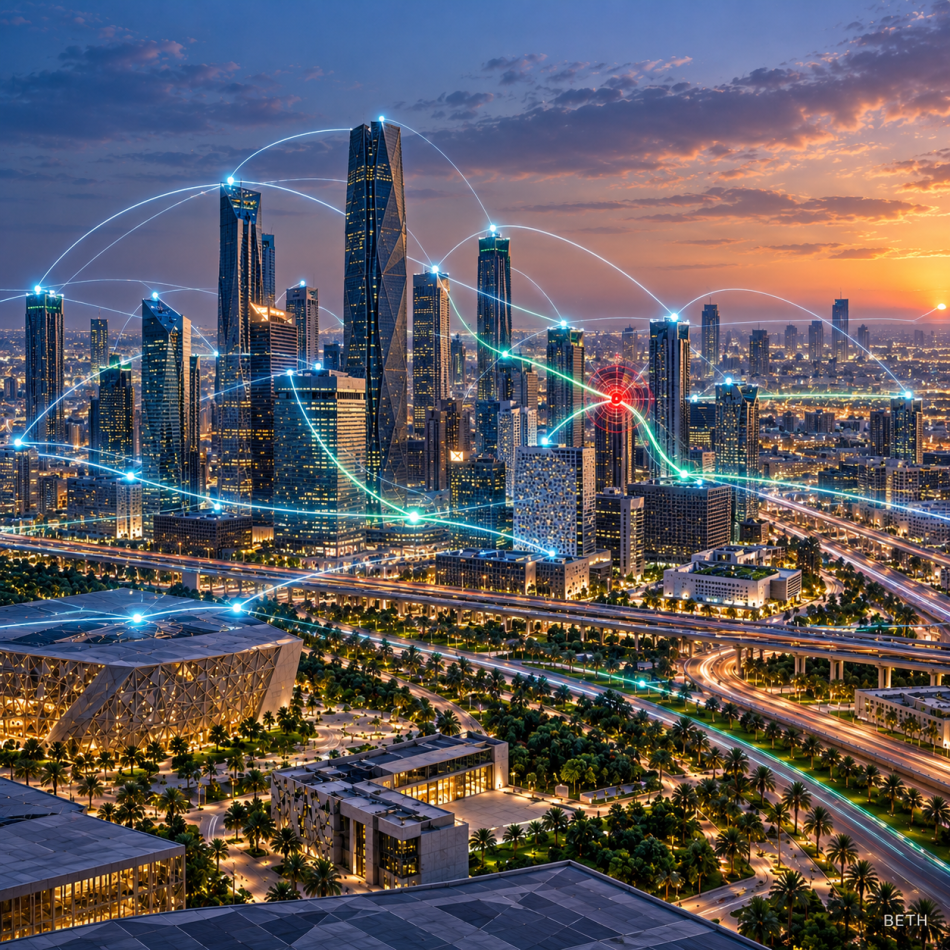
Nokia’s first research and development center in the Kingdom is developing AI-powered software that enables telecom networks to configure themselves, detect and resolve faults, optimize performance, and reduce energy consumption
Prepared and analyzed by | Strategic Media Department – BETH Agency
In traditional networks, engineers wait for a fault to occur, then search for it and fix it.
With the new generation of networks, the idea is different:
The network knows there is a problem before the user does.
That is the core idea behind Nokia’s new research and development center in Riyadh, the company’s first in the Kingdom, dedicated to developing AI-powered software for greater automation and autonomy in telecom network operations.
A Network That Watches Itself
According to Nokia, teams at the center will develop software that allows networks to self-configure, detect and resolve faults, optimize performance, and reduce energy consumption, rather than relying entirely on human intervention at every step.
The work will include service management and orchestration technologies, self-organizing networks, automation and energy-efficiency applications, as well as exploration of AI-native 6G technologies.
Why Riyadh?
The most important part of the announcement is not simply that a global company has opened a center in the Kingdom.
It is that what will be developed there is not intended for the Saudi market alone.
Nokia says the software created in Riyadh will serve customers both inside the Kingdom and abroad, as part of a broader effort to produce “Made in Saudi Arabia” innovations for global markets.
This changes the significance of the news.
The real shift is not from a slower network to a faster one, but from importing technology to helping create it.
The Economy Behind the Network
As data centers, smart cities, automated factories and connected vehicles expand, the need for networks that can operate almost continuously becomes more critical.
That is why a network’s ability to detect and resolve faults autonomously is not merely a technical issue.
It is an economic one.
A single minute of downtime in a major network can mean thousands of disrupted services and millions of delayed transactions.
A network that can learn from itself can reduce both the duration and the cost of disruption before users even feel the impact.
The Shift
The new center is expected to create research and engineering roles, alongside advanced training and certification programs in artificial intelligence and automation for Saudi talent.
The goal is to build local expertise in one of the most critical layers of the digital economy:
the intelligence that runs connectivity itself.
That may be the clearest way to describe what is happening in Riyadh:
We are no longer waiting for an engineer to fix the network.
We are developing a network that knows when something is wrong...
and begins to heal itself.