



Day 181: War Returns to Hormuz
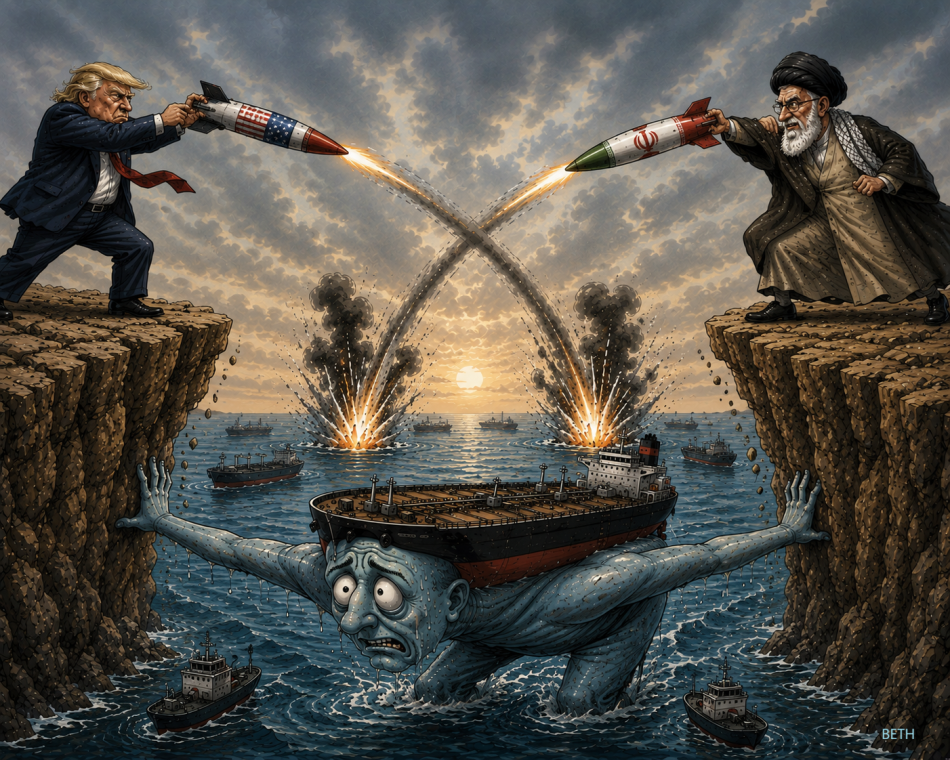
First direct U.S.-Iran military exchange in a month brings fire back to the strait; tanker hit by three projectiles, ship traffic falls to just five vessels, while Brent rises above $91
September 1, 2026
Prepared and analyzed by | Strategic Media Department – BETH Agency
The U.S.-Iran war entered its 181st day with a significant shift: military confrontation has returned to the Strait of Hormuz after weeks in which the conflict had largely moved toward blockade and economic pressure.
The escalation followed a U.S. strike on Iranian platforms on Larak Island that Washington said were preparing to deploy missiles equipped with naval mines. Tehran responded by firing ballistic missiles at two U.S. bases in Jordan, marking the first direct exchange of fire between the two sides since late July.
President Donald Trump said the United States would strike Iran “hard” in response to the attacks, while Tehran described the confrontation as limited but warned of a stronger response if it comes under further attack.
Hormuz Traffic Falls
The most serious development this morning came at sea.
The UK Maritime Trade Operations reported that a tanker was struck by three unidentified projectiles while exiting the strait near Khasab, Oman. Ship-tracking data showed that only five commercial vessels transited Hormuz on Monday, compared with an average of around 14 during the previous ten days. None were liquid-bulk tankers.
The escalation quickly reached energy markets, with Brent crude climbing above $91 a barrel on Tuesday as concerns over shipping and supply returned to oil pricing.
Pressure and War
In Asheville, where G20 finance ministers and central bank governors conclude their meeting today, U.S. Treasury Secretary Scott Bessent reaffirmed continued economic pressure on Iran. He said a turning point could emerge within weeks or months, with the objective of creating conditions that would bring Tehran to the negotiating table.
The picture on Day 181 is becoming clearer:
Washington is not replacing economic warfare with military action; it is using both simultaneously.
Iran, meanwhile, is seeking to demonstrate that pressure against it will not make Hormuz safer. But falling ship traffic and oil’s return above $91 show that the strait has quickly regained its position as the war’s most dangerous pressure point.
Day 181 does not begin with a new war, but with fire returning to a war that never ended.
Will Trump follow through on his threat of another strike? And is the tanker incident the beginning of renewed attacks on shipping, or an isolated event?
U.S. Expands Strikes.. Iran Threatens Retaliation
U.S. forces began, at 12:00 noon Eastern Time, carrying out a wave of strikes against Islamic Revolutionary Guard Corps targets inside Iran, with U.S. Central Command saying the attacks came in response to recent attacks and attempted attacks against commercial vessels in the Strait of Hormuz.
Explosions were reported in Bandar Abbas, Sirik, Qeshm Island, Konarak, and Chabahar along Iran’s southern coast, while five explosions were heard on Qeshm and four more from the direction of the Strait of Hormuz. BETH sources indicate that the strikes hit more than 17 sites, in an operation described by U.S. President Donald Trump as “large-scale.”
In response, Iranian Parliament Speaker Mohammad Bagher Ghalibaf escalated his rhetoric, warning that Tehran would respond militarily if Washington tightened its blockade of Iranian ports. He said that if Iran were prevented from exporting oil through the Gulf, “no one will be able to export oil.”
He also tied the reopening of the strait to the United States fulfilling its commitments under the June memorandum of understanding, warning that Iran would force Washington to comply “through the language of force.”
Reading
The confrontation on Day 181 is moving to a more dangerous level: Washington is widening the scope of its targets along Iran’s coast, while Tehran is responding by linking the security of Hormuz and the passage of oil to the outcome of the confrontation itself.
The battle is no longer only over military sites, but over who sets the rules of passage through the strait.