



Riyadh Brings Together the World’s Supply Chains
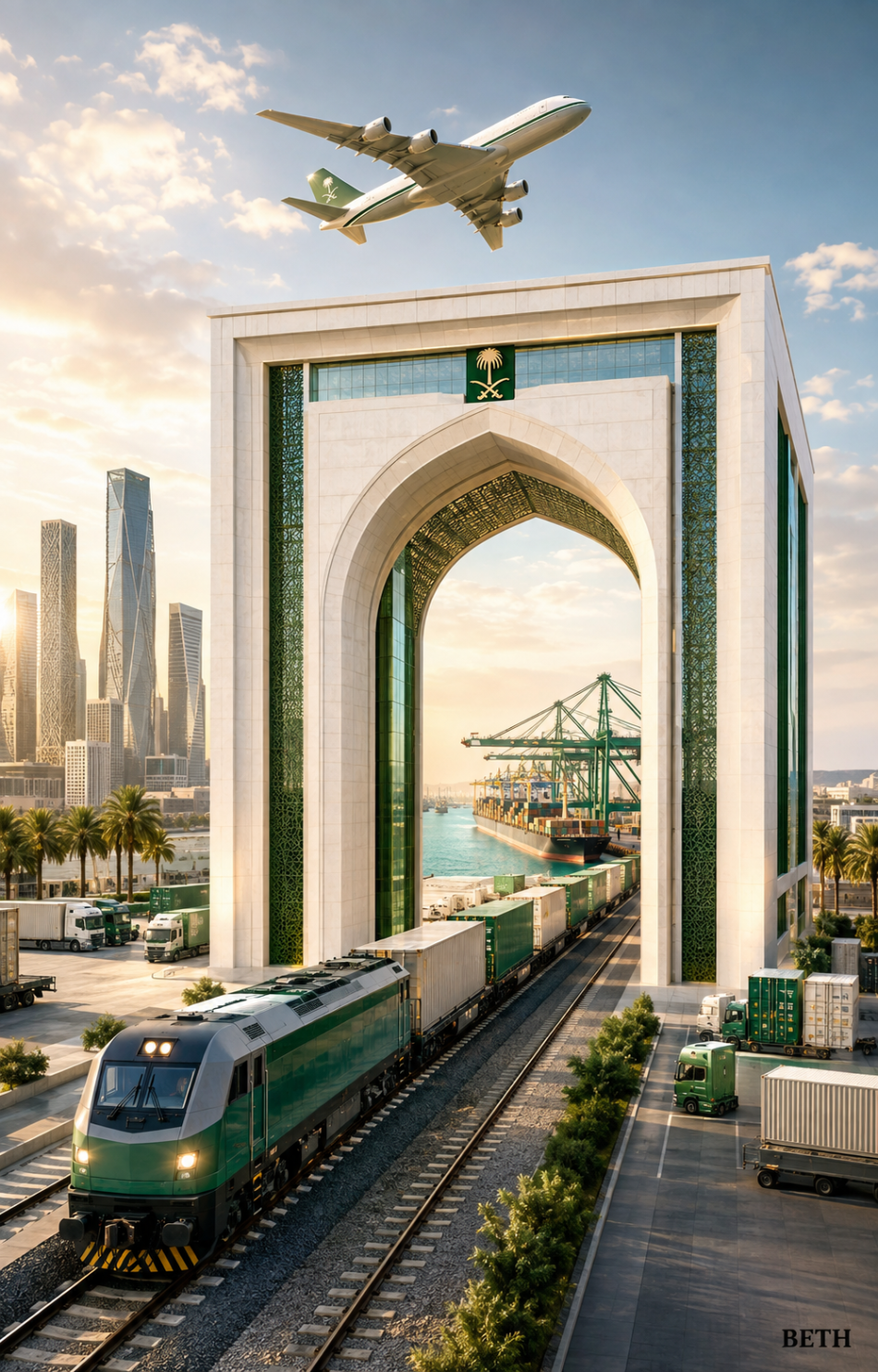
The Global Logistics Forum and the United Nations Global Supply Chain Forum will convene at the same place and time to develop solutions to trade disruptions and strengthen the Kingdom’s position as a global hub connecting continents
Riyadh | BETH
Saudi Arabia’s Ministry of Transport and Logistic Services will organize the second edition of the Global Logistics Forum 2026 alongside the United Nations Global Supply Chain Forum, bringing together industry leaders, decision-makers, investors and experts to discuss the future of transport, logistics and global trade.
Under the patronage of Custodian of the Two Holy Mosques King Salman bin Abdulaziz Al Saud, Riyadh will host both events from November 29 to December 1, 2026, at the King Abdulaziz International Conference Center.
Holding the two forums at the same place and time goes beyond hosting parallel events. Riyadh will bring together the investment and operational track represented by the Global Logistics Forum and the international policy and intergovernmental cooperation track led by the United Nations Conference on Trade and Development, or UNCTAD.
From Operations to Decision-Making
The Global Logistics Forum will focus on innovation in logistics, connections between markets and continents, sustainable supply chains, and attracting investment and partnerships in transport and supporting services.
The United Nations Global Supply Chain Forum, organized by UNCTAD in cooperation with the Saudi Ports Authority, Mawani, will examine international policies designed to make supply chains more resilient, sustainable and inclusive—and strengthen their ability to withstand wars, disasters, pandemics and climate change.
Bringing the two tracks together allows discussions to move from diagnosing disruptions in global trade to seeking implementable solutions. International policymakers will sit alongside port operators, transport and logistics companies, investors and technology providers.
A Time of Disruption
The forums will convene as global trade faces a series of simultaneous pressures, from disrupted navigation in the Strait of Hormuz and the Red Sea and higher shipping and insurance costs to changing energy and trade routes and growing demand for alternative corridors and systems capable of operating through crises.
These disruptions have shown that supply chains can no longer be treated as a commercial matter separate from politics and security. The disruption of a single maritime corridor can raise energy and food prices, delay factories, and alter the direction of vessels and investment across several parts of the world.
Riyadh’s role as host therefore carries significance beyond event organization. The Kingdom lies at the intersection of three continents, overlooks both the Red Sea and the Arabian Gulf, and is developing ports, airports, railways and logistics zones while integrating them into a single network.
SAR 16 Billion
The second edition follows the achievements of the inaugural Global Logistics Forum, which Riyadh hosted in 2024 with more than 13,000 participants, 140 speakers and 80 exhibitors representing over 30 countries.
The first edition witnessed the signing of 67 local and international agreements, memoranda of understanding and partnerships with a total value exceeding SAR 16 billion. These results have raised expectations regarding the scale of investment and agreements the 2026 edition could attract.
The importance of these figures extends beyond the value of the deals. They reflect the forum’s transformation from a platform for dialogue into a marketplace where Saudi projects meet global capital, companies and supply-chain operators.
A Global Logistics Hub
Saudi Arabia’s National Transport and Logistics Strategy seeks to establish the Kingdom as a global hub connecting three continents, place it among the world’s top 10 countries in the Logistics Performance Index and expand its capacity to serve international trade.
The Kingdom is supporting this objective by developing ports, airports, logistics zones, road and railway networks, and expanding the use of technology, automation and artificial intelligence in freight management, storage and cargo movement.
Holding the United Nations forum alongside the Saudi event adds another dimension to this ambition. The Kingdom will not merely showcase its infrastructure and investments; it will enter the arena in which the policies and standards governing the future of global supply chains are shaped.
The Test of Results
The true value of the two forums will be determined by the agreements, projects and international crisis-response mechanisms they produce—not solely by the number of sessions or participants.
Issues expected to receive particular attention include protecting trade routes, insuring vessels and cargo, diversifying corridors, connecting ports with railways, digitalization and data exchange, reducing emissions, and developing joint mechanisms for responding when supply chains are disrupted.
The forums will also test Riyadh’s ability to convert its location between continents into actual trade and investment flows, as well as the willingness of international companies to use the Kingdom as a base for their regional logistics operations.
Conclusion
In November, Riyadh will not merely host a conference discussing the movement of trucks and ships. It will host a global gathering examining how the world economy can continue moving when its traditional routes are disrupted.
Bringing the Global Logistics Forum together with the United Nations Global Supply Chain Forum places both sides of the equation in Riyadh: those who make policy, and those who operate ports, roads and warehouses and move goods.
Saudi Arabia is therefore seeking to become more than a transit point for global supply chains. It aims to become a platform that helps reorganize them when the world is disrupted.