



Riyadh Launches Its Digital District
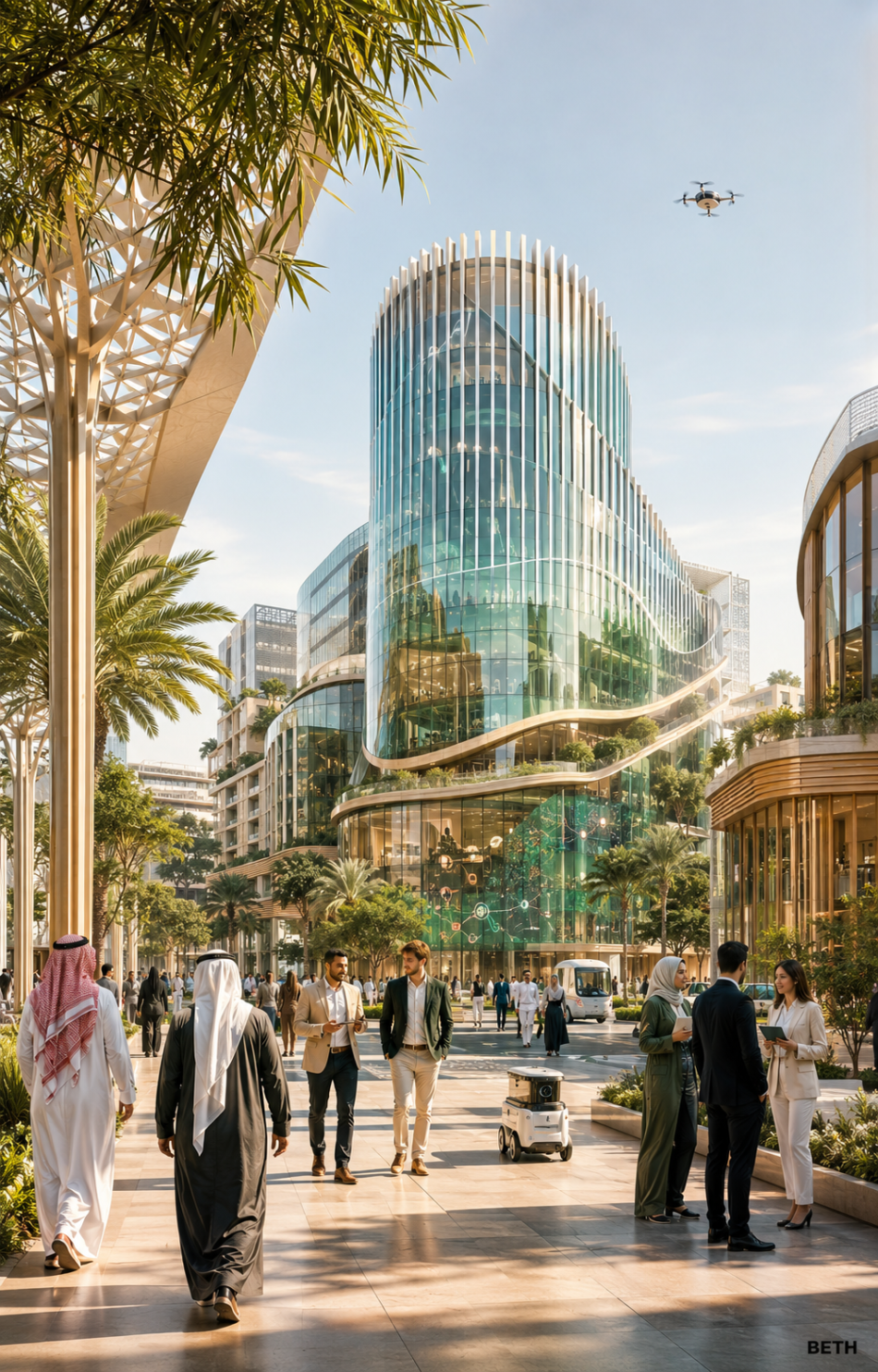
An integrated technology ecosystem aims to place the capital among the world’s top 10 technology hubs and attract companies and talent across six sectors driving the investments of the future
Riyadh | BETH
The Royal Commission for Riyadh City has launched the “Riyadh Digital District” initiative to build an integrated business environment that attracts technology companies, skilled professionals and investment while supporting the capital’s transformation into a global hub for talent, entrepreneurship and digital innovation.
The district’s concept goes beyond allocating a location for technology companies. It seeks to bring together talent, entrepreneurs, investors and digital service providers within a single ecosystem—accelerating company formation, knowledge exchange and the transformation of technological ideas into scalable products and businesses.
The initiative aims to place Riyadh among the world’s top 10 technology hubs, strengthen its ability to compete for international companies and specialized talent, and build a knowledge economy founded on digital leadership and technological innovation.
Six Sectors
The Digital District will focus on attracting companies and talent operating in six principal fields:
- Artificial intelligence and big data.
- Cybersecurity.
- Cloud computing and services.
- The Internet of Things.
- Blockchain technology.
- Robotics and unmanned aerial vehicles.
These six fields account for the largest share of global investment in technology innovation companies. Their applications also intersect with the economy, government services, transportation, industry, energy, healthcare and security.
Bringing them together in one district shows that the initiative is designed to create an interconnected technology network, rather than merely attract separate companies. Artificial intelligence depends on data and cloud computing; the Internet of Things feeds systems with information; cybersecurity protects them; and robotics and drones turn these capabilities into real-world applications.
Competing for Talent
Minister of State, Cabinet Member and Chief Executive Officer of the Royal Commission for Riyadh City Ibrahim Al-Sultan said the initiative would help make Riyadh a global destination for technology companies, talent and digital entrepreneurship, with the goal of placing the city among the world’s top 10 technology hubs.
He added that the initiative supports the capital’s progression toward a global leadership position in future-oriented sectors and advances the objectives of Saudi Vision 2030 by building a diversified and prosperous economy founded on digital leadership and technological innovation.
The announced ambition places Riyadh in direct competition with global technology clusters whose strength depends not only on the presence of companies, but also on their ability to attract talent, provide financing and connect universities and research centers with investors and markets.
More Than Real Estate
Technology districts differ from conventional office developments in that their value is not measured by the size of their built environment, but by the concentration of knowledge, investment and companies within them—and by their ability to generate technologies, patents and highly skilled jobs.
The Digital District’s economic impact will therefore depend on the incentives offered to companies and talent, the availability of advanced computing and communications infrastructure, laboratories and business accelerators, financing for startups, and connections with universities and research and development centers.
The initiative gains additional significance from its location in Riyadh, which is attracting the regional headquarters of international companies and hosts government, financial and investment institutions capable of becoming the first buyers and users of solutions developed within the district.
What Has Not Been Announced
The initial announcement did not provide details about the district’s location or size, the value of investment allocated to it, its development phases, or when construction and operations are expected to begin.
It also did not specify the regulatory and financial incentives that will be offered to companies, the mechanisms for attracting international talent, or the roles of universities, the private sector and investment funds in the project.
Once announced, these details will determine whether the district will operate as a specialized technology zone, an economic zone with independent regulations and incentives, or an integrated urban development combining business, housing, education, research and development.
Conclusion
Riyadh is launching the Digital District at a time when competition between cities is no longer limited to corporate headquarters and skyscrapers, but extends to the talent, data and technologies shaping the next economy.
If the initiative succeeds in bringing companies, talent, financing and scientific research together within an integrated ecosystem, the district will not merely be a place where Riyadh hosts the digital economy—it will be where the capital seeks to create part of it and export it to the world.