



Custodian of the Two Holy Mosques Chairs Cabinet Session in Jeddah
Cabinet commends the outcomes of the Crown Prince’s visit to France, the launch of the Strategic Partnership Council, and the announcement of 21 agreements and memoranda of understanding
Cabinet stresses that the Strait of Hormuz and Bab Al-Mandab must remain open and secure, and approves national policies on intellectual property and emergency-response safety
Registration of property transfers involving white land and vacant properties linked to payment of outstanding fees
Jeddah | August 25, 2026
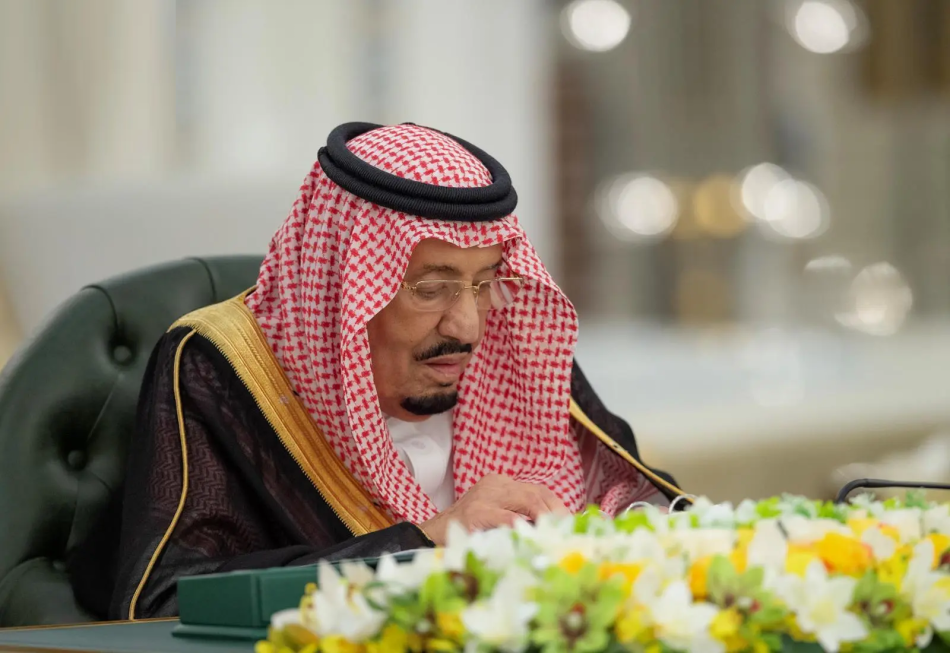
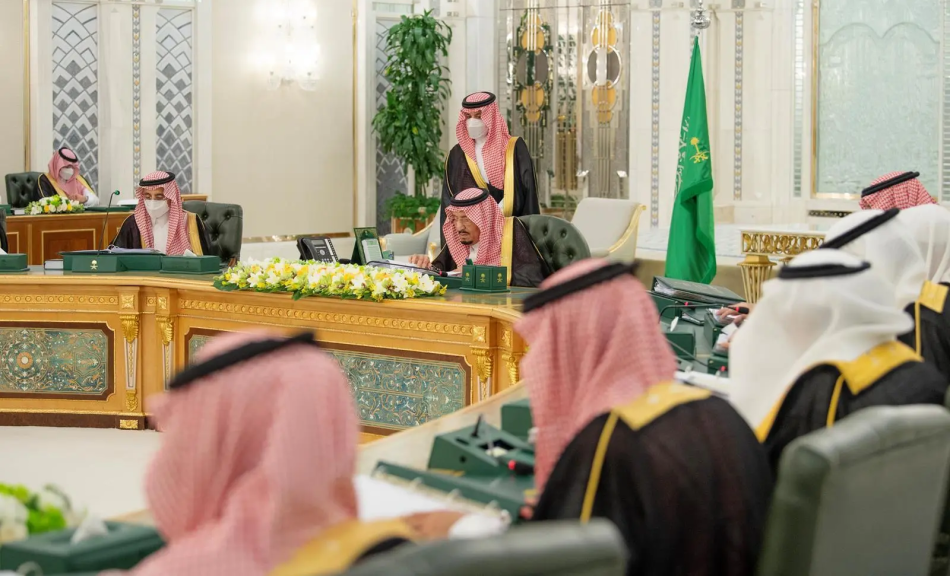
The Custodian of the Two Holy Mosques, King Salman bin Abdulaziz Al Saud, chaired the Cabinet session held in Jeddah on Tuesday.
The session focused on the outcomes of the state visit made by His Royal Highness Prince Mohammed bin Salman bin Abdulaziz, Crown Prince and Prime Minister, to the French Republic, as well as regional developments, maritime security, and a number of national decisions and policies.
Visit to France
The Cabinet commended the Crown Prince’s visit to France and the confirmation provided by his official talks with President Emmanuel Macron of the strength of the historic relations between the two countries and their shared desire to deepen strategic cooperation across various fields.
The Cabinet highlighted the continuation of Saudi-French coordination and consultation according to a shared vision based on safeguarding state sovereignty, respecting international law, prioritizing political and diplomatic solutions to conflicts, and confronting security threats.
It also welcomed the outcomes of the inaugural meeting of the Saudi-French Strategic Partnership Council, co-chaired by the Crown Prince and the French president, including the launch of new initiatives and the signing of agreements and memoranda of understanding in defense, health, artificial intelligence, emerging technologies, and entertainment.
The Cabinet underscored the significance of the announcement of 21 agreements and memoranda of understanding during the investment roundtable. These are expected to advance the economic partnership between the two countries and open new horizons for cooperation and joint investment, supported by the extensive opportunities offered by Saudi Vision 2030.
International Engagements
The Cabinet reviewed the talks held over recent days between Saudi Arabia and several brotherly and friendly countries. These included two messages received by the Custodian of the Two Holy Mosques and the Crown Prince from UAE President Sheikh Mohammed bin Zayed Al Nahyan and British Prime Minister Andy Burnham.
The Cabinet also commended the outcomes of the third Strategic Dialogue meeting between the foreign ministers of Saudi Arabia and Japan. The meeting reaffirmed the two countries’ commitment to further developing their longstanding relations and benefiting from economic opportunities in investment, energy, resources, supply chains, technology, and the exchange of expertise and capabilities.
Hormuz and Bab Al-Mandab
The Cabinet reviewed regional and international developments and the Kingdom’s continuing efforts to reduce escalation, prevent renewed tensions and conflicts, support comprehensive and sustainable diplomatic solutions, and protect freedom of maritime navigation.
It stressed the need for the Strait of Hormuz, Bab Al-Mandab, and all other vital waterways to remain open, secure, and free from threats.
This position is consistent with the Saudi-French joint statement, which called for restoring navigation through the Strait of Hormuz to normal conditions, ensuring the regular movement of maritime shipping, and preventing the imposition of fees or restrictions on transit.
133 Countries
The Cabinet praised the success of the 46th King Abdulaziz International Competition for the Memorization, Recitation, and Interpretation of the Holy Qur’an, which attracted male and female contestants from 133 countries.
It stated that the extensive international participation and distinguished organization reflected the Kingdom’s leading role in caring for the Holy Qur’an and serving Islam and Muslims.
Esports
The Cabinet described the achievements and successes of the Esports World Cup—in its first and second editions in Riyadh and its third edition in Paris—as further confirmation of the Kingdom’s continuing support for this growing sector.
It highlighted the role of sport and creative fields in promoting communication and closer relations among peoples and societies through excellence, competition, and innovation.
Intellectual Property
The Cabinet approved the National Intellectual Property Policy, providing a unified national framework for protecting intellectual property rights, supporting innovation and creativity, and strengthening an environment conducive to investment and the knowledge economy.
It also approved the National Policy for Enhancing Emergency-Response Safety in Public Places and Workplaces, supporting greater preparedness for emergencies and reducing their consequences.
White Land
The Cabinet decided that no real estate transaction transferring ownership of land subject to the White Land and Vacant Properties Fees Law may be registered until payment of all outstanding fees has been verified.
The decision links the transfer of ownership to fulfillment of statutory financial obligations and prevents a property from being transferred to a new owner while previous fees remain unsettled.
Other Decisions
The Cabinet adopted several other decisions, including:
- Authorizing the Minister of Transport and Logistics Services to sign the draft United Nations Convention on Negotiable Cargo Documents.
- Authorizing the Minister of Health to hold discussions with the Portuguese side on cooperation in the health sector.
- Authorizing the Minister of Education to hold discussions on a memorandum of understanding concerning cooperation in e-learning.
- Authorizing the Minister of Human Resources and Social Development to discuss an agreement with the United Nations Conference on Trade and Development concerning technical assistance to build the capacities of small and medium-sized enterprises and startups under the Empretec program.
- Approving two memoranda of understanding between the Saudi General Court of Audit and the audit institutions of Cyprus and The Gambia on cooperation in accounting, auditing, and professional work.
- Approving the Unified Law for Volunteer Work in the Gulf Cooperation Council states.
- Approving the final accounts of Umm Al-Qura University, Qassim University, and Jouf University for previous fiscal years.
- Issuing directives concerning annual reports of the Madinah Region Development Authority, the Small and Medium Enterprises General Authority, and the National Center for Water Efficiency and Conservation.
The Cabinet also approved several promotions to the 15th and 14th ranks.
Commentary
The Cabinet session reveals a clear connection between Saudi Arabia’s international engagement and its domestic institutional development.
The outcomes of the visit to France moved from political talks to a partnership council, agreements, and investments, while the domestic decisions strengthened the environment for innovation, investment, safety, and regulatory compliance in the property sector.
Regionally, the Kingdom maintained its consistent position: reducing escalation and supporting diplomatic solutions, while firmly asserting that freedom of navigation through the Strait of Hormuz and Bab Al-Mandab is not a bargaining tool, but a necessity for regional security and the global economy.