


Culture Headquarters Completed in Diriyah
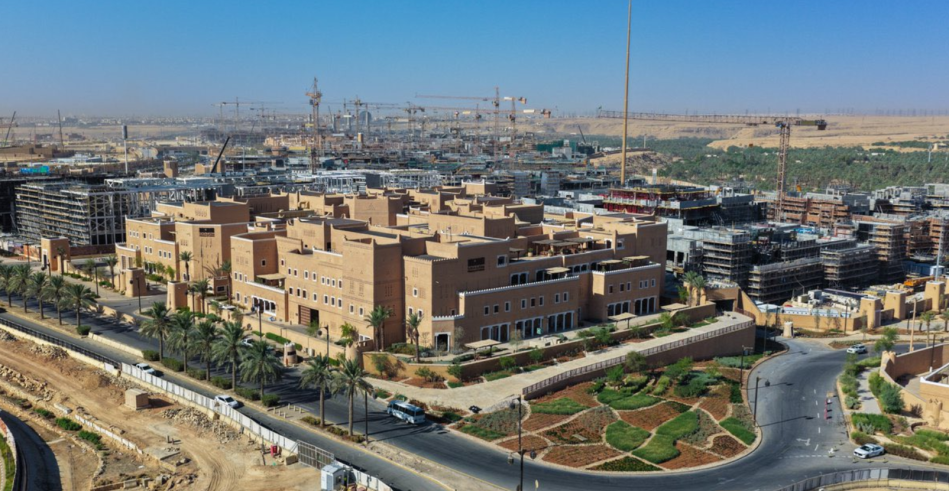
Diriyah Company completes the Ministry of Culture’s headquarters across more than 33,000 square meters; the Najdi-inspired building places the cultural institution at the heart of an urban masterplan combining work, housing, commerce and the arts
Riyadh | BETH
Diriyah Company has announced the completion of the Ministry of Culture’s headquarters in Diriyah, covering more than 33,000 square meters within an integrated urban masterplan that includes cultural, residential, commercial, office and hospitality destinations.
The project represents more than the completion of a new administrative building. It establishes the Ministry of Culture within the location most closely associated with the origins of the Saudi state and its historical memory, near the UNESCO-listed At-Turaif Historic District.
The Ministry has not yet announced when all its departments and employees will relocate to the headquarters or when it will become fully operational. The announcement therefore concerns the completion of construction and fit-out works, ahead of the handover and operational phases.
Architecture from Its Setting
The headquarters was designed around the principles of Najdi architecture, reinterpreted within a contemporary institutional building that balances historical identity with the requirements of modern government work.
Its connection to Diriyah is not limited to ornamentation or color. It appears in the building’s volumes, proportions, materials, façades, use of shade and relationship with the surrounding urban fabric, preventing it from appearing as an administrative structure detached from its setting.
The project covered design development, construction and detailed engineering, with Building Information Modeling used throughout its stages to coordinate architectural, structural and operational systems and reduce potential conflicts before implementation.
According to published project information, the building comprises two basement levels and three upper floors, providing the administrative, operational and service spaces required by the Ministry.
Building Sustainability
The Ministry of Culture’s headquarters has achieved LEED Gold certification after sustainability standards were integrated into its design and construction.
The certification assesses energy and water efficiency, indoor environmental quality, material selection, waste management and the building’s environmental impact. This means its architectural identity was developed alongside long-term operational efficiency.
Sustainability carries particular importance in government buildings because its value does not appear only in the design at inauguration, but in reducing resource consumption and operating costs while improving the working environment throughout the building’s lifespan.
A Ministry Within the City
The headquarters was not developed as an isolated government complex, but within a masterplan that integrates offices with residences, hotels, shops, restaurants, cultural institutions and public spaces.
This model seeks to create continuous activity throughout the day, rather than an administrative district that operates during working hours and becomes empty afterward.
Diriyah’s masterplan includes spaces for work, housing, shopping and hospitality, alongside the Royal Diriyah Opera House, the Saudi Arabia Museum of Contemporary Art, and other cultural and entertainment facilities. This makes the Ministry part of a living cultural environment, rather than an administrative address detached from it.
The presence of Ministry employees, visitors, specialists and service users will also create a permanent daily population supporting shops, restaurants, transportation and other services within the development, helping transform Diriyah from a destination to visit into a city for living and working.
Culture Beside History
Selecting Diriyah as the Ministry’s headquarters carries an institutional meaning extending beyond geography.
The Ministry responsible for heritage, museums, visual arts, architecture, design, literature, music and film is relocating to a place that already embodies many of the subjects under its mandate.
This proximity places a greater responsibility on the institution: Diriyah should not remain merely an attractive backdrop for the building, but become an environment from which the Ministry develops policies, programs and expertise that protect heritage and connect it with contemporary life.
The location does not merely host the Ministry of Culture; it places the institution every day before the heritage it is responsible for protecting and developing.
BETH Commentary
The project’s value lies in the relationship between its function and location.
A modern headquarters for the Ministry of Culture could have been built in any administrative district. Locating it in Diriyah, however, makes architecture part of the institution’s message and turns the choice of location itself into a cultural statement: the Ministry will operate from within the nation’s historical memory, rather than administer it from a distance.
The project also reflects a shift in Saudi urban planning. A government headquarters no longer needs to be merely a building surrounded by roads and parking spaces; it can become an active element within a mixed-use district, supporting economic and cultural activity while improving the quality of the surrounding environment.
The test after operations begin will be the headquarters’ ability to engage with its surroundings, host dialogue, exhibitions and programs, and connect Ministry employees, creatives, researchers and the public with the cultural institutions around it.
Construction of the Ministry of Culture’s headquarters in Diriyah is complete. Its deeper meaning, however, is that culture will no longer visit the historic setting merely to hold an event; it has become one of its permanent institutions.