



日・サウジ、第3回戦略対話 | Saudi–Japan Third Strategic Dialogue
日本語
第3回日・サウジ戦略対話は、両国関係を「石油と技術」の交換から、エネルギー安全保障、海上交通路、投資、防衛、宇宙、外交を結ぶ包括的なパートナーシップへと進展させた。日本にとってサウジアラビアは、信頼できるエネルギー供給国であると同時に、米国とイランの対話を支える重要な政治的パートナーでもある。
English
The third Saudi–Japan Strategic Dialogue advanced bilateral ties beyond the traditional exchange of oil and technology toward an integrated partnership encompassing energy security, maritime routes, investment, defense, space and diplomacy. For Japan, Saudi Arabia is both a reliable energy supplier and a key political partner in supporting dialogue between the United States and Iran.
詳細 | Details
日本語
両国外相はリヤドで、海上交通の安全、エネルギー、投資、防衛、テクノロジーについて協議。日本政府はサウジアラビアを、米国とイランの緊張緩和を支える重要なパートナーと位置づける
リヤド | BETH
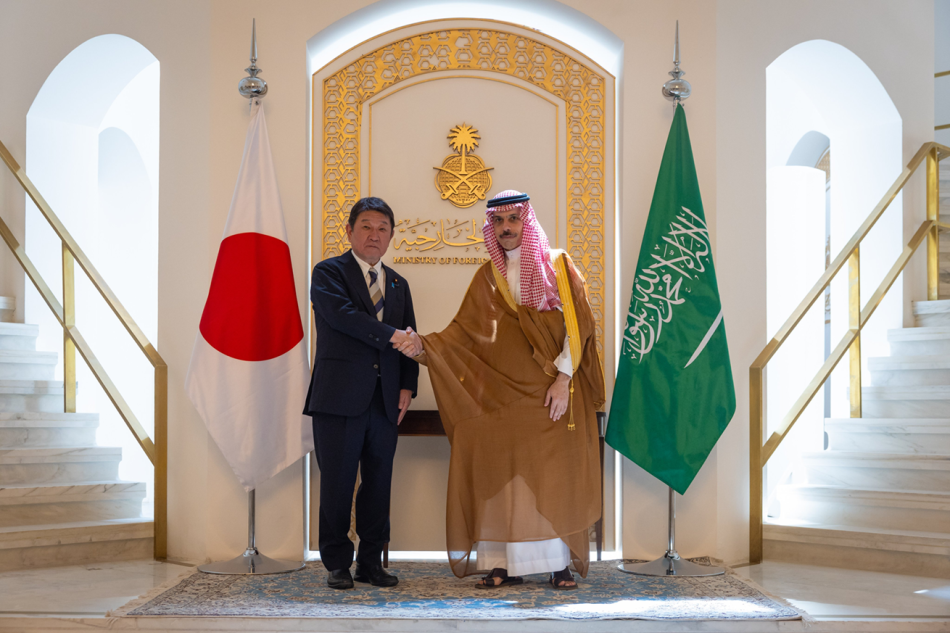
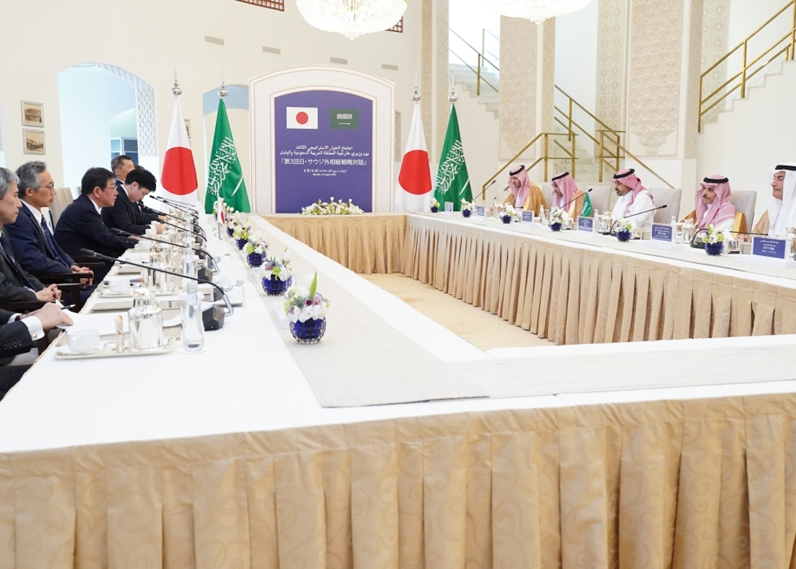
サウジアラビアのファイサル・ビン・ファルハーン外相は2026年8月19日水曜日、リヤドの外務省本部で、訪問中の茂木敏充外相と第3回日・サウジアラビア外相級戦略対話を開催した。
会合では、二国間関係の発展に加え、投資、エネルギー、資源、サプライチェーン、防衛、テクノロジー分野における協力の拡大、専門知識の共有、能力構築などについて協議した。
ファイサル外相は、サウジアラビアが、信頼と相互尊重に基づき長年にわたって築かれてきた日本との関係を重視していると強調した。
また、日本はサウジアラビアにとって重要な経済パートナーであり、両国が持つ機会を活用することで、より広範かつ先進的な分野へ協力を拡大できるとの考えを示した。
エネルギーと海上交通路
ホルムズ海峡とバブ・エル・マンデブ海峡の不安定化により、石油タンカーや国際的なサプライチェーンに対する危険が高まる中、海上安全保障は戦略対話の最重要議題の一つとなった。
ファイサル外相は、国際法に基づく航行の自由を保障し、ホルムズ海峡、バブ・エル・マンデブ海峡をはじめとするすべての国際海上交通路を、開かれ、安全で、脅威のない状態に保つ必要性を強調した。
このメッセージは、エネルギー供給を中東に大きく依存する日本にとって特別な重要性を持つ。日本政府は、海上交通路の安全を単なる地域問題ではなく、自国の経済安全保障に直結する課題と捉えている。
ファイサル外相は、サウジアラビアが今後もエネルギーを含む幅広い分野で日本の信頼できるパートナーであり続けると表明。経済の強靱性とエネルギー市場、世界貿易の安定に寄与する日本の取り組みを評価した。
石油からテクノロジーへ
日・サウジ関係は60年以上に及ぶが、もはや産油国と工業国という従来の関係だけに限定されていない。
両国の協力は、クリーンエネルギー、水素、投資、製造業、テクノロジー、宇宙、サプライチェーンに加え、防衛や能力構築へと拡大している。
近年、両国はエネルギーや宇宙の平和利用に関する覚書や協力協定を締結してきた。これらには宇宙科学・技術、能力構築、専門知識の共有などが含まれる。ただし、すべてが今回の戦略対話で締結されたものではなく、今後の協力拡大を支える既存の基盤である。
両国間の貿易額は2016年から2024年末までに38%増加し、1,380億サウジ・リヤル、約368億ドルに達した。サウジアラビア政府の過去の公式発表によると、日本はエネルギー、石油、ガス分野で同国第3位の貿易パートナーとなった。
日本メディアが見た訪問
日本語による報道は、茂木外相の訪問を、「石油と技術」の交換を中心とした従来型の関係から、クリーンエネルギー、投資、産業、宇宙、人工知能、インフラを含む、より包括的なパートナーシップへの移行として伝えた。
アラブニュース・ジャパンは、両国の貿易額が約410億ドルに達し、日本によるサウジアラビアへの直接投資額が490億リヤルに上ると報じた。
また、「日・サウジ・ビジョン2030」の開始時に約65社だったサウジアラビア進出日本企業が約100社に増え、2024年10月時点で日本企業の拠点・施設は118カ所に達したと伝えた。
しかし、協力分野の多様化にもかかわらず、両国関係は依然としてエネルギーに強く結びついている。
2025年の日本によるサウジアラビアからの輸入額のうち、石油と鉱物製品が約97.1%を占めた。一方、日本からサウジアラビアへの輸出では、自動車と輸送機器が約73.6%を占めた。
報道はさらに、2026年1月の日・サウジ投資フォーラムで、金融、宇宙、農業技術などに関する12件の協力覚書が締結されたことにも注目した。
水素、アンモニア、低炭素燃料、炭素回収、人工知能、自動運転技術などでも協力が進められている。これらは今回の会合で新たに締結されたものではなく、戦略対話が実施と拡大を後押しする既存の合意である。
日本外務省は、今回の具体的な成果として、税関相互支援協定が大筋合意に達したことや、2026年11月にリヤドと成田を結ぶ直行便が就航する予定であることを挙げた。
日本側はさらに、「パワー・アジア」の下でアジア地域の石油備蓄強化を支援する方針を示したほか、サウジアラビアで進められている海水淡水化、電力、鉄道インフラ事業への積極的な参加を表明した。
また、イランとの戦争を受け、サウジアラビアと湾岸諸国の経済・エネルギー分野における強靱性を支援する包括的な協力計画を策定していることも明らかにした。
したがって、日本側はリヤド会合を個別の協定を締結する機会というより、エネルギー、テクノロジー、宇宙、税関、交通を海上安全保障と結びつける枠組みとして捉えている。これは、個々のプロジェクトを相互に連携する利益体系へと発展させる動きである。
日本はサウジアラビアの石油に依存している一方、サウジアラビアは日本との協力を、より多様で付加価値の高い分野へ広げている。
かつての関係が油井と工場を結ぶものだったとすれば、新たな関係はエネルギーをテクノロジー、投資、安全保障、外交へと結びつけようとしている。
日本の外交戦略におけるリヤド
茂木外相の発言には、今回の戦略対話が持つ最も重要な政治的意味が表れている。
日本側は、米国とイランの対話促進に向けた取り組みで重要な役割を果たすサウジアラビアが、日本外交において特別な重要性を持つと指摘した。
さらに、イスラム世界やグローバル・サウスにおけるサウジアラビアの地域的、国際的な影響力が高まっていることにも言及した。
この評価は、日本にとってのサウジアラビアの位置づけが、エネルギー供給を保証する国から、エネルギーの輸送路を守り、その安定を脅かす紛争の緩和に貢献できる国へと変化していることを示す。
日本がサウジアラビアを必要とする理由は二つある。信頼できるエネルギー供給国であること、そしてワシントン、テヘラン、地域諸国のすべてと対話できる政治的パートナーであることだ。
BETH分析
第3回戦略対話の重要性は、協力分野の多さだけではなく、両国関係そのものの性質が変わりつつある点にある。
従来の関係は、サウジアラビアの石油と日本の技術・産業を結ぶものだった。新たな関係は、エネルギー安全保障、海上交通路の保護、投資、テクノロジー、宇宙、防衛、緊張緩和に向けた政治的連携を一つの枠組みにまとめようとしている。
日本がリヤドに求めているのは、石油供給量に関する保証だけではない。その石油が安全に到着するための政治的、海洋安全保障上の能力も求めている。
一方、サウジアラビアは、日本を単なる原油の大市場ではなく、新産業への投資と知識・技術移転に貢献できるパートナーと位置づけている。
日・サウジ戦略対話は、両国間で何を運ぶかだけを議論する段階を越えた。その輸送路をいかに守り、何を新たに生み出し、それらを脅かす政治的緊張をどのように緩和するかを協議する場へと進化している。
English
The two foreign ministers discuss maritime security, energy, investment, defense and technology in Riyadh, as Tokyo views the Kingdom as a partner in reducing tensions between Washington and Tehran
RIYADH | BETH
Saudi Foreign Minister Prince Faisal bin Farhan bin Abdullah and visiting Japanese Foreign Minister Toshimitsu Motegi held the third Saudi–Japan Strategic Dialogue at the Foreign Ministry headquarters in Riyadh on Wednesday, August 19, 2026.
The meeting addressed the development of bilateral relations and the expansion of cooperation in investment, energy, resources, supply chains, defense and technology, in addition to exchanging expertise and building capabilities in support of the two countries’ priorities and shared interests.
Prince Faisal said the Kingdom attaches great importance to its longstanding relationship with Japan, which is founded on mutual trust and respect.
He described Japan as an important economic partner for Saudi Arabia, noting that the opportunities available to both countries could move their relationship into broader and more advanced sectors.
Energy and Maritime Routes
Maritime security was among the dialogue’s leading priorities amid disruptions in the Strait of Hormuz and Bab el-Mandeb and growing risks to oil tankers and international supply chains.
Prince Faisal stressed the importance of protecting freedom of navigation in accordance with international law and ensuring that the Strait of Hormuz, Bab el-Mandeb and all international waterways remain open, secure and free from threats.
The message holds particular importance for Japan, whose economy relies heavily on energy imports from the Middle East. Tokyo therefore views the security of maritime routes not merely as a regional matter, but as a direct component of its economic security.
Prince Faisal affirmed that Saudi Arabia would remain a reliable partner for Japan, including in the energy sector. He also praised Japanese initiatives aimed at strengthening economic resilience and stabilizing energy markets and global trade.
From Oil to Technology
Saudi–Japanese relations extend back more than six decades, but they are no longer confined to the traditional relationship between an oil producer and an industrial importer.
Cooperation is expanding into clean energy, hydrogen, investment, manufacturing, technology, space and supply chains, as well as defense and capability development.
The partnership has recently produced memorandums and agreements covering energy and the peaceful uses of outer space, including space science and technology, capacity building and the exchange of expertise.
These agreements provide a foundation for further cooperation, but they were not all signed during Wednesday’s strategic dialogue.
Trade between the two countries rose by 38 percent from 2016 to the end of 2024, reaching SAR138 billion, or approximately $36.8 billion.
According to previous official Saudi statements, the increase made Japan the Kingdom’s third-largest partner in the energy, petroleum and gas sectors.
The Visit in Japanese Media
Available Japanese-language coverage portrayed Motegi’s visit as a transition from the traditional “oil-for-technology” model toward a broader partnership encompassing clean energy, investment, industry, space, artificial intelligence and infrastructure.
Arab News Japan highlighted bilateral trade of approximately $41 billion and Japanese direct investment in Saudi Arabia amounting to SAR49 billion.
It also reported that the number of Japanese companies investing in the Kingdom had increased from around 65 when the Saudi–Japan Vision 2030 framework was launched to nearly 100. Japanese companies operated 118 offices and facilities in Saudi Arabia as of October 2024.
Despite this diversification, the figures show that the relationship remains deeply connected to energy.
Oil and mineral products accounted for approximately 97.1 percent of Japan’s imports from Saudi Arabia in 2025, while automobiles and transport equipment represented around 73.6 percent of Japanese exports to the Kingdom.
Japanese-language coverage also highlighted 12 memorandums of cooperation signed at the Saudi–Japan Investment Forum in January 2026, covering finance, space and agricultural technology.
Cooperation is also underway in hydrogen, ammonia, low-carbon fuels, carbon capture, artificial intelligence and autonomous-driving technology.
These are existing agreements whose implementation and expansion may be advanced by the current dialogue, rather than new agreements signed during Wednesday’s meeting.
Japan’s Foreign Ministry highlighted several concrete outcomes, most notably an agreement in principle on a bilateral customs mutual-assistance agreement and the planned launch of direct flights between Riyadh and Narita in November.
Japan also proposed cooperation to strengthen Asian oil reserves under its “Power Asia” initiative and expressed its intention to take an active role in Saudi desalination, electricity and railway infrastructure projects.
Tokyo further revealed that it was preparing a comprehensive plan to strengthen economic and energy resilience in Saudi Arabia and the Gulf states following the war with Iran.
Japan therefore viewed the Riyadh meeting less as an occasion for signing separate agreements and more as a framework connecting energy, technology, space, customs and transport with maritime security—transforming a collection of projects into an interconnected system of interests.
Japan relies on Saudi oil, while Saudi Arabia is expanding its cooperation with Japan into more diverse and higher-value sectors.
The old relationship connected an oil well to a factory; the new relationship seeks to connect energy with technology, investment, security and diplomacy.
Riyadh in Japan’s Strategic Thinking
Motegi’s remarks carried the meeting’s most significant political message.
He said Saudi Arabia holds special importance in Japan’s diplomatic engagement because of its central role in efforts to facilitate dialogue between the United States and Iran.
He also cited the Kingdom’s growing regional and international influence, particularly across the Islamic world and the Global South.
This assessment moves Saudi Arabia’s position in Japanese strategic thinking beyond that of a country capable of guaranteeing energy supplies. It presents the Kingdom as a state that can also help protect the routes carrying those supplies and reduce the conflict threatening their continuity.
Tokyo needs Riyadh twice: as a reliable energy supplier and as a political partner capable of communicating with Washington, Tehran and the wider region.
BETH Commentary
The importance of the third Strategic Dialogue lies not only in the expanding list of areas for cooperation, but also in the changing nature of the relationship itself.
The traditional equation linked Saudi oil with Japanese technology and industry. The new equation combines energy security, the protection of maritime routes, investment, technology, space and defense with political coordination aimed at reducing regional tensions.
Japan is no longer seeking assurances from Riyadh solely about the volume of oil supplies. It also seeks political and maritime-security capabilities that can help ensure those supplies reach their destination.
Saudi Arabia, meanwhile, views Japan as a partner capable of transferring knowledge and investing in emerging industries—not merely as a large market for crude oil.
The Saudi–Japan Strategic Dialogue is no longer concerned only with what moves between the two countries. It is now about protecting the route, developing what is produced, and helping ease the political tensions that could disrupt both.