



U.S. Warning: Cyber Intrusions Target Water Systems
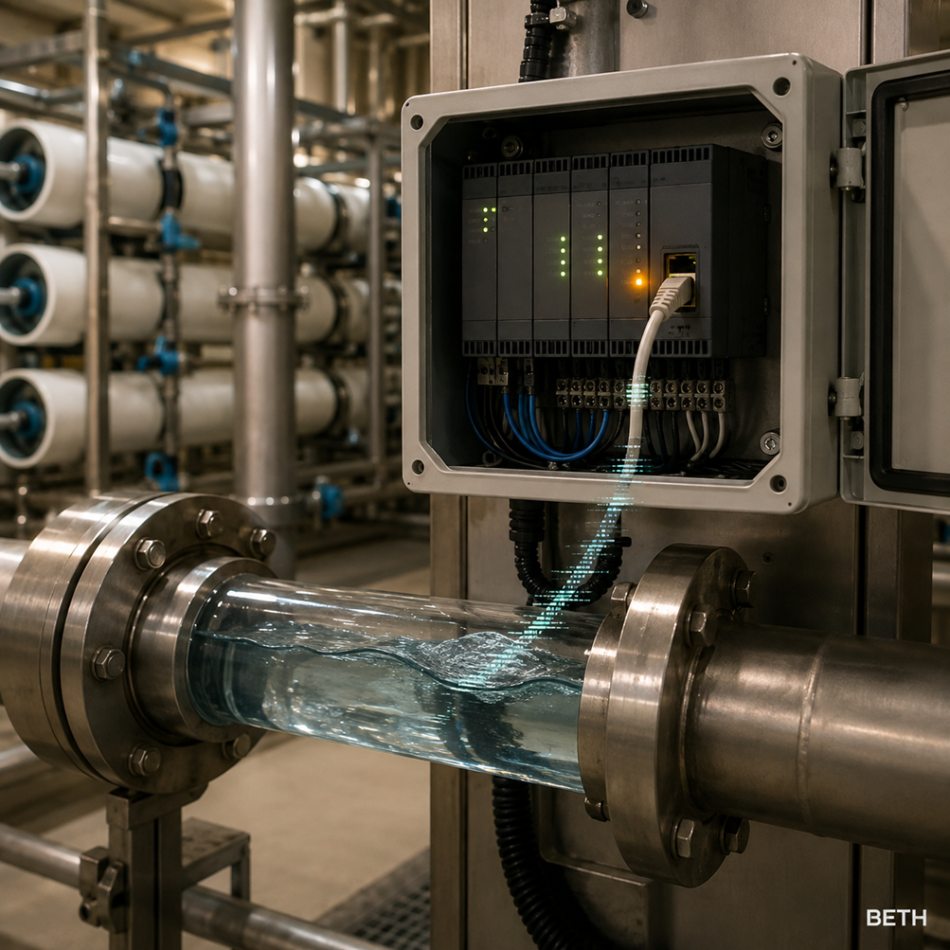
Five U.S. agencies warn of an active threat to Siemens industrial controllers operating water and energy facilities; attackers are using artificial intelligence to accelerate the development of hacking tools
Washington | BETH
Five U.S. agencies have warned of active attempts to breach Siemens S7-series programmable logic controllers used in water, wastewater, energy, manufacturing, chemical, food and agricultural facilities.
The warning was issued by the National Security Agency, the Federal Bureau of Investigation, the Department of Energy, the Environmental Protection Agency, and the Cybersecurity and Infrastructure Security Agency.
The agencies said the attackers are using artificial intelligence to reduce the time and expertise required to develop tools capable of compromising these systems. They warned that a successful breach could disrupt operations, damage equipment, cause safety incidents and produce cascading effects across interconnected facilities.
The Attack Goes Beyond Data
These systems do not handle email or administrative files; they issue commands to pumps, valves, pressure gauges and treatment equipment.
A breach can therefore move from the screen into the physical world: reducing network pressure, stopping pumping operations, disrupting treatment processes or feeding operators readings that do not reflect what is actually happening inside the facility.
The warning followed attacks affecting more than 30 local water systems in Minnesota, in addition to incidents reported in other states.
U.S. agencies have not established that Iran was responsible, although experts suspect that some of the activity may be linked to Iranian groups. The attribution should therefore remain a possibility, not be presented as an established fact.
AI Shortens the Path
The new development is not the attempt to breach industrial facilities, but the use of artificial intelligence to reduce the knowledge and time previously required by an attacker.
AI tools can help identify weaknesses, write portions of malicious code, analyze system architecture and test multiple attack paths more rapidly.
This does not enable anyone to bring down a water plant, but it broadens the pool of potential attackers, increases the number of attempts and shortens the interval between discovering a vulnerability and exploiting it.
Artificial intelligence does not create a professional attacker on its own; but it gives a less experienced attacker a shorter path into the facility.
Why Does It Matter to Saudi Arabia?
There is no information indicating that a Saudi facility has suffered a similar attack, nor is there evidence that the affected systems are used in the Kingdom’s facilities.
The warning nevertheless has direct relevance to a country that relies on an extensive network of desalination, water transmission and storage, energy and industrial infrastructure. Water security is no longer limited to the physical protection of pipes and plants; it also requires protecting the digital commands that operate them.
Saudi Arabia’s National Cybersecurity Authority has issued dedicated cybersecurity controls for operational technology at sensitive industrial facilities, aimed at preventing unauthorized access and avoiding the resulting risks and potentially costly national losses.
The new warning makes reviewing compliance with these controls more urgent, particularly regarding the isolation of operational systems from the internet, the regulation of remote access, the inspection of updates and the ability to maintain safe operations if digital systems fail.
BETH Comment
The incidents reveal a change in the meaning of cybersecurity.
A breach is no longer measured by the number of stolen files, but by what an attacker can stop in daily life. A small controller inside a facility may be less visible than a missile, yet it can produce consequences reaching thousands of homes.
Attributing the attacks to Iran before the investigation is complete could also exaggerate its cyber capabilities. Part of a cyberattack’s effect is psychological: convincing the public that the attacker can reach every valve and pump.
Technical preparedness must therefore be combined with media accuracy: systems should be protected against a real threat without granting an unproven perpetrator a free propaganda victory.
The war that once searched for a ship or a military base has begun searching for a small device behind a plant wall; once it gains control of that device, it can disrupt the water supply without firing a missile.