


Qiddiya Builds World Cup Stadium
The Public Investment Fund’s annual report reveals that Prince Mohammed bin Salman Stadium has entered its main construction phase following the award of a SAR 15 billion contract; the project targets 7.6 million annual visits and extends beyond the function of a stadium to become a year-round sports and entertainment destination
Riyadh | BETH
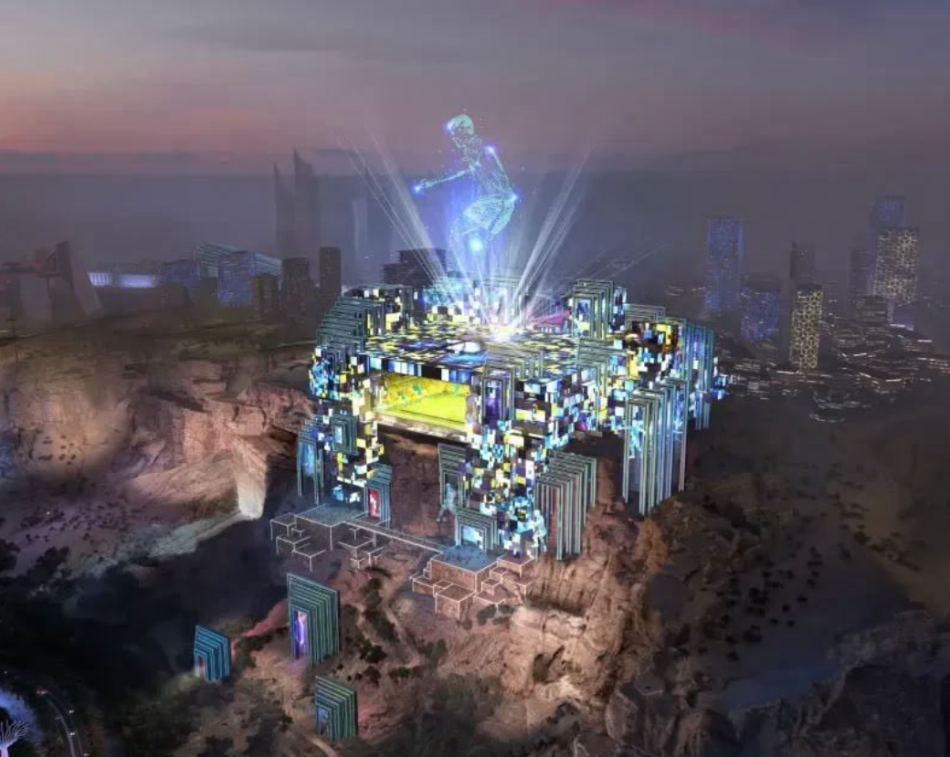
The Public Investment Fund’s 2025 Annual Report revealed that Prince Mohammed bin Salman Stadium in Qiddiya City has entered its main construction phase following the award of a SAR 15 billion contract early in the year, moving one of the most prominent projects for the 2034 FIFA World Cup from preliminary works to the execution of its principal structures.
The stadium is being built at an elevated location atop the Tuwaiq Mountains, overlooking Qiddiya City and its entertainment attractions. It has been designed as a multi-use venue combining football matches, concerts, and major sporting and entertainment events within a single destination.
More Than a Stadium
The stadium will accommodate more than 46,000 spectators for football matches, while its total capacity will rise to more than 60,900 for concerts and other events.
It is expected to attract 7.6 million visits annually, including approximately 5.8 million visits associated with sporting events, and to host more than 60 football matches each year, in addition to concerts, competitions, and public events.
The projected visitor figure does not refer to match attendance alone. The stadium will be surrounded by more than 50,000 square meters of retail, dining, and entertainment space, enabling the destination to operate on non-match days and increasing its ability to attract visitors and spending throughout the year.
Unprecedented Technology
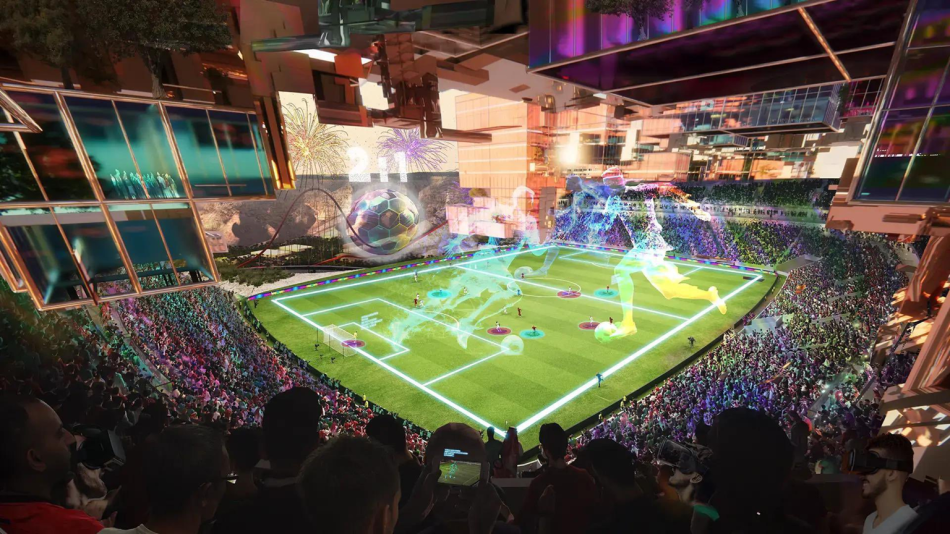
The stadium’s design includes a retractable roof, pitch, and LED wall within an integrated system described as the first of its kind in the world, allowing the venue to be transformed for football matches, concerts, and a variety of other events.
The stadium will also be climate-controlled and equipped with technologies that provide spectators with real-time data and live coverage during matches, improving the fan experience and giving the operator greater flexibility to use the venue throughout the year.
World Cup Matches
Prince Mohammed bin Salman Stadium will be one of the main venues for the 2034 FIFA World Cup and is scheduled to host prominent fixtures, including a quarter-final and the third-place playoff.
It is also expected to become a home venue for Saudi Pro League clubs, providing it with a regular operating program before and after the global tournament and preventing it from becoming a facility tied to a single event.
The true value of stadiums built for major tournaments is not measured solely by what they host during the weeks of the World Cup, but by their ability to remain active after its lights have dimmed.
Qiddiya’s Sports Hub
The stadium will not operate separately from Qiddiya’s other projects. It will integrate with the city’s gaming, entertainment, sports, motorsport, and arts districts, while benefiting from its proximity to Six Flags Qiddiya City, Aquarabia, the Speed Park Track, and other assets.
This integration will transform attendance at a match into an experience extending beyond the opening and final whistles, while supporting hotels, restaurants, retail, transportation, and events and increasing the duration and value of each visitor’s stay in the city.
It also explains the target of attracting 7.6 million annual visits: the stadium is not merely stands built around a pitch, but a principal gateway into Qiddiya’s economy.
Commentary
The SAR 15 billion contract value demonstrates that the project is not being built as a conventional sports facility, but as a complex operational, technological, and entertainment infrastructure designed to host multiple types of events and changing audiences throughout the year.
The most important figure is not the number of seats alone, but the projected number of visits. Seating capacity measures the stadium’s size on match night, while 7.6 million annual visits reveal the scale of the economy intended to grow around it.
Once construction is complete, the challenge will be to convert these figures into an active operating program comprising domestic and international matches, concerts, tournaments, conferences, and entertainment experiences, supported by seamless connections to Qiddiya’s other facilities and transport networks.
Prince Mohammed bin Salman Stadium is not being built merely to receive the World Cup, but to make the global tournament the beginning of its operation—not the end of its purpose.