



Day 168: The War Expands from the Edges
The UAE suspends dealings with Iran after accusing it of launching two missiles, while Israel strikes a Syrian base to prevent a Turkish deployment; Hormuz remains nearly closed as Iran’s threat against Europe becomes noise greater than its capability
Prepared and analyzed by | Strategic Media Department – BETH News Agency
Day 168 did not witness a resumption of large-scale American–Iranian strikes, but it revealed that the war is expanding from its edges.
The UAE suspended trade and financial dealings with Iran after accusing Tehran of launching two missiles toward its territory. Israel struck a Syrian base to prevent a potential Turkish deployment, while the United States began working on a mechanism to prevent friction among Turkey, Israel, and Syria.
At sea, traffic through Hormuz remained at low levels, while Iran added to the noise of its threats by speaking of targeting American facilities in Europe if Trump escalates the war.
The main front remains relatively calm, but the edges of the map are beginning to heat up.
News of the Past Hours
No announced talks: US President Donald Trump said there were no ongoing or scheduled talks with Iran, contradicting earlier statements by his envoy Jared Kushner, who had spoken of active contacts with different levels of the Iranian regime. Meanwhile, Iranian Foreign Minister Abbas Araghchi said Washington was seeking negotiations after failing to force Iran to surrender.
The UAE suspends dealings: Abu Dhabi suspended trade and financial dealings with Iran after saying that two ballistic missiles had been launched toward its territory; one landed outside its waters and the other inside them. Tehran denied responsibility and said the accusation was damaging to regional relations.
Six ships in Hormuz: Six cargo vessels crossed the strait on Tuesday, down from nine the previous day and below the recent average of 11. The traffic included an empty very large crude carrier entering from the Omani side, along with two other tankers, while three vessels departed.
Oil continues to rise: Brent crude climbed for a fourth session to around $91.44 per barrel, while US crude rose to $85.45, amid continuing doubts over whether political understandings can restore energy traffic to normal.
Israel strikes Syria: Israel carried out eight airstrikes on the Abu al-Duhur airbase in northwestern Syria, saying the objective was to prevent a potential Turkish deployment there. Turkey condemned the strike, while Washington is working to establish a mechanism to prevent friction among Turkey, Israel, and Syria.
The UAE Brings the Gulf Back into Focus
The suspension of Emirati dealings with Iran represents the most consequential development of the past several hours because it carries the impact of the war from maritime navigation into direct economic relations.
Tehran’s responsibility for the two missiles remains disputed, but the Emirati decision reveals that confidence has deteriorated to a level at which trade can no longer be separated from security.
If it is established that Iran launched the missiles, this would mean that Tehran has resumed testing the Gulf states after weeks of attempting to improve relations with them. If it is not established, the incident reveals an equally serious danger: the possibility of pushing regional states into a new confrontation because of an unidentified missile or an allegation that has not been conclusively proven.
In either case, the Gulf has moved from being economically affected by the war to being directly exposed to friction.
Israel Moves Closer to Turkey
The strike on Abu al-Duhur airbase is not directly related to the confrontation with Iran, but it may be more dangerous than some developments within that war because Israel carried out the attack to prevent a potential Turkish deployment, not to target a declared Iranian force.
This opens a line of tension between two states with a military presence and growing influence inside Syria, making a miscalculation capable of producing a confrontation neither side intended.
The United States therefore moved quickly to work on a mechanism to prevent friction among Turkey, Israel, and Syria.
The situation has become even more sensitive following the Makkah Joint Defense Agreement among Saudi Arabia, Turkey, and Pakistan. Any direct attack on Turkey or its forces would subject the new deterrence framework to an early political and security test.
Israel, which says it is protecting its security from Iran, has begun creating a conflict with another regional power. This does not produce security as much as it multiplies the possibilities of an explosion.
Hormuz Passes Judgment on the Statements
Trump insists that the strait is open and safe. Iran insists that it will remain closed until the United States lifts the blockade on its ports and oil sanctions, releases frozen assets, and ends its threats and military operations.
The figures, however, are more precise than either side’s rhetoric: only six ships crossed in an entire day, compared with more than 130 vessels per day before the war.
A single very large tanker does not alter the reality of the situation. The passage will not resume functioning because one ship tested the route, but when shipping companies and insurers once again begin treating it as a normal corridor.
Hormuz is open on maps and in official statements, but it remains nearly closed in the calculations of commerce.
Iranian Nonsense Reaches Europe
Amid these developments, sources close to the Iranian regime leaked claims that Tehran had considered targeting US military installations in Bulgaria and Cyprus if Washington expanded its operations.
The report does not constitute a military decision or evidence of preparations for a strike. Rather, it appears to be part of an attempt to broaden the sphere of fear after Iran shifted to the rhetoric of a “fully offensive posture.”
Hitting a distant target in Europe would require accuracy and the ability to penetrate multiple layers of defense, while striking an installation in a NATO member state could expand the political and military legitimacy of the war against Iran.
This is why the noise precedes the capability in this threat. Tehran wants to push European states to pressure Trump or restrict the use of bases and facilities on their territory, without bearing the cost of a strike that could move Europe from the position of a hesitant mediator to that of a direct adversary.
What may have encouraged Iran to broaden its threat is a combination of American hesitation in decisively settling the course of the confrontation and Tehran’s sense that it enjoys political cover or visible and hidden support from Russia. Threatening US interests in Europe also serves several purposes: it disperses pressure, unsettles the allies, and transfers the dispute into the Western camp—without necessarily meaning that Tehran possesses either the capability or the willingness to carry out the threat.
Iran is expanding the map of its rhetoric because it does not necessarily possess the freedom to expand the map of fire.
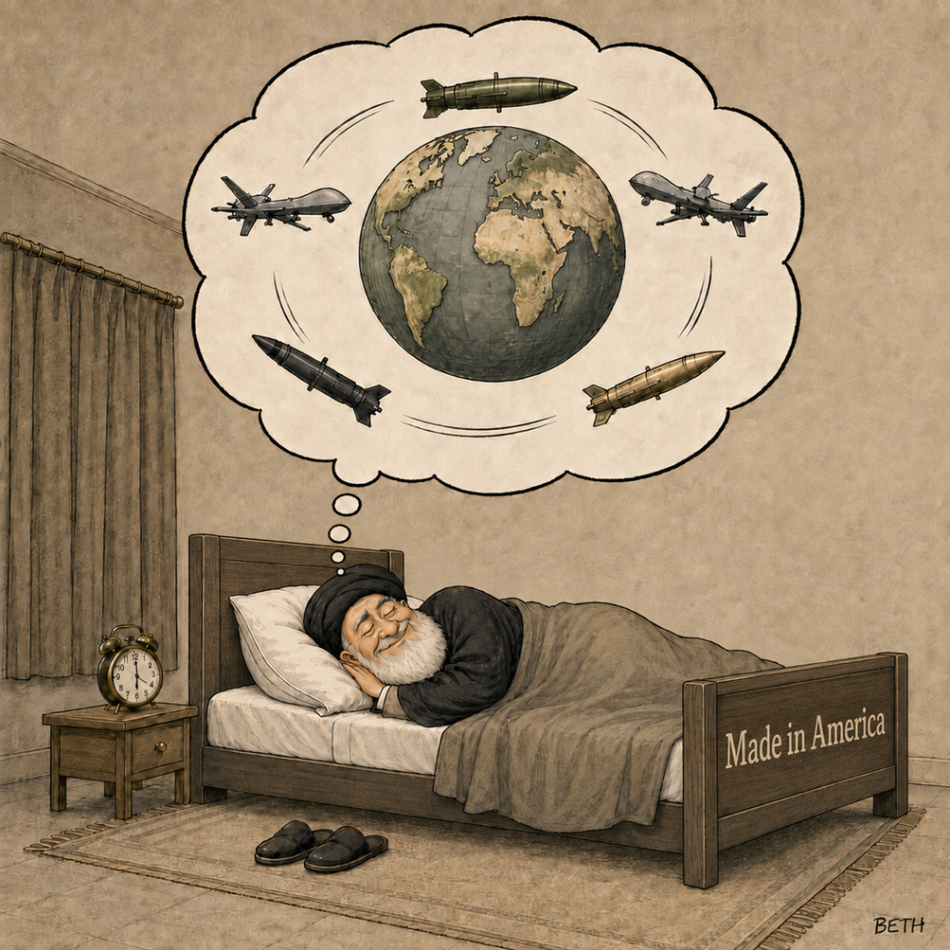
It is a dream, but one worth contemplating.
Between the Lines
The day’s developments show that the war is no longer moving along a single line between Washington and Tehran.
The United States publicly closes the door to negotiations while possibly keeping back channels open. Iran threatens a broad offensive without specifying a date or target. The UAE takes an economic decision following a disputed missile incident. Israel strikes Syria because of Turkey, not Iran. Meanwhile, the markets continue to treat Hormuz as a passage that has not regained its security.
The crisis is therefore evolving from a confrontation between two adversaries into a network of adjacent points of friction, any one of which could move ahead of the political decision and restart the war.
The danger no longer lies in the strike announced by the two sides, but in the incident that creates a new party to the conflict before anyone understands how it entered the war.
Assessment
The day’s developments do not point to an imminent large-scale American or Iranian attack, but they increase the risk of miscalculation.
Direct escalation remains costly for both sides. There is no confirmation that the back channels have been completely closed, and Iran continues to use threats to improve its position more than as an openly declared prelude to an attack.
Three tracks, however, warrant close monitoring:
- Whether the UAE presents evidence identifying the source of the two missiles or takes additional measures.
- Whether the deconfliction mechanism succeeds in containing Israeli–Turkish competition inside Syria.
- Whether traffic through Hormuz moves beyond limited tests toward a sustained return of major tankers.
Iran’s threat against Europe will remain propaganda unless Tehran moves from invoking an entire continent to demonstrating a capability, identifying a target, or showing verifiable operational preparations.
On Day 167, the deadline expired and the warning began. On Day 168, the strike was not carried out, but the war began drawing new parties toward its edge.