Hail Joins the Smart Cities
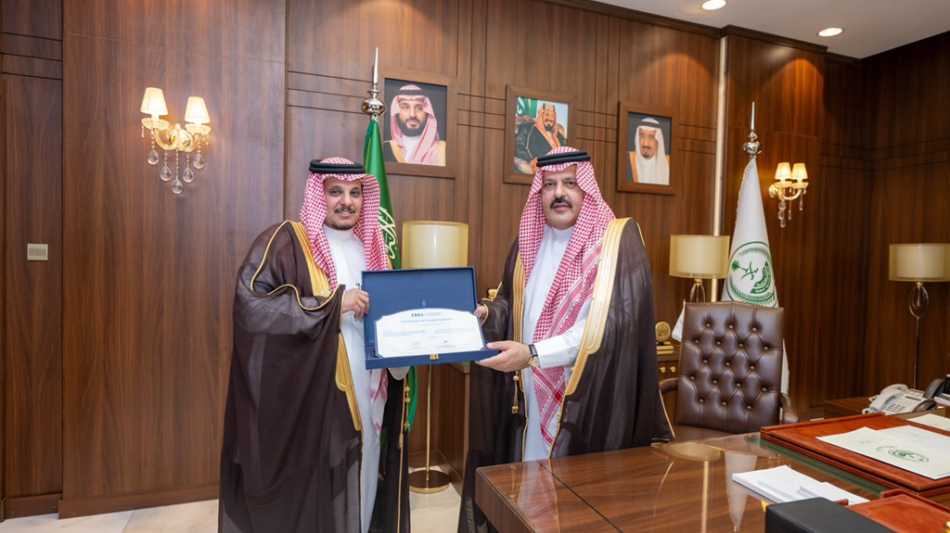
Regional governor receives the city’s certificate for ranking 33rd globally from Hail’s mayor; the city enters the IMD Smart City Index for the first time following the expansion of parks, digital services and urban improvement projects
Hail | BETH
His Royal Highness Prince Abdulaziz bin Saad bin Abdulaziz, Governor of the Hail Region, received Hail Region Mayor Engineer Sultan bin Hamed Al-Zaidi in his office on Tuesday and accepted the city’s certificate of recognition in the 2026 IMD Smart City Index.
Hail ranked 33rd among 148 cities worldwide in its first appearance in the global index.
The governor praised the city’s progress in international rankings and stressed the importance of continuing to develop municipal and urban services and employ modern technologies to improve quality of life and strengthen Hail’s competitiveness locally and internationally.
The significance of the achievement lies not only in securing a high position upon the city’s first inclusion in the index, but also in what the ranking measures. Technology is not valued merely for its presence; the index assesses the impact of infrastructure and digital services on residents’ lives.
Residents Shape the Ranking
The IMD Smart City Index draws a significant portion of its results from surveys measuring residents’ perceptions of their cities. It evaluates two main pillars: existing structures and essential services, and the technological applications available to residents.
The two pillars are assessed across five areas: health and safety, mobility, activities, opportunities and governance.
Hail’s 33rd-place ranking therefore reflects more than the availability of electronic systems. It also indicates the city’s ability to bring its services and infrastructure closer to the people.
A smart city is not the one with the largest number of screens and sensors, but the one whose residents feel that its streets, services and municipal decisions work better.
What Has Changed in Hail?
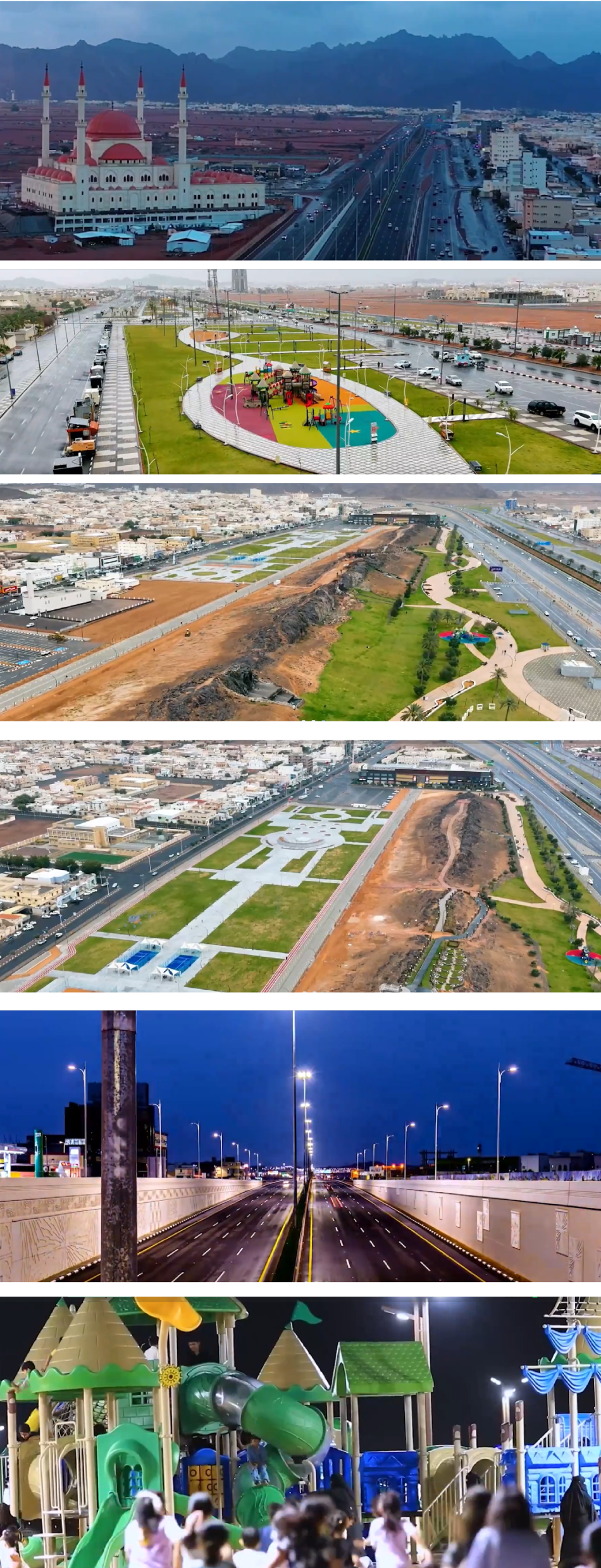
Over recent years, Hail Municipality has pursued several parallel tracks, including improving the urban landscape, making roads more people-friendly, expanding green spaces, developing digital services and connecting municipal projects more closely to residents’ daily experiences.
In 2025, the municipality inaugurated 46 new neighborhood parks as part of an initiative to bring parks and open spaces closer to homes, with the goal of ensuring that the nearest park is no more than approximately 800 meters away.
Hail was also named the “Arab Green City” for 2024–2025, reflecting its progress in afforestation, sustainability and the improvement of its urban environment.
The work also included developing applications and electronic services, improving the monitoring of performance and public reports, and establishing an integrated smart-city framework that unifies projects and performance indicators while connecting decision-making to what residents experience in mobility, services, neighborhoods and streets.
These results do not mean that the work is complete or that every challenge involving traffic, roads and the urban landscape has been resolved. They do, however, confirm that Hail has moved from implementing separate projects to managing a measurable urban transformation that can be compared internationally.
From Al Khobar to Hail
The achievement also carries the imprint of an administrative experience that preceded Engineer Sultan Al-Zaidi’s move to Hail. He served as head of Al Khobar Municipality from 2017 to 2021 before being appointed mayor of the Hail Region.
During that period, Al Khobar strengthened its position as an advanced urban city, combining sound planning, clean streets, high-quality parks and public facilities, well-organized service districts, careful attention to buildings and façades, and the development of one of the Kingdom’s most attractive urban waterfronts.
Al Khobar was no longer compared only with cities in the Eastern Province. In the view of many residents and visitors, it became one of Saudi Arabia’s leading cities in urban sophistication and the quality of its streets, services and public spaces.
When Al-Zaidi moved to Hail in 2021, the Governor of the Eastern Province commended his efforts during his tenure at Al Khobar Municipality and the achievements recorded during that period.
Hail’s progress does not mean that Al Khobar’s experience has been replicated. The two cities differ in geography, identity and needs. It does, however, reveal the transfer of a consistent administrative principle: residents should see the municipality’s impact in their daily lives, not only in official reports.
Comment
Hail’s entry into a global index at 33rd place on its first appearance is not a certificate to be displayed on a wall, but a test that begins once the certificate has been received.
The ranking raises residents’ expectations and makes maintaining the position more difficult than reaching it. Other cities continue to develop, while the index measures what people feel rather than what institutions announce.
The greater achievement will come when the ranking is translated into a program of action: addressing weaknesses, expanding transportation and digital services, increasing public spaces, improving neighborhoods beyond the city center and involving residents in setting priorities.
A smart city’s success does not become visible merely when it advances in a ranking, but when the difference is clear to those who walk its streets, use its services and live in its neighborhoods.
If Al Khobar demonstrated Sultan Al-Zaidi’s ability to elevate an advanced coastal city, Hail now presents a broader test: transforming a city with a distinct historical identity and geography into an urban model that combines authenticity with intelligent services.
Ranking 33rd is global news for Hail; the real achievement, however, is for every resident to feel that the city has advanced with them, not merely ahead of them.