



Day 166: The Deadline Expires
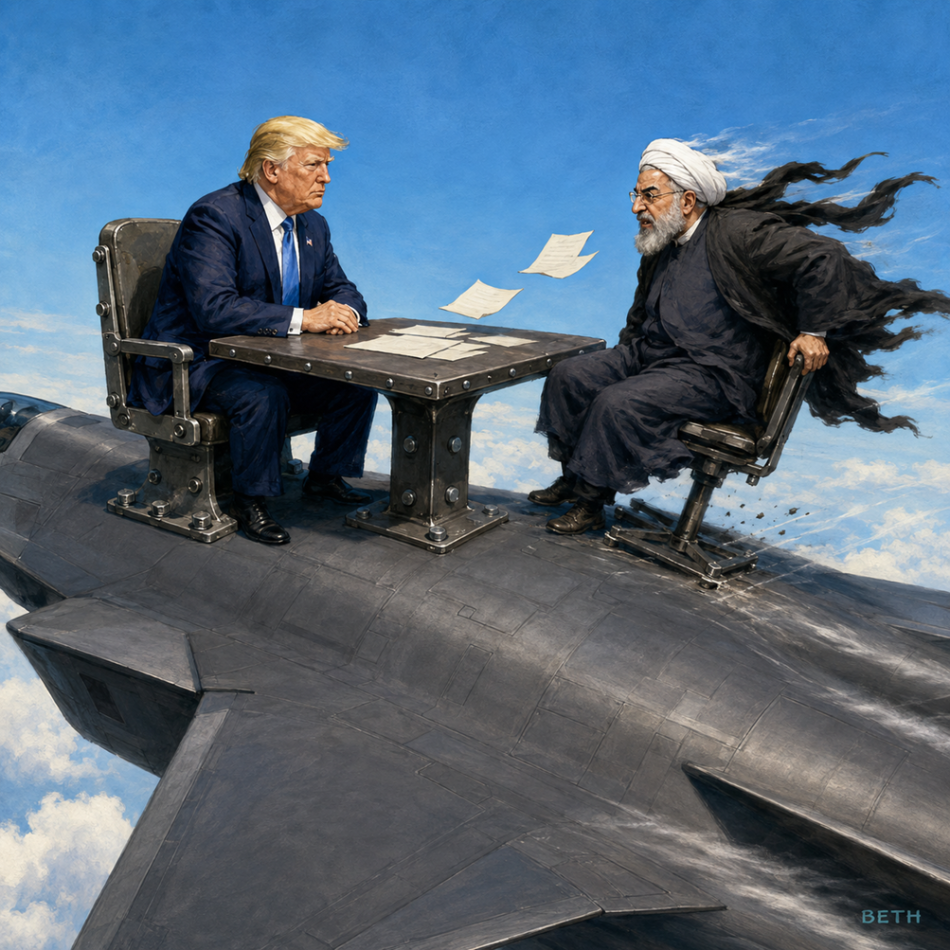
The memorandum of understanding expires without an announced extension or a return to full-scale war, while Hormuz approaches a complete standstill and the movements of Iran and its regional proxies reveal that the lull was used for preparation as much as it was for negotiation
Monitoring and Analysis | Strategic Media Department – BETH News Agency
The U.S.-Israeli war with Iran entered its 166th day as the deadline stipulated in the memorandum of understanding signed in June expired without a joint announcement extending it or an alternative agreement governing the next phase.
The memorandum’s expiry, however, does not mean that full-scale war will immediately resume.
It was not a peace treaty, but a temporary framework intended to halt escalation, reopen the Strait of Hormuz and provide time to negotiate broader issues—most notably Iran’s nuclear program, sanctions, the naval blockade and Tehran’s regional role.
The timeframe has expired, while indirect messages continue to move through Qatar and Pakistan and Oman pursues separate arrangements for navigation through the strait.
The crisis has therefore entered an undefined political state:
The memorandum has expired, but its channels remain open; the truce has eroded, but the full-scale air war has not yet returned.
Hormuz Declares Failure
The deadline’s expiry was not merely a date written in a document. It was preceded by measures on the ground that emptied the memorandum of its most important commitments.
Iran closed the Strait of Hormuz in protest against a U.S. attempt to establish a shipping route outside Iranian arrangements, while Washington reimposed its blockade on Iranian ports and vessels.
Transit through the strait fell to extremely low levels over the weekend. Only five vessels passed through on Saturday, while no crossings were recorded on Sunday, compared with approximately 31 vessels during the previous weekend.
These figures show that the strait is no longer partially open in any meaningful commercial sense. It has become an exceptional passage used by a limited number of vessels under shifting political and security conditions.
Oil prices have so far moved more in response to anxiety than to a broad physical shortage in supplies. Brent crude approached $90 a barrel after rising by more than 5% during the previous week.
Markets continue to assume that the parties to the war will avoid destroying major energy facilities, but that confidence remains fragile. A strike on a large refinery or a loaded tanker—or significant loss of life at sea—could shift prices from carrying a risk premium to reflecting an actual supply crisis.
The memorandum has expired politically, but Hormuz had already declared its failure on the ground before the deadline arrived.
The Economy Pressures Iran
Iran faces an economic challenge that grows more severe the longer the blockade continues.
Declining oil exports, difficulties in financial transfers and disrupted trade have increased pressure on the local currency and prices. Iran’s First Vice President Mohammad Reza Aref has called on state institutions to confront rising costs and curb inflation.
The government’s ability to control prices remains limited, however, because the roots of the crisis extend beyond monetary policy alone.
Iranian inflation is not driven solely by increased demand or weak market oversight. It also reflects falling oil revenues, rising import costs, declining confidence in the currency and expanding military and security expenditure.
Washington is betting that sustained pressure will push Tehran to reopen the strait and make nuclear concessions before receiving broad sanctions relief.
Iran’s leadership is pursuing the opposite calculation: that the cost of closed waterways and disrupted energy markets will generate global pressure on the United States before the blockade causes an internal explosion in Iran.
The economic confrontation has become a race between the Iranian regime’s capacity to endure and the global markets’ ability to tolerate a nearly closed Strait of Hormuz.
Washington Lowers the Ceiling
After nearly six months of war, the United States appears to be rearranging its declared objectives.
At the beginning of the confrontation, President Donald Trump and his administration spoke of Iran’s complete surrender, regime change, the elimination of its nuclear program and an end to its support for regional proxies.
The June memorandum achieved few of those objectives. It focused instead on a temporary ceasefire, navigation through Hormuz, preventing nuclear escalation and opening a path toward future negotiations.
U.S. interest in recovering the enriched nuclear material that Washington had previously demanded Iran surrender has also diminished.
Trump now says the nuclear facilities were severely damaged, that the material was buried at deeply located sites that are difficult to access, and that monitoring from space could reveal any Iranian attempt to recover it.
In other statements, he has described Iran as already denuclearized.
These claims do not mean that the nuclear issue has been resolved. They indicate that Washington has moved from seeking the immediate removal of the material to trying to prevent Iran from reaching or using it.
That represents a clear reduction in the operational ceiling, even as U.S. rhetoric continues to speak in the language of victory.
Can Trump’s Statements Be Relied Upon?
Trump’s statements can be treated as an indicator of his political direction at the moment they are made—not as a final commitment upon which an entire assessment can be built.
His rhetoric performs several functions simultaneously:
- Pressuring the adversary before negotiations.
- Reassuring the American public that the war has succeeded.
- Raising demands and then lowering them in return for a gain.
- Preserving the image of victory when the original objectives cannot be achieved.
- Keeping both allies and adversaries waiting for his next decision.
This is why some of his statements appear contradictory. He may declare Iran denuclearized and then threaten it if it attempts to retrieve the material. He may also assert control over Hormuz while shipping data shows that the strait is nearly at a standstill.
That does not mean his words should be disregarded. The U.S. president holds decision-making authority, and his statements can quickly be translated into sanctions or military orders.
A professional assessment, however, does not rely on a statement alone. It measures that statement against four indicators:
- The movement of forces and aircraft carriers.
- Executive decisions and sanctions.
- The texts Washington accepts in negotiations.
- What is actually implemented at sea and on the ground.
The proposal to monitor nuclear material from space could reveal excavation work, equipment movements, changes to facilities and activity on the surface. On its own, however, it cannot determine the quantity of buried uranium, its enrichment level or whether it has remained in place.
Precise nuclear verification requires on-site inspections, nuclear material accountancy, seals, cameras and environmental sampling—the instruments used by the International Atomic Energy Agency.
Satellites can observe movement above a site, but they cannot independently measure what remains beneath the ground.
Iran Prepared During the Lull
Iran’s leadership believes the memorandum was not an American path toward ending the war, but a pause intended to ease pressure on energy markets and allow U.S. and Israeli forces to prepare for another round.
Reports drawing on Iranian and Arab officials and intelligence assessments indicate that Tehran also treated the period as time to prepare. It reorganized its military command, increased missile and drone production, and expanded coordination with its proxies in Iraq, Lebanon and Yemen.
This perception partly explains Iran’s refusal to offer final concessions before receiving enforceable guarantees. Tehran fears that reopening Hormuz and reducing its readiness would remove pressure from Washington without preventing a later U.S.-Israeli strike.
The result is that both sides used the interim period in almost the same way.
Washington rotated aircraft carriers, replenished munitions and expanded the blockade.
Iran rebuilt capabilities, organized its proxies and raised its readiness to retaliate.
Each side entered the memorandum fearing that the other would exploit it; both ultimately used it to prepare.
The Truce—or What Comes After?
Iran’s actions indicate that it pursued two tracks during the truce, but its preparations for failure were clearer than its confidence in success.
Tehran kept communication channels open to benefit from any easing of the blockade. At the same time, it reorganized its military command, increased missile and drone production, and coordinated the movements of its regional proxies.
This means that Iran did not reject ending the war, but it did not regard the truce as a guaranteed route toward that outcome. Instead, it treated the pause as a negotiating opportunity within a broader preparation for the next confrontation.
Iraq Moves to the Forefront
Iraq witnessed a significant development today when two drones targeted the office of Kurdistan Regional Government Prime Minister Masrour Barzani.
The region’s security authorities said the drones had been launched from Iranian territory. The attack caused no human casualties.
Its significance extends beyond the location itself. The target was the political decision-making center of the Kurdistan Region—not merely a military facility or an Iranian Kurdish opposition group.
The attack may have carried three simultaneous messages:
- A warning to Erbil over hosting Iranian opposition groups.
- Pressure on the region because of its relations with the United States and regional countries.
- A demonstration of Tehran’s ability to expand its retaliatory front beyond the Gulf.
The attack coincides with increasing pressure on the Iraqi government to place all weapons under state control, along with reports of a September 30 deadline for armed factions and preparations to restrict their operational centers and supply routes if they refuse to comply.
Iraq consequently faces two opposing dangers:
It could become an Iranian platform for pressuring Tehran’s adversaries, or government action against the factions could trigger an internal confrontation and open a new front inside the country.
Lebanon: A Suspended Truce
In Lebanon, the truce remains in force on paper but continues to recede on the ground.
Recent Israeli strikes on the south killed 11 people, including children, in the deadliest escalation since the ceasefire began on June 20. Israel said the strikes came in response to a Hezbollah drone attack that wounded three soldiers.
Israel has linked its withdrawal from southern Lebanon to Hezbollah’s disarmament, while Hezbollah refuses to discuss surrendering its weapons before a complete Israeli withdrawal.
The process has therefore entered a closed circle:
Israel will not withdraw before disarmament.
Hezbollah will not disarm before withdrawal.
The Lebanese state does not independently possess sufficient force to impose both conditions.
Israel is simultaneously monitoring the speed at which Iran is rebuilding its ballistic missile stockpile, amid concern within the Israeli security establishment that Tehran may be restoring what was destroyed faster than expected.
Israel may therefore conclude that extended negotiations are giving Iran time it should not be allowed to have, increasing the possibility that it will pressure Washington to prevent an open-ended extension or resume strikes on missile facilities.
Yemen: Pressure Continues
Yemen remains the most active extension of Iran’s strategy outside Hormuz.
The Port of Mokha suspended all commercial and maritime activity after being struck by more than 25 Houthi missiles over several days. Seven people were killed, and losses were estimated at approximately $16 million.
The Houthis are not targeting Mokha merely as a local port. It is an outlet beyond their control on Yemen’s western coast, an economic and security base opposite Bab el-Mandeb, and a project capable of reducing the group’s ability to control Yemeni trade.
Disrupting Mokha also gives Iran an additional instrument of pressure. If ships search for alternatives to Hormuz, they find Bab el-Mandeb and the Red Sea under threat as well.
The United Nations has warned that Yemen faces its greatest risk of returning to full-scale war since the 2022 truce, amid rising military activity in Mokha, Marib, Hadramawt and the Red Sea.
Israel Between Two Fronts
There are currently no field indicators that Israel is about to begin another broad air campaign inside Iran, but Tel Aviv is operating along two tracks.
The first is maintaining pressure on Hezbollah and preventing it from rebuilding its infrastructure in southern Lebanon.
The second is gathering intelligence on Iran’s missile reconstruction and presenting it to Washington as proof that time is working in Tehran’s favor.
Israel may prefer a limited strike against missile facilities or supply networks rather than wait for the completion of a diplomatic process that imposes no clear restrictions on rearmament.
It also understands that opening another round inside Iran could bring missiles back to Israeli cities, undermine U.S. arrangements in Gaza and Lebanon, and confront Israel with three simultaneous fronts before the October elections.
The Israeli decision is therefore not simply between war and peace, but between:
A costly early strike, or waiting while Iran recovers a larger share of its strength.
Trump and the Makkah Agreement
President Trump welcomed the Makkah Joint Defense Agreement among Saudi Arabia, Türkiye and Pakistan, describing it as a major, bold and important step.
Pakistani Prime Minister Shehbaz Sharif, meanwhile, pledged to continue working with Riyadh and Ankara to defend the three countries and the wider region.
Does Trump’s welcome reflect genuine support or merely diplomatic courtesy?
The most likely answer is: It is genuine support from the perspective of burden-sharing, but it is not an unrestricted U.S. mandate for the alliance.
The agreement advances several of Trump’s interests:
- It requires regional countries to bear a greater share of their defense costs.
- It builds deterrence against Iran and its proxies.
- It brings together three partners with military relationships with the United States.
- It reduces the need for a permanent U.S. presence at every threatened location.
- It creates opportunities for arms sales, training and integration with American systems.
At the same time, the agreement reflects the three countries’ desire to build a more independent security capability after the war demonstrated that complete reliance on U.S. protection may not provide an immediate or equal response to every threat.
Trump can therefore welcome the agreement because it reduces Washington’s burden, while later seeking to prevent it from developing into an independent military decision-making center that contradicts U.S. interests.
The extent of genuine U.S. support will become clear through what happens next—not through the social media post alone:
- Will Washington approve broader intelligence sharing?
- Will it facilitate the transfer of advanced weapons and technology?
- Will it participate in exercises or coordination arrangements with the alliance?
- Will it respect the alliance’s decisions if its assessment of a threat differs from Washington’s?
Trump is pleased when allies defend themselves; how pleased he will be with the independence of their decisions will be determined in practice.
What Actually Ended?
The memorandum’s duration has expired, but for weeks it had ceased to be the real framework governing the war.
The blockade returned.
Hormuz is nearly at a standstill.
Attacks on vessels have continued.
Iran and its proxies have increased their activity in Iraq, Yemen and Lebanon.
The United States has maintained its military deployment and readiness to strike.
What remains of the memorandum is not adherence to its text, but a shared fear of the cost of its complete collapse.
Washington does not want a prolonged air war that raises oil prices and exhausts the navy.
Tehran does not want strikes that further destroy its military infrastructure and accelerate its economic crisis.
The countries of the region do not want their waterways, ports and cities to become arenas for exchanges of messages between the two sides.
Expected Outcomes
Most Likely: An Extension Without a Name
The current situation may continue for days or weeks without a formal extension being announced.
Messages will continue through mediators, and the United States and Iran will avoid major strikes, while the blockade, Hormuz and regional proxies remain instruments of mutual pressure.
This is not a cessation of war, but its temporary management after the document’s expiry.
Possible: A Limited Maritime Agreement
Oman may succeed in arranging passage for a limited number of vessels along an agreed route, accompanied by security guarantees and notification procedures.
Such an arrangement would ease pressure on markets but would not resolve sanctions, the nuclear issue or the activities of Iran’s proxies.
Plausible: A Limited Strike
The possibility of a limited strike has increased following the deadline’s expiry, particularly if a large vessel is targeted, Americans are killed or a rapid increase in Iranian missile production is confirmed.
The strike could target naval facilities, missile bases or Islamic Revolutionary Guard Corps positions without immediately developing into a comprehensive campaign.
More Remote: A Comprehensive Deal
A comprehensive agreement remains the least likely scenario in the near term.
The dispute is no longer limited to the nuclear issue. It now includes Hormuz, the blockade, sanctions, missiles, Iran’s proxies, compensation and guarantees against the resumption of war.
A single rapid agreement cannot resolve all these files, particularly amid deep distrust and the use of ceasefire periods by both sides to rebuild their readiness.
Assessment
Day 166 is not the day full-scale war returns, but it is the day the conflict lost the final timetable that had given it a temporary name.
Trump’s statements alone cannot be used to declare the nuclear danger over, just as Iran’s preparations for war cannot by themselves be treated as proof that Tehran has decided to start it immediately.
The real indicators will be found in three places:
The movement of ships through Hormuz.
The movement of U.S. and Israeli forces.
The movement of missiles and drones from Iran and its regional proxies.
If transit improves and the fronts become calmer, negotiations will be taking place without announcement.
If shipping remains suspended and attacks expand across Iraq, Yemen and Lebanon, the expiry of the deadline will have shifted from an administrative event into the beginning of a new military phase.
The memorandum expired without an agreement, but the parties did not leave the table. They kept one hand on it—while placing the other on their weapons.