



King Commends Mecca Summit
The Cabinet confirms that the trilateral agreement establishes a long-term defense partnership between Saudi Arabia, Türkiye, and Pakistan
Securing the Strait of Hormuz and Bab al-Mandab is a cornerstone of global economic stability
Roads General Authority regulation approved, alongside space cooperation with Japan and logistics cooperation with Morocco
CBAHI expands internationally by accrediting healthcare facilities outside the Kingdom
Jeddah | BETH
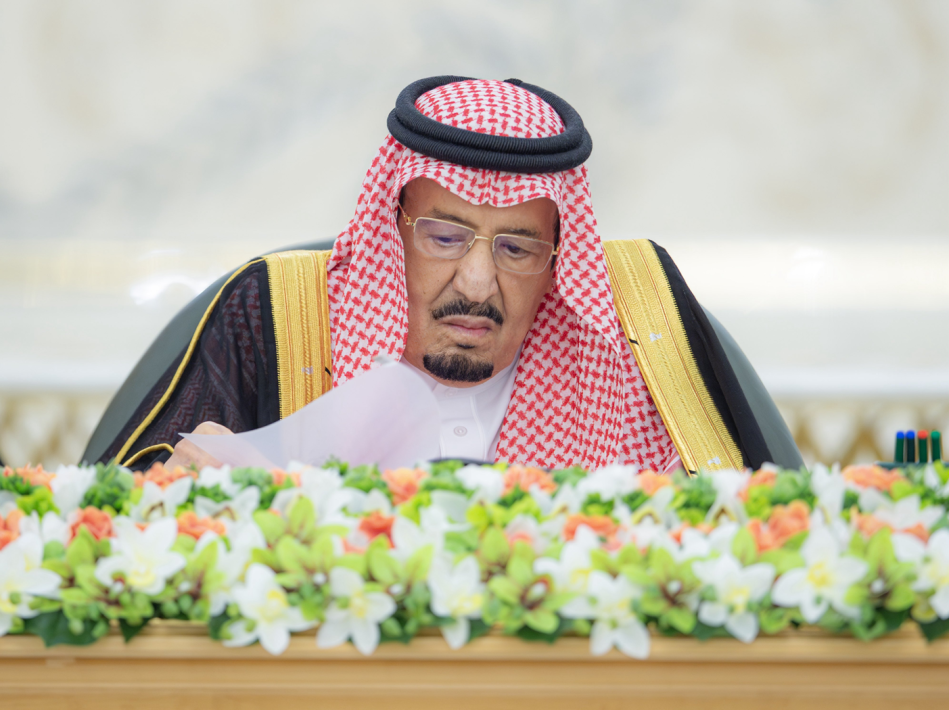
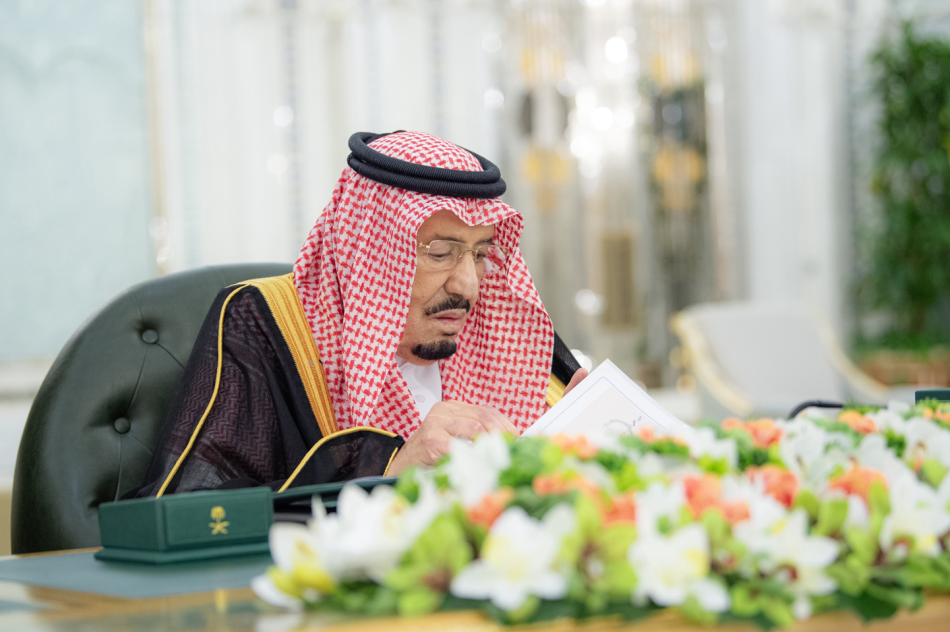
Custodian of the Two Holy Mosques King Salman bin Abdulaziz Al Saud chaired the Cabinet session held in Jeddah on Tuesday.
At the beginning of the session, the Custodian of the Two Holy Mosques expressed his thanks and appreciation to Crown Prince and Prime Minister Mohammed bin Salman bin Abdulaziz, Turkish President Recep Tayyip Erdoğan, and Pakistani Prime Minister Muhammad Shehbaz Sharif for their efforts during the Mecca Joint Defense Summit.
He affirmed that the summit reflected the depth of the historical relations among the three countries and their continuous pursuit of strengthening the bonds of brotherhood and Islamic solidarity and serving their shared strategic interests.
The Custodian of the Two Holy Mosques praised the outcomes of the trilateral summit in establishing a framework for a long-term defense partnership that strengthens coordination and integration among Saudi Arabia, Türkiye, and Pakistan and supports their ability to address regional challenges and safeguard international security and stability.
Security and Waterways
The Cabinet reviewed regional and international developments, as well as Saudi Arabia’s efforts, in communication and coordination with brotherly and friendly countries, to support de-escalation, establish diplomatic solutions, and reinforce respect for the sovereignty and territorial integrity of states.
The Cabinet emphasized the importance of ensuring the security of the waterways in the Strait of Hormuz and Bab al-Mandab, describing them as a fundamental pillar of global economic stability.
This position brings together the two tracks Saudi Arabia is currently pursuing: building a regional defense capability through the Mecca Agreement, and continuing political and diplomatic efforts to reduce escalation and prevent disruptions to energy and trade.
Condemnation of the Houthis
The Cabinet welcomed the statement issued by members of the United Nations Security Council condemning the attacks and criminal acts of the terrorist Houthi militia that threaten regional security and freedom of maritime navigation.
The Cabinet reaffirmed the Kingdom’s right to defend its security and resources, its steadfast support for Yemen’s legitimate government, and the United Nations’ efforts to achieve peace and stability in Yemen.
The position comes amid escalating threats in the Red Sea and the interconnection between the security of Bab al-Mandab and the Strait of Hormuz crisis, making the protection of both waterways part of a single framework for the security of the Kingdom, energy supplies, and international trade.
Jerusalem and Palestine
The Cabinet commended the steps taken during the ministerial meeting held in the Jordanian capital, Amman, to support Jerusalem and its holy sites.
It reaffirmed the Kingdom’s categorical rejection of all attempts to alter the legal and historical status of Jerusalem or undermine its identity. It also called on the international community to halt Israeli violations in the Gaza Strip and the West Bank, protect the holy sites, and support the steadfastness of the Palestinian people.
Leadership Communications
The Cabinet reviewed the content of the message received by the Custodian of the Two Holy Mosques from Zimbabwean President Emmerson Mnangagwa.
It also reviewed the two telephone calls held by the Crown Prince and Prime Minister with French President Emmanuel Macron and Ukrainian President Volodymyr Zelenskyy, which addressed bilateral relations and regional and international developments.
Artificial Intelligence Ethics
The Cabinet affirmed that Riyadh’s hosting of the fourth edition of the UNESCO Global Forum on the Ethics of Artificial Intelligence in September reflects the Kingdom’s advanced position in supporting multilateral international dialogue on emerging technologies.
The event also embodies Saudi Arabia’s commitment to promoting the responsible and ethical use of artificial intelligence, contributing to the creation of a more inclusive and sustainable digital future.
The forum is particularly significant as the global debate shifts from developing artificial intelligence capabilities to establishing standards for their use and governing their effects on the economy, employment, education, and individual rights.
Saudi Scientific Excellence
The Cabinet regarded the Kingdom’s successful organization of the International Nuclear Science Olympiad, along with the achievements of Saudi male and female students who topped the competition’s results, as confirmation of Saudi Arabia’s leadership in hosting major international scientific events.
The achievement also extends the Kingdom’s support for talented and creative individuals and their empowerment to compete in international forums, in line with the objectives of Saudi Vision 2030 to develop human capital and build specialized scientific capabilities.
Cabinet Decisions
After reviewing the items on its agenda and the conclusions reached by the Council of Political and Security Affairs, the Council of Economic and Development Affairs, the Cabinet’s General Committee, and the Bureau of Experts, the Cabinet issued the following decisions:
First: Ratifying the United Nations Convention on the Use of Electronic Communications in International Contracts.
Second: Authorizing the Minister of Health, or a deputy, to discuss and sign with the Mozambican side a draft memorandum of understanding between the Ministry of Health of Saudi Arabia and the Ministry of Health of the Republic of Mozambique for cooperation in health fields.
Third: Authorizing the President of the General Court of Audit, or a deputy, to discuss and sign with the Uzbek side a draft memorandum of understanding between the General Court of Audit of Saudi Arabia and the Chamber of Accounts of the Republic of Uzbekistan for cooperation in accounting, auditing, and professional work.
Fourth: Approving a memorandum of understanding for cooperation in the logistics sector between the Ministry of Transport and Logistic Services of Saudi Arabia and the Ministry of Transport and Logistics of the Kingdom of Morocco.
Fifth: Approving a memorandum of cooperation between the Saudi Space Agency, Japan’s Cabinet Office, the Japanese Ministry of Education, Culture, Sports, Science and Technology, and the Japanese Ministry of Economy, Trade and Industry in the peaceful use of outer space.
Sixth: Approving a memorandum of understanding between the Saudi Food and Drug Authority and the Central Islamic Council of Thailand for cooperation in halal-related fields.
Seventh: Approving the regulation of the Roads General Authority.
Eighth: Allowing the Saudi Central Board for Accreditation of Healthcare Institutions to provide accreditation services to healthcare facilities outside the Kingdom, in accordance with regulations approved by the Saudi Health Council.
Ninth: Abolishing the Authority for the Development and Reconstruction of Mountainous Areas in Jazan and transferring its responsibilities to the Strategic Office for the Development of the Jazan Region and the Ministry of Environment, Water and Agriculture.
Tenth: Approving the final accounts of the development authorities of the Makkah and Madinah regions, the General Authority of Media Regulation, and the Education and Training Evaluation Commission for a previous fiscal year.
Eleventh: Issuing the necessary directives concerning several items on the Cabinet’s agenda, including the annual reports of the University of Jeddah, the University of Hafr Al-Batin, and the Financial Academy.
Analysis of the Decisions
The Cabinet’s decisions reveal two parallel tracks. The first is political and security-related, focused on building deterrence and protecting strategic waterways. The second is regulatory and economic, aimed at transforming Saudi capabilities into standards, services, and partnerships that extend across borders.
A Long-Term Partnership
Describing the Mecca Agreement as a framework for a “long-term defense partnership” carries implications beyond treating it as an emergency response to the current war.
A long-term partnership requires permanent structures for consultation, information sharing, early warning, training, manufacturing, joint planning, and determining appropriate response levels to threats.
Linking the Mecca Agreement with the reaffirmation of Saudi Arabia’s right to defend its security and resources also demonstrates that Riyadh is combining de-escalation and diplomacy with building deterrence and defensive capabilities.
Contracts Enter the Digital Age
Ratifying the United Nations Convention on the Use of Electronic Communications in International Contracts strengthens legal confidence in cross-border commercial transactions.
The convention aims to remove legal obstacles to using electronic messages and tools in forming and executing international contracts and to affirm that a communication or contract does not lose its legal validity merely because it was issued electronically.
The decision is important for Saudi companies dealing with international markets because it helps reduce uncertainty concerning the validity of electronic contracting, the place and time at which messages are sent and received, and the use of automated systems to conclude contracts.
Road Regulation
Approving the regulation of the Roads General Authority places the sector within a clearer framework for distributing powers, responsibilities, and standards.
The authority is responsible for regulating and supervising the roads sector, developing policies and strategic plans, improving safety and quality standards, and regulating work carried out across the road network.
The regulation is important because roads are no longer merely a domestic service, but an essential infrastructure for the logistics sector, connecting ports, airports, industrial zones, and tourism destinations, while improving the movement of people and goods.
Its impact will be measured by its ability to reduce overlapping responsibilities, improve maintenance quality, accelerate project implementation, reduce accidents, and enhance the experience of road users.
A Saudi Healthcare Standard
Allowing the Saudi Central Board for Accreditation of Healthcare Institutions, CBAHI, to provide services outside the Kingdom represents an important transition from importing healthcare standards to exporting Saudi regulatory expertise.
The center works to improve the quality of healthcare services and patient safety by developing standards, evaluating facilities, and monitoring their compliance.
International expansion, in accordance with regulations approved by the Saudi Health Council, could strengthen the Kingdom’s presence in the healthcare accreditation market and make Saudi standards more competitive regionally and internationally.
The success of the move, however, will depend on international recognition of the accreditation, the qualification of assessors, the protection of evaluation independence, and the maintenance of rigorous standards when services are provided outside the Kingdom.
Space Cooperation with Japan
The memorandum of cooperation with Japan gains significance from the number and range of Japanese entities participating in it, bringing together the Cabinet Office, the ministry responsible for education and scientific research, and the ministry responsible for the economy and industry.
This means that potential cooperation is not limited to scientific activity, but could extend to policy, technology, industry, investment, and the commercial and peaceful uses of outer space.
The decision also supports the development of a Saudi space ecosystem that connects research and technology with the economy and opens opportunities for knowledge exchange, capability development, and joint projects.
Jazan: Unifying Responsibility
Abolishing the Authority for the Development and Reconstruction of Mountainous Areas in Jazan and transferring its responsibilities to the region’s Strategic Development Office and the Ministry of Environment, Water and Agriculture redistributes responsibilities within a broader framework.
The decision does not mean halting the development of mountainous areas, but transferring their responsibilities to entities with broader mandates in strategic planning, agriculture, water, and the environment.
The integration is expected to reduce duplication, connect the development of mountainous areas with the region’s overall plan, and clarify the responsibility of each entity for implementation and follow-up.
Another Perspective
The Cabinet session brings together three levels of state-building: power that protects borders and strategic waterways, regulations that organize the economy and services, and Saudi standards that are beginning to expand abroad.
The Mecca Agreement protects the strategic sphere, road regulation and digital contracts improve domestic efficiency, while space cooperation and healthcare accreditation expand the Kingdom’s international presence.
When power evolves from a reaction into a permanent partnership, and expertise moves from a domestic practice into an international standard, everyday decisions become part of building the state’s future position.