



Advanced Saudi-British Air Partnership
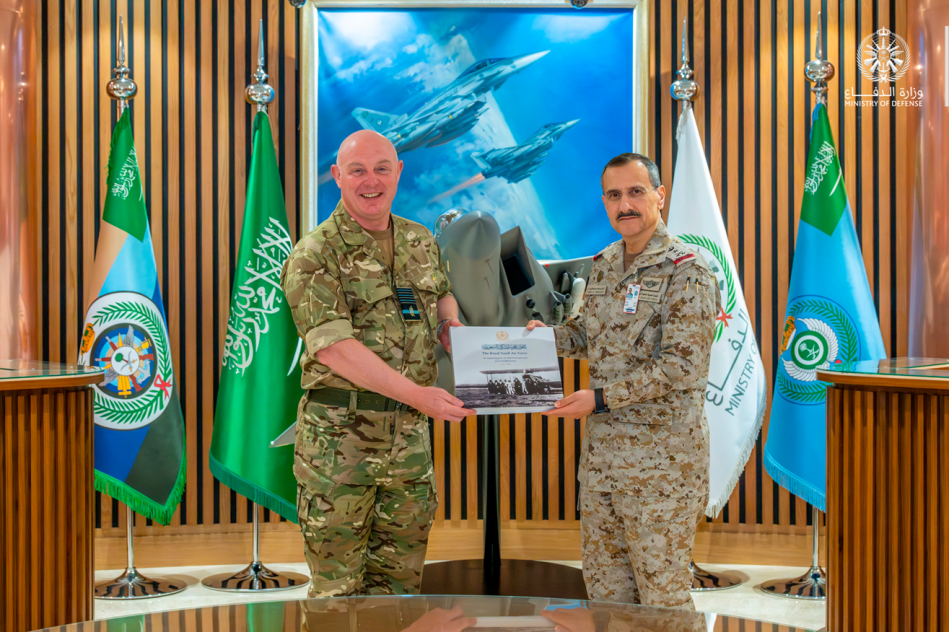
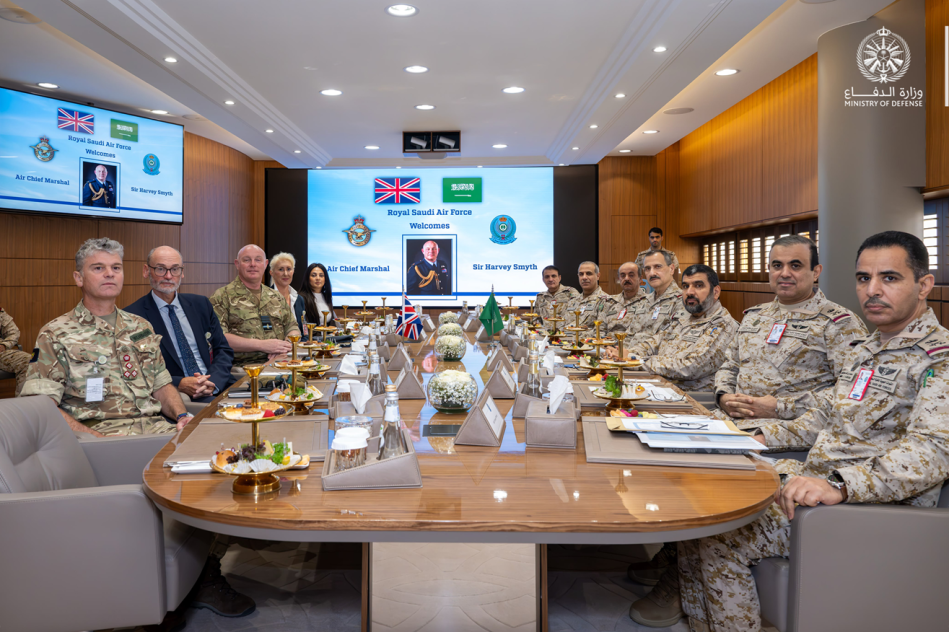
The commanders of the Saudi and British air forces discuss joint cooperation, extending a partnership that encompasses training, readiness, operations, and combat technologies
Riyadh | BETH
His Royal Highness Lieutenant General Turki bin Bandar bin Abdulaziz, Commander of the Royal Saudi Air Force, received Air Chief Marshal Harv Smyth, Chief of the Air Staff of the Royal Air Force.
During the meeting, they reviewed areas of cooperation between the two air forces and discussed matters of mutual interest, according to the Saudi Ministry of Defense.
The meeting comes within the context of longstanding air cooperation encompassing training, joint exercises, the exchange of expertise, and enhanced operational integration, benefiting from both forces’ operation of Typhoon fighter aircraft and their accumulated experience in combat, support, and maintenance systems.
The Royal Air Force has previously participated in the Spears of Victory exercise hosted by the Kingdom, while the Royal Saudi Air Force participated with six Typhoon fighter jets in Exercise Cobra Warrior in the United Kingdom. The exercises included defensive and offensive air operations, target strikes, and the development of the ability to operate within multinational formations.
Beyond the Meeting
The significance of this cooperation extends beyond operating similar air systems to the alignment of operational, planning, command, and control methods, enabling both forces to work more efficiently in joint exercises and missions.
The cooperation also creates opportunities to exchange expertise in modern aerial warfare, air defense, electronic warfare, and the management of complex operations, alongside supporting localization, knowledge transfer, and enhanced technical readiness.
Amid rapidly evolving aerial threats and the expanding use of missiles and drones, the value of this partnership lies in its ability to transform training and technology into a faster response and effective operational integration. Advanced systems provide power, but joint training is what makes that power deployable when needed.