

FIFA Corruption: Ruining the Joy
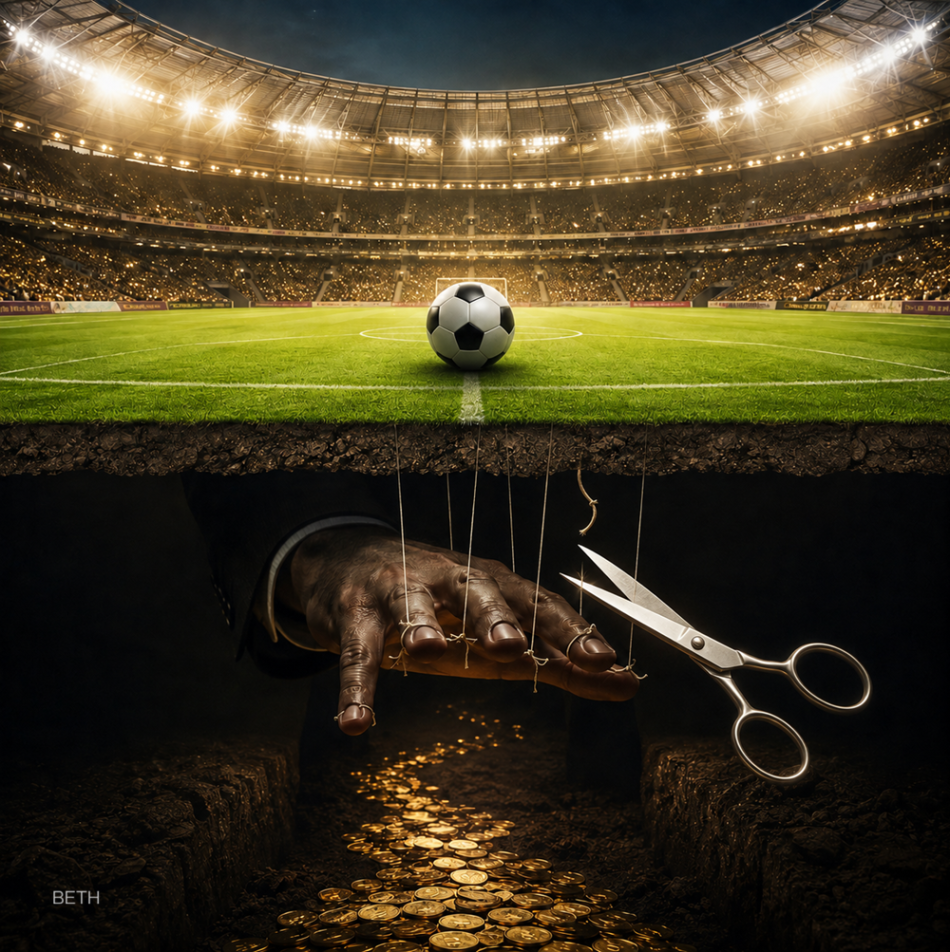
How does football turn from a fair competition inside the rectangle into a network of interests behind it? And why does corruption continue despite scandals, trials and reforms?
By: Abdullah Al-Omairah
What Is Happening?
Football is no longer just a game.
It is a global economy, a political platform, a media industry, a market for advertising and broadcasting rights, a tool for building the image of nations, and a space where the emotions of billions of people come together.
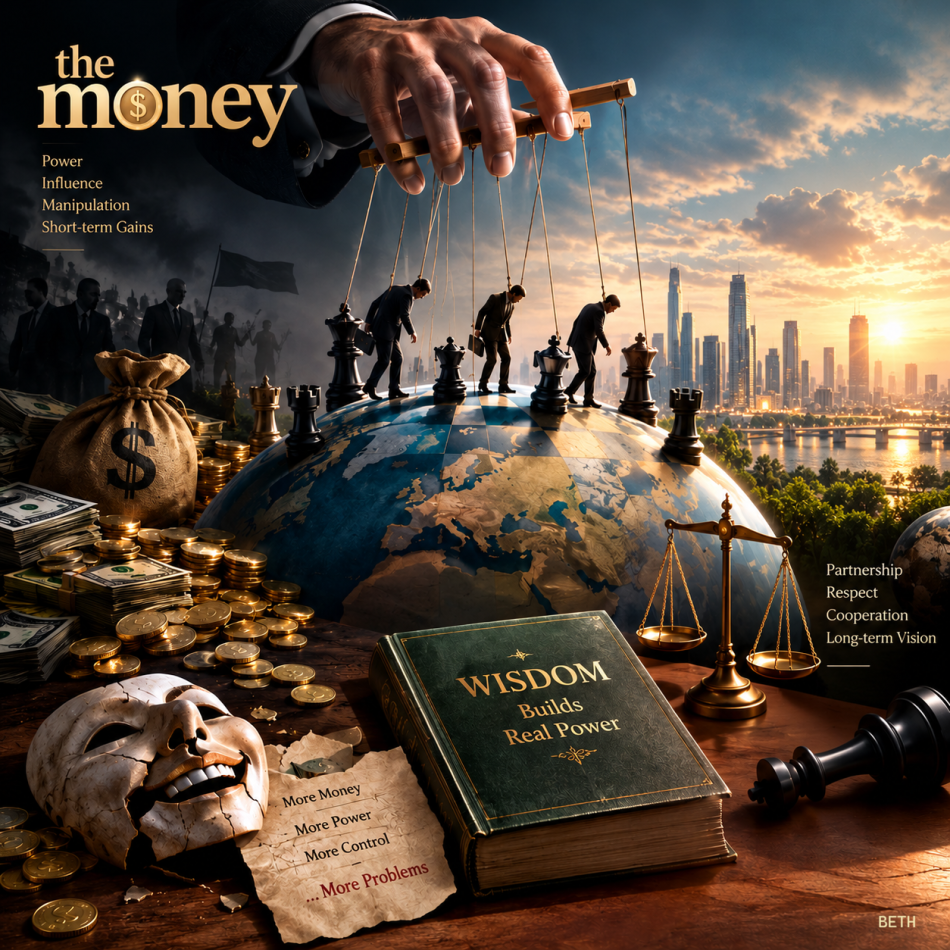
Therefore, whoever controls football’s decisions does not merely determine where a tournament is held or the value of a commercial contract; they possess the power to distribute money, visibility, influence and reputation.
This is where the danger begins.
The more powerful football becomes, the greater the number of those who do not see a match on the pitch, but rather a vast market beyond it that can be divided, votes that can be bought, associations that can be subdued, and countries that can be rewarded or punished.
Corruption in sport does not always begin with a bag of money under the table.
It may begin with information being withheld.
Or a decision made within a closed circle.
Or funding tied to loyalty.
Or a major contract whose formulation remains unknown to the stakeholders of the game.
Or electoral influence built with money supposedly allocated to the development of football.
Not every bad decision may constitute corruption in the criminal sense. However, the absence of transparency, conflicts of interest, concentration of power, and the use of institutional money to build loyalties create an environment in which corruption grows, even if not every incident reaches the courts.
Football for Sale?
The question returned strongly after the crisis surrounding the “FIFA Forward Enterprise” project, which proposed establishing a company valued at approximately $20 billion to manage FIFA’s commercial rights and events, while selling a stake of up to 20% to private investors for approximately $4.2 billion.
The objection was not to the entry of private investment into a vast sports industry; sport already depends on sponsorship, broadcasting, ticketing and investment.
The objection concerned something more serious:
Who proposed the deal?
How was the company valued?
Who selected the investors?
Which rights would have been transferred to them?
And to what extent were the national associations, which constitute FIFA’s membership, informed of the details before being asked to approve it?
The crisis intensified when reports spoke of a financial offer of up to $40 million for each national association if the project received support, while funding would remain at lower levels if it were rejected.
FIFA presented the project as a means of maximising resources and investing them in the development of the game, stressing that football was not for sale and that the project would not proceed without the support of a majority of the associations.
However, the strength of the objections, the division within the organisation itself, and the rejection of the project by associations and confederations led to its withdrawal only days after it became public.
The question here is not limited to the withdrawn deal.
How did a project of this magnitude, concerning the commercial rights of the world’s most important tournaments, reach an advanced stage before senior officials within the organisation and its associations knew its full details?
If the project was excellent, why was it not presented transparently from the beginning?
And if the associations were to vote on it freely, why was approval linked to enormous sums of money that could affect the independence of smaller associations’ decisions?
An Allegation That Cannot Be Ignored
The crisis became more serious after Prince Ali bin Al Hussein, President of the Jordan Football Association, accused FIFA President Gianni Infantino of practising what he described as “blackmail” by linking assistance in addressing matters concerning the Jordanian association to obtaining political and electoral endorsement.
Prince Ali spoke of delayed payments connected with the Arab Cup, problems faced by supporters, and financial and organisational burdens. He said that a verbal offer had been made suggesting that supporting Infantino’s candidacy could help resolve those issues.
This is an allegation made by the president of a national association and a former candidate for the FIFA presidency, not a passing comment from an angry supporter.
Nevertheless, it remains an allegation requiring an independent and transparent investigation, as well as a documented response from the international federation. Justice does not permit anyone to be convicted on the basis of an allegation alone, nor does professionalism permit an allegation of such gravity to be ignored.
The money allocated to football development does not belong to the FIFA president, nor is it a gift that he offers to those who support him.
It is the game’s money and the right of associations that meet the required conditions. It must not be transformed into an electoral instrument or a means of buying silence and loyalty.
If it is proven that providing a service to an association or paying its dues can be linked to its position in the presidential election, then we are not facing an administrative dispute, but an assault on the independence of sporting decisions.
The Corruption We Already Know
The current concerns are not separate from recent history.
In May 2015, the greatest scandal in the history of football administration erupted when Swiss authorities arrested a number of FIFA officials in Zurich, based on US investigations that uncovered networks of bribery, fraud and money laundering connected with marketing rights, broadcasting rights and tournaments.
At one stage of the investigation, 41 individuals and entities had been charged, while the amount that convicted defendants agreed to forfeit exceeded $190 million.
In 2025, the US Department of Justice stated that investigations related to corruption in world football had resulted in more than 30 convictions and guilty pleas, and the recovery of more than $200 million in forfeited funds.
These were not media rumours or sporting disputes.
They were convictions, confiscated funds and trials that revealed how some officials had turned the rights to matches and tournaments into avenues for personal enrichment.
The scandal led to the departure of senior figures, suspensions, changes to governance rules, and promises of a new era of integrity.
Yet, more than a decade later, the question remains:
Did the system change, or did only the people standing at its summit change?
Why Do They Become Accustomed to Corruption?
Corruption does not continue because the corrupt person is brave, but because the surrounding system makes them feel safe.
The corrupt person begins with a small test.
They pass a decision without accountability.
They grant a privilege to a friend.
They mix the institution’s money with their personal influence.
If no one objects, the next step becomes larger.
Over time, they no longer regard what they are doing as corruption, but rather as “managing relationships”, “protecting interests”, “political flexibility” or “rewarding those who cooperate”.
When corruption reaches the top, it cannot hold the corruption beneath it accountable; the powerful corrupt person needs the corruption of the smaller ones, just as they need that person’s silence and protection.
Wrongdoing is thus given a gentle name until it becomes repeatable.
Corruption continues in major sporting institutions for several interconnected reasons.
Money Without a Visible Owner
FIFA manages billions of dollars, but it is neither a company owned by shareholders who monitor the value of their shares nor a government directly accountable to a parliament and voters.
It is a private international association whose members are national associations. At the same time, it holds the authority to regulate, distribute funds, award tournaments and impose sanctions.
This structure gives it an independence necessary to protect sport from government interference, but it may also grant it a broad sphere of power that is not matched by equally strong public oversight.
Money that no one feels they directly own can easily be treated by some officials as though it belongs to no one.
Yet its real owner is the child who needs a football pitch, the small club that needs a coach, and the poor association waiting for a project to develop its competitions.
Every dollar used to buy loyalty is a dollar stolen from the future of the game, even if it never enters a personal account.
An Equal Vote, an Unequal Need
FIFA comprises 211 national associations, and each association has one vote in elections, regardless of the country’s size, population or football history.
This principle appears fair because it prevents major countries from monopolising the decision.
The problem arises when many associations are heavily dependent on FIFA funding.
An association that cannot operate its competitions or build its headquarters without central support does not enter elections completely independent of the body distributing the money.
A dangerous equation then emerges:
A legally equal vote, but an economically unequal need.
When the president or the president’s circle can present funding as a personal favour rather than an institutional right governed by published standards, development programmes turn into a network of electoral loyalty.
This does not mean that every association receiving support sells its vote. It means that the system opens the door to influence and weakens the ability to distinguish between legitimate development and the building of influence.
Who Watches the Referee?
On the pitch, the referee watches the players, video technology reviews the referee, and specialists evaluate the referee’s performance. Nevertheless, the referee retains broad authority that may protect the integrity of the match or open the door to corrupting it.
If financial and administrative corruption within FIFA and some associations interferes with the management of the game, corrupt refereeing interferes with its very spirit. It steals the joy of fair competition, inflames supporters, and transforms soft power from a bridge for bringing people closer into fuel for hostility and hatred.
But who reviews the major decisions within the institution that writes the rules, distributes money and punishes associations, yet may then turn a blind eye when corruption infiltrates the pitch?
When the source of funding, the holder of electoral influence and the supervisor of oversight bodies are all part of the same structure, independence written into regulations becomes insufficient.
An ethics committee described as independent has no value if its resources, appointments or the future of its members are linked to those whose decisions it is supposed to investigate.
The independence of a committee is not tested in minor cases, but when the question reaches the top of the pyramid.
Can it investigate?
Can it publish the findings in full?
Can it protect whistleblowers?
And can it impose a penalty without fear or negotiation?
Silence Is an Accomplice
Corruption does not survive through the efforts of corrupt people alone.
It needs an employee who saw and remained silent.
An official who knew and preferred to protect their position.
An association that received money but did not ask about the source of the decision.
A sporting star who lent their fame in exchange for payment.
And a media outlet that confined itself to covering the matches, as though what happens in closed rooms does not affect the result on the pitch.
The circle of silence expands because every person says that their objection will change nothing.
Yet corrupt systems do not become powerful because they are unseen. They become powerful because many people see them, and each person decides that someone else should speak.
From the Pitch to Influence
Football succeeds because it offers a simple promise:
Two teams, one set of rules, equal time, and victory for the team that scores more goals.
But when competition is moved beyond the pitch, the rules change.
Power becomes access to decision-makers.
Victory becomes the selection of committees.
The goal becomes a commercial contract.
The tournament becomes an electoral card.
And support becomes a reward for the supporter.
Then it is not only teams that lose; football loses its meaning.
A supporter can accept their team’s defeat if they believe the opponent was better. But they cannot easily accept that the outcome of the competition may have been affected by a decision whose origins they do not know, or by a rule applied to one team while another was exempted from it.
Sport does not live by results alone.
It lives through the public’s confidence that the result was not written before the match.
From Soft Power to Soft Harm
Countries use football to build bridges with the world, present their cultures, improve their image, stimulate their economies, and attract visitors and investment.
This is a legitimate use of soft power as long as it occurs through fair competition, investment, achievement and organisation.
But when corruption, politicisation or blackmail enters the game, soft power turns into “soft harm”.
Instead of bringing peoples closer, sport becomes a means of exchanging accusations.
Instead of recognising the opponent’s achievement, the public searches for a conspiracy behind it.
Instead of a country being judged by its organisational ability, it becomes surrounded by suspicions created by the weakness of the international institution.
More dangerously, corruption may harm parties that had no involvement in it.
Any opaque decision awarding a tournament to a country, changing the format of a competition or distributing financial returns does not harm FIFA alone when surrounded by suspicion. It casts its shadow over the country, the association, the tournament, the players and the supporters.
The corrupt person takes the benefit for themselves and distributes the damage among everyone else.
Saudi Arabia Needs a Strong FIFA
Saudi Arabia is preparing to host the 2034 FIFA World Cup as part of a national project that extends beyond staging matches to developing cities, stadiums, transport, tourism, sport and quality of life.
Therefore, FIFA’s integrity and the transparency of its decisions are not external matters distant from Saudi Arabia.
The Kingdom needs a strong and respected international federation because the success of a World Cup is not built through facilities and organisation alone. It also requires an international institution that protects the tournament from politicisation and suspicion and applies clear standards to everyone.
Critics of Saudi projects are also constantly searching for any weakness within the international institution that they can link to the Kingdom, even when Saudi Arabia is not involved.
Saudi Arabia’s interest, therefore, does not lie in a weak FIFA that can easily be influenced, but in a strong FIFA that no one can exploit against the Kingdom or anyone else.
A country investing billions to build a genuine sporting project does not need a favour from a confused institution. It needs justice that protects its achievement and transparency that prevents sceptics from distorting it or stealing its value.
Saudi Arabia has an opportunity to contribute to restoring the world’s confidence in football and to present a model that combines the scale of construction with integrity in administration. The stadiums and facilities it builds, the investments it makes, and the stars and expertise it attracts should be matched by an institutional structure of equal strength and clarity.
The Saudi sporting project should not be singled out merely for the scale of its spending, but for its ability to transform large and openly declared investment into efficient administration, fair competition, transparent regulations and oversight that exempts no one.
As the Saudi Pro League advances towards a place among the strongest leagues in the world, its strength will not be measured by the names of its stars and the value of its contracts alone, but by the level of confidence in the fairness of its competitions, the independence of its decisions, the integrity of its refereeing, and its ability to correct its mistakes publicly.
Sporting power can be purchased through investment. Trust, however, cannot be bought; it is built through integrity and proven through practice.
Not Every Defeat Is a Conspiracy
Resisting corruption does not mean turning every incorrect refereeing decision or sporting defeat into a conspiracy; such thinking corrupts the game in a different way.
Mistakes are part of football. Referees are human, teams lose, and technical decisions may be poor without being corrupt.
But a mistake loses its incidental nature when it recurs systematically, when rules are applied selectively, or when interests, connections and objectives emerge behind decisions that seek to corrupt the competition or undermine a particular project. At that point, explanations of “human error” are no longer sufficient, and an independent and transparent investigation becomes necessary to protect the game.
One of the most dangerous consequences of weakened trust is that the public becomes ready to interpret everything as corruption. Victory is no longer convincing, defeat is no longer acceptable, the referee is no longer presumed innocent, and the tournament is no longer regarded as fair.
Transparency therefore protects not only money and decisions, but also the public from living in a state of permanent suspicion.
Justice requires evidence, just as allegations require investigation. A distinction must always be made between:
Error.
Mismanagement.
Conflict of interest.
Ethical misconduct.
Financial crime.
Combining them all under one word may generate excitement, but it does not create reform.
How Can the Game Be Reclaimed?
Football does not need another statement about integrity. It needs a system that makes corruption more difficult, its detection faster, and its punishment certain.
Genuine Independence for Oversight
Ethics and auditing committees should have independent budgets and appointment processes, and they should possess the authority to investigate any official, regardless of seniority.
Publishing Major Decisions
The financial and technical foundations of major deals, evaluation reports, conflicts of interest and voting results should be published whenever decisions affect the future of the game.
Separating Development from Elections
Football development funds should be distributed according to published and measurable standards, not according to an association’s proximity to the president or its electoral position.
Protecting Whistleblowers
An employee who exposes corruption should find an independent body that protects them, not a door leading to the loss of their job and the destruction of their reputation.
Limiting Terms of Office
The longer an official remains within a broad international network, the greater the likelihood that professional relationships will turn into a system of personal loyalty.
External Oversight
It is not enough for FIFA to investigate itself.
Major contracts, development funds and conflicts of interest require independent external auditing, with its conclusions published for the public.
Holding the Stars Accountable
Former players, coaches and celebrities should not be used as public faces to polish decisions whose details they have not reviewed.
Fame is a responsibility, not a certificate of integrity granted to whoever pays.
Will We Learn?
Officials have fallen, money has been confiscated, regulations have changed, and the world was promised that the era of closed rooms had ended.
But corruption does not die when one person is removed if the system remains capable of producing another person who uses the same methods.
Reform does not lie in changing the names of those seated around the table, but in making the table transparent for everyone to see.
Football does not need leaders who enjoy appearing beside the trophy.
It needs institutions that protect the right of peoples to enjoy the game.
Nor does it need someone who declares that football unites the world, then uses its money to divide its associations into supporters and opponents.
The most beautiful thing about football is that it gives people 90 minutes whose ending they do not know.
Corruption begins when someone knows, before everyone else, how opportunities, money and decisions will be distributed.
Conclusion
A corrupt person in football does not merely steal money.
They steal the fairness of competition.
They tarnish the winner’s achievement.
They create an excuse for the loser.
They turn supporters from partners in enjoyment into adversaries exchanging hatred.
They exploit the soft power of nations, clubs and stars, then return it to them burdened with suspicion and harm.
Saving football, therefore, does not begin with new technology to monitor the goal line, but with an eye that refuses to close to what happens beyond the pitch.
We will reclaim the joy of the game when officials fear the question more than journalists fear asking it.
When money becomes a means of developing football, rather than developing the influence of those who run it.
And when we know that the trophy goes not to whoever has the shortest path to the corridors of power, but to whoever deserves it on the pitch.
Football is capable of becoming the world’s greatest source of enjoyment once again.
But before it cleans the stadiums after the matches, it must clean the rooms in which its decisions are made.
__________________
After Publication | Did the Media Invent Corruption?
The article prompted wide-ranging reactions. Some praised its argument, while others questioned whether corruption exists within FIFA, arguing that the issue amounts to nothing more than a narrative created by the media or a European conflict with the head of football’s international governing body.
But the media did not invent the arrests of FIFA officials in Zurich. Nor did it hand down the verdicts or confiscate the money. Investigations and courts did that. The case resulted in more than 30 convictions and guilty pleas, as well as the recovery of more than $200 million in forfeited funds.
Nor did the media attribute to Prince Ali bin Al Hussein an allegation he had not made. It reported his statement, attributed it to him, and made clear that it remained an allegation requiring an independent investigation—not a ready-made conviction.
Europe may oppose the FIFA president in defence of its influence and interests, but questioning the motives of those raising objections does not erase the facts. Corruption on the part of an opponent does not prove the integrity of the person they oppose, and self-interest does not make everything a person reveals untrue.
Nor can FIFA be separated from corrupt national football associations as though they were unrelated entities. These associations elect FIFA’s leadership, while FIFA funds, monitors and sanctions them. If the centre and its members exchange money, votes and silence, then we are not facing two separate forms of corruption, but a system that protects itself.
Professional media do not ask readers to believe them without evidence. They present the facts, distinguish between allegation and conviction, and leave the door open to investigation and response.
Denying court judgments, forfeited funds and public statements on the grounds that “the media invented them” is not scepticism towards the media. It is a rejection of facts simply because they do not conform to a preconceived belief.
The media may expose corruption, and they may err in interpreting it. But they cannot invent a court, fabricate 30 convictions or confiscate $200 million. Anyone wishing to deny corruption must challenge the evidence, not accuse the mirror because it revealed the image.
Administrative corruption within FIFA does not negate the success of World Cup tournaments, including the most recent edition and, before it, the 2022 World Cup in Qatar. The organisational success of a host nation is one matter, while the integrity of the international governing body and its decisions is another; neither should be used to negate the other.
The world now expects future tournaments to move towards a more complete model, beginning with the 2030 World Cup and culminating in the 2034 World Cup in Saudi Arabia. The Kingdom’s organisational capabilities, modern sporting projects and infrastructure, the scale of its ongoing transformation, and its ability to learn from the experiences and mistakes of previous tournaments all point to an edition with the potential to achieve unprecedented success.
The Saudi World Cup may establish an organisational, technological and human-centred standard that will be difficult to replicate for years—not because it conceals football’s shortcomings, but because it learns from them and builds upon the best the world has achieved before it.
The question remains: Will the corruption allegations and disputes with the FIFA president alter the course of the federation’s programmes and upcoming international competitions, or will they prove to be a storm that ultimately cleanses the organisation and drives it towards presenting a better model?
The tournaments will proceed according to their schedules because they are bound by contracts and international commitments that are difficult to disrupt. However, the crisis may change the way FIFA is managed and impose greater transparency and oversight. The storm will not stop football, but it may cleanse the institution that governs it.
Administrative corruption within FIFA does not negate the success of its tournaments, just as successful tournaments do not grant the organisation a certificate of integrity if wrongdoing is proven. Between the two, what the world expects remains clear: football in which the fairness of its decisions matches the beauty of its organisation.