



Saudi Arabia Safeguards Stability
The Cabinet reaffirms the priority of dialogue to reduce escalation, welcomes the expanding maritime coalition, and approves a package of regulations and decisions supporting investment, artificial intelligence, and housing
Jeddah | BETH
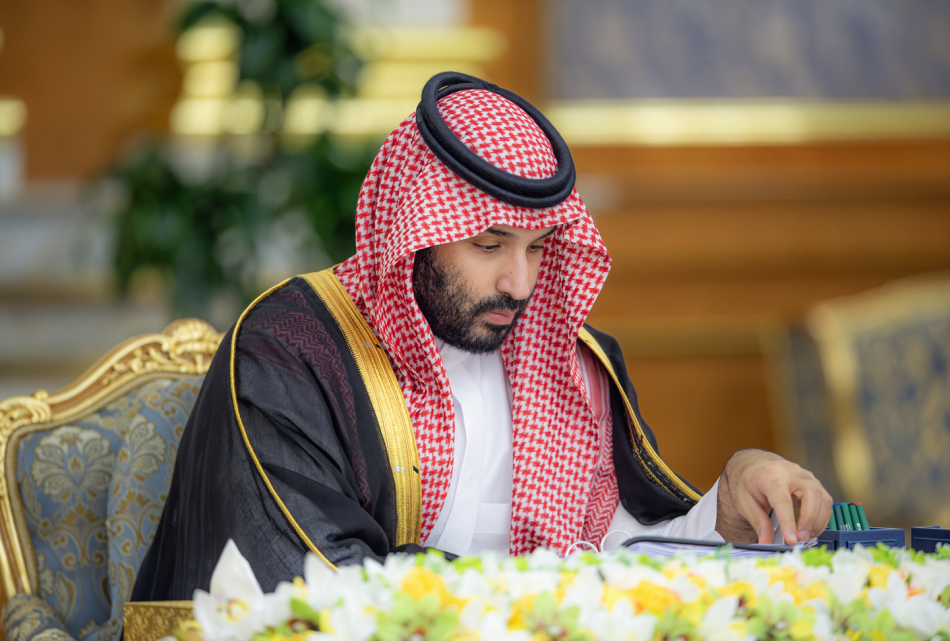
His Royal Highness Prince Mohammed bin Salman bin Abdulaziz Al Saud, Crown Prince and Prime Minister, chaired the Cabinet session held Tuesday in Jeddah, as Saudi efforts continue to expand along two parallel tracks: containing regional escalation and strengthening the national economy’s capacity to sustain transformation and growth.
The session reflected the integration of Saudi policy instruments—from high-level political communications and calls for diplomatic solutions to the establishment of a multinational maritime coalition to protect navigation, trade, and energy supplies, alongside the continued modernization of regulations and the opening of new opportunities for investment, technology, and housing within the Kingdom.
Dialogue Before Expansion
The Crown Prince briefed the Cabinet on the content of his telephone conversation with United States President Donald Trump, which addressed developments in the region and their repercussions at various levels.
During the call, Saudi Arabia stressed the need to prioritize dialogue to reduce escalation and to exert every effort to achieve calm, paving the way for diplomatic solutions that preserve regional security and stability.
This position demonstrates the consistency of the Saudi approach to crises. The Kingdom does not view de-escalation as a temporary position, but as a political entry point to prevent the conflict from expanding and to protect states, societies, and the global economy from consequences that could become difficult to contain if they move beyond their current boundaries.
The Crown Prince also briefed the Cabinet on his telephone conversations with King Hamad bin Isa Al Khalifa of Bahrain, Syrian President Ahmed Al-Sharaa, Turkish President Recep Tayyip Erdoğan, and Spanish Prime Minister Pedro Sánchez. The discussions reviewed prospects for cooperation between Saudi Arabia and their respective countries, as well as issues of mutual interest.
The intensity of these communications is closely linked to the nature of the current phase. Riyadh is engaging capitals across the region and the world to bring positions closer together, reduce the risk of a broader confrontation, and keep political channels open at a time when the language of force and threats is intensifying.
The Coalition Expands
The Cabinet expressed appreciation for the growing international support and participation in the multinational defensive maritime coalition launched by Saudi Arabia to protect international shipping lanes, trade routes, and energy supplies from escalating threats in the Red Sea, the Bab Al-Mandab Strait, and the Gulf of Aden.
The growing international participation in the coalition marks a shift from shared concern to organized action. The waterways the coalition seeks to protect do not serve one country alone; they are vital arteries for global trade, maritime traffic, and energy supplies.
The launch of the coalition also reflects the Kingdom’s transition from managing the consequences of maritime threats to establishing an international framework for deterrence and protection, based on shared responsibility, coordinated capabilities, and broader surveillance and response.
Three tracks therefore converge within the Saudi approach: American power for pressure and deterrence, the Saudi-led maritime coalition to protect strategic waterways, and Saudi diplomacy to prevent the war from expanding and clear the path toward a settlement.
From Gaza to a Political Process
The Cabinet expressed hope that the historic agreement on disarmament in the Gaza Strip would serve as the starting point for a comprehensive political process leading to the full implementation of the comprehensive peace plan and guaranteeing the Palestinian people’s right to self-determination and the establishment of their independent state.
The Cabinet commended the efforts of Egypt, Qatar, Türkiye, the United States, and the Peace Council in achieving the agreement.
The Saudi position places the agreement within its broader context. Security arrangements alone are insufficient to end the conflict unless they are translated into a political process that addresses its root causes and grants the Palestinian people their legitimate rights, foremost among them the establishment of an independent state.
A Platform for Humanitarian Action
The Cabinet reaffirmed the Kingdom’s commitment to supporting and expanding humanitarian and relief efforts by organizing the fifth Riyadh International Humanitarian Forum next April.
The forum strengthens Riyadh’s position as a global platform for building sustainable humanitarian partnerships, coordinating international efforts, and facilitating the delivery of assistance to people in need and those affected by crises.
This approach is becoming increasingly important amid the growing number of conflict zones and expanding humanitarian needs. Emergency responses alone are no longer sufficient; there is now a greater need for long-term partnerships that connect funding with implementation and ensure that assistance reaches those affected.
A Decade of Transformation
The Cabinet welcomed the findings of the International Monetary Fund’s 2026 Article IV Consultation report, which affirmed the resilience of the Saudi economy and its ability to adapt to challenges.
The IMF’s assessment was based on the Kingdom’s strong economic fundamentals, diversified infrastructure, adequate long-term fiscal planning, financial and monetary stability, and the structural reforms implemented under Saudi Vision 2030.
The recognition is particularly significant because it comes after a full decade of economic transformation. During this period, diversification has ceased to be merely a future objective and has become a tangible path reflected in institutional efficiency, the expansion of non-oil activities, improvements in healthcare and education indicators, and the achievement of several targets ahead of schedule.
The Cabinet also praised the achievements of the Pilgrim Experience Program and the contribution of its initiatives and projects to continuously improving services provided to pilgrims and Umrah performers from their arrival until their departure.
Legislation for a New Economy
The Cabinet approved several regulations and decisions shaping a new phase of economic and investment governance, foremost among them the Government Tenders and Procurement Law and the Statute of the International Center for Artificial Intelligence Research and Ethics.
The two decisions bring together complementary tracks: improving the efficiency of government spending and contract management, and establishing an international authority capable of addressing the ethical and regulatory questions accompanying the rapid expansion of artificial intelligence.
The international center is expected to strengthen the Kingdom’s role in shaping the principles governing technology—not merely as a user, but as a partner in developing its intellectual and ethical frameworks at the global level.
Housing Through Partnership
The Cabinet approved allowing investors to develop planned land and construct housing units for developmental housing beneficiaries in exchange for ownership of a percentage of the land.
The decision introduces a new model of partnership between the state and the private sector by linking investment returns to direct social impact. It could accelerate land development, increase housing supply, and provide homes for beneficiaries with greater efficiency.
The Cabinet also approved a one-year extension of the deadline for rectifying the status of undocumented real estate transactions. This gives the parties involved an additional opportunity to complete the required legal procedures, enhances the reliability of the real estate market, and protects property rights.
Finance Across Borders
The Cabinet authorized the regional headquarters of financial institutions licensed by the Ministry of Investment to conduct cross-border financial activities approved by the Financial Sector Development Program Committee.
The impact of the decision goes beyond hosting administrative headquarters. It allows institutions to conduct financial activities serving markets outside the Kingdom from their regional bases within Saudi Arabia, further strengthening Riyadh’s position as a hub for managing international business and financial services.
The decision also increases the economic value of regional headquarters, expands the range of specialized jobs, expertise, and activities that can be localized, and gives financial institutions a stronger operational reason to make the Kingdom their regional base.
Diverse Partnerships
The Cabinet approved a general cooperation agreement with Ecuador, an agreement with Kazakhstan on the promotion and reciprocal protection of investments, a memorandum of understanding with Spain in the field of civil aviation, and a maritime transport cooperation agreement with Somalia.
It also approved a memorandum of understanding between the Saudi Space Agency and the Turkish Space Agency on cooperation in the peaceful use of outer space. The Minister of Education was authorized to hold discussions with the Korean side on cooperation in technical and vocational training.
The Cabinet further approved the accession of the Ministry of Interior’s General Directorate of Medical Services to the International Hospital Federation and endorsed the final accounts of the universities of Hail, Taibah, Qassim, and Jouf for previous fiscal years.
The range of agreements reflects a carefully diversified network of partnerships extending from investment, aviation, and maritime transport to training, space, and healthcare. These agreements connect political relations with practical projects capable of generating knowledge, investment, and national capabilities.
A State Moving on Two Tracks
The Cabinet session presents the image of a state managing the challenges of the present without postponing the work of building the future.
Abroad, the Kingdom is working to reduce escalation, protect international waterways, support peace and Palestinian rights, and expand humanitarian action.
At home, it continues to modernize legislation, stimulate investment, regulate artificial intelligence, deepen the financial market, develop innovative housing solutions, and build international partnerships in future-oriented sectors.
This is the session’s most important dimension: safeguarding stability does not end with preventing war; it also means building an economy, institutions, and a society capable of continuing to function regardless of how severe the surrounding turmoil becomes.