



Crown Prince Stresses in Call with Trump the Need to Prioritize Dialogue to Prevent the Conflict from Widening
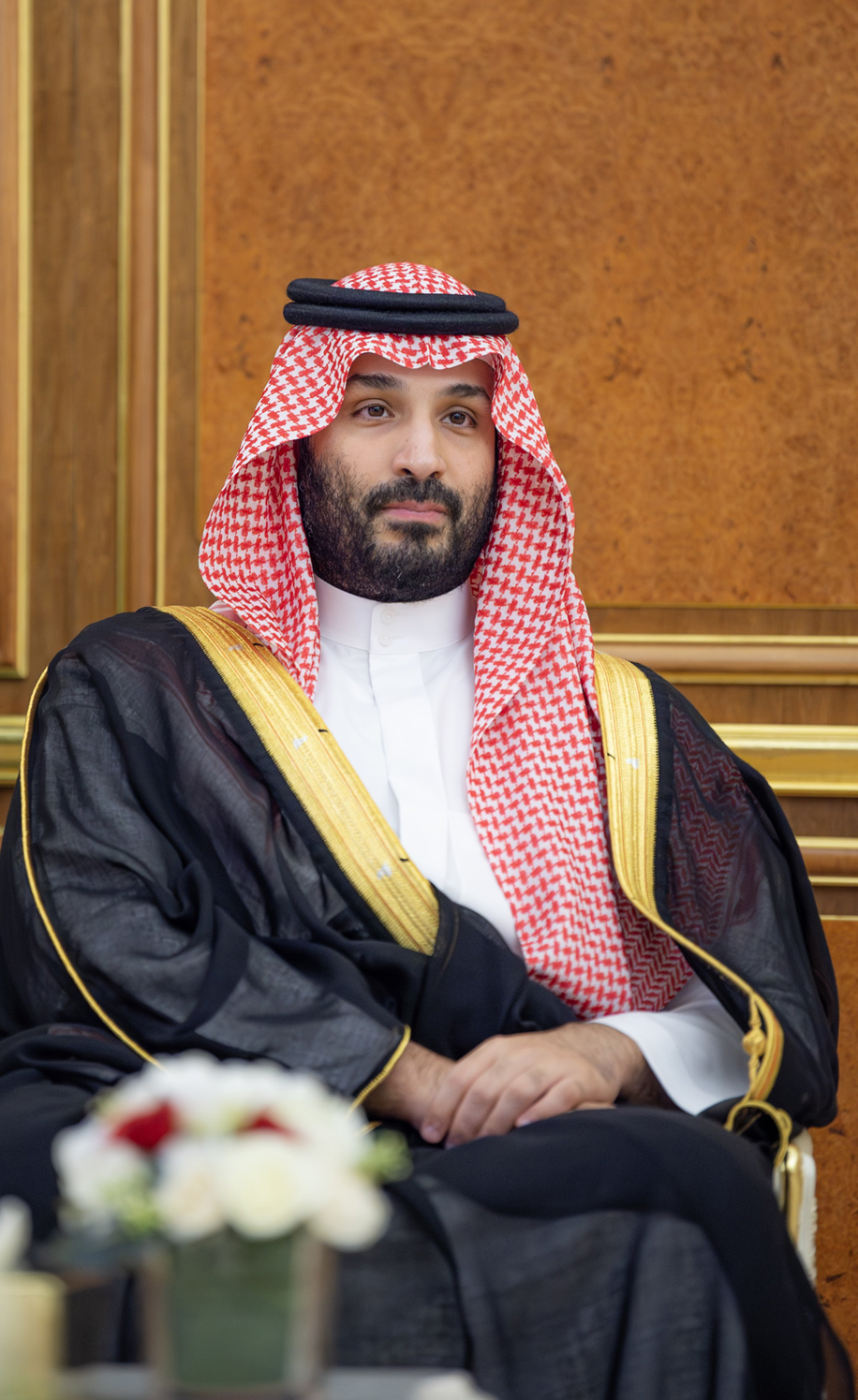
Saudi-US call discusses the repercussions of regional tensions and calls for a de-escalation that paves the way for diplomatic solutions safeguarding regional security and international stability
Jeddah | BETH
His Royal Highness Prince Mohammed bin Salman bin Abdulaziz Al Saud, Crown Prince and Prime Minister, held a telephone call with President Donald Trump of the United States. The call addressed developments in the region and their regional and international repercussions at various levels.
During the call, the Crown Prince stressed the need to prioritize dialogue, reduce escalation, and exert every possible effort to achieve a de-escalation that paves the way for diplomatic solutions capable of producing positive results, preserving the region’s security and stability, and preventing the slide into a broader conflict whose repercussions would extend to regional and international security and stability.
The two sides also reviewed existing areas of cooperation between the Kingdom and the United States and ways to strengthen them.
Analysis
The significance of the call stems from both its timing and the level of its participants. It comes at a moment when the risks of escalation are no longer confined to the warring parties, but have extended to countries in the region, energy facilities, maritime corridors, global trade, and the world economy.
The choice of the phrase “prioritize dialogue” does not merely represent a general call for de-escalation. It clearly defines the Saudi position: preventing military force from becoming the only means of managing the crisis and restoring politics to its proper place before the parties lose the ability to control the war.
The Crown Prince’s emphasis on the need to prevent a slide into a broader conflict also reflects Saudi Arabia’s understanding of the sensitivity of the current stage. When confrontation reaches energy facilities, ports, and neighboring countries, it no longer remains a limited war whose consequences can be contained. It becomes an international crisis affecting oil supplies, supply chains, markets, and maritime security.
A Message to Washington
The call conveyed a direct message to President Trump: to define the scope of US military operations and keep the door open to a political solution.
Military strikes may weaken Iran’s capabilities, but they cannot, on their own, guarantee an end to the confrontation. Any expansion of the target list, particularly if it includes infrastructure and energy facilities, could trigger responses that would be difficult to contain and make a return to negotiations more costly.
From this perspective, the Kingdom does not present dialogue as an alternative to protecting security or deterring attacks, but as a means of preventing deterrence itself from turning into an open-ended war that exceeds its original objectives.
An Active Saudi Role
The call to “exert every possible effort” indicates that the Kingdom is not content merely to monitor the crisis or warn of its consequences. Instead, it is pushing for diplomatic action that prepares the ground for de-escalation and produces workable solutions.
Saudi Arabia’s position, political and economic weight, and international relationships give its message particular significance. The Kingdom is directly affected by instability in the region, while also possessing channels of communication and influence that can be employed to bring positions closer together and protect stability.
The review of bilateral cooperation at the conclusion of the call also confirms that the Saudi-US relationship is not confined to managing the current crisis. It rests on a broader partnership that allows Riyadh to engage with Washington through the language of shared interests and mutual responsibility for regional security.
Conclusion
The Saudi-US call establishes a clear equation for the next stage:
Security cannot be protected by expanding the war. Deterrence cannot be complete without a political track. And any military victory loses its value if it opens a conflict that no one has a plan to end.
Riyadh is therefore acting to prevent the most dangerous question from arising:
How can the war be stopped if it extends beyond the borders of its parties and turns the region and the world into part of its battlefield?