



Development of the Red Palace in Riyadh
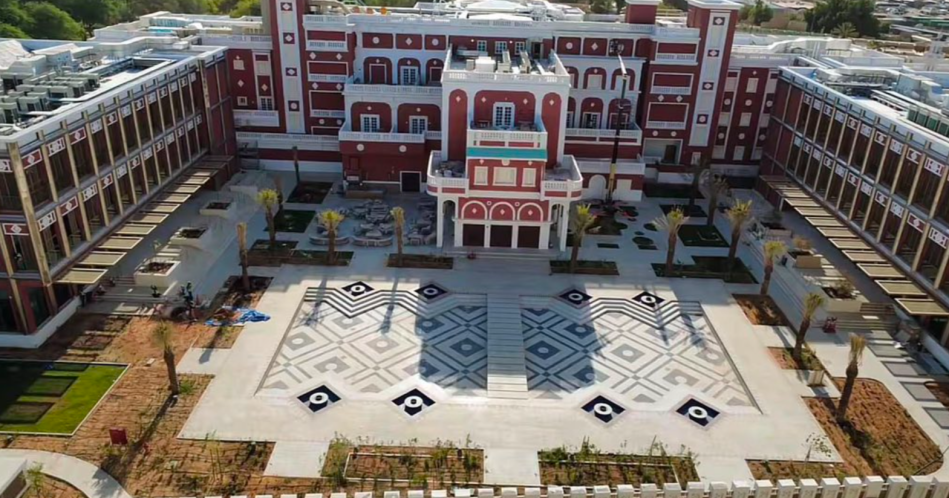
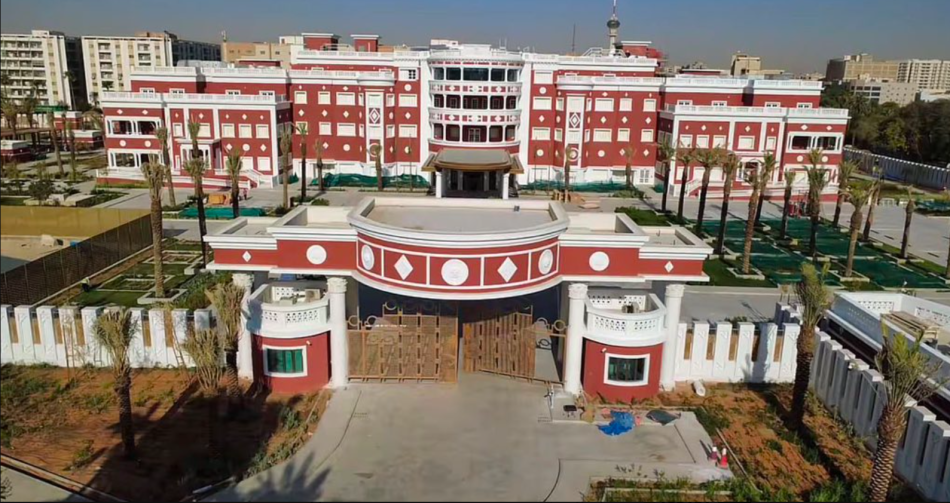
Most of the work to transform the historic landmark in central Riyadh into a luxury hotel destination comprising 70 rooms and suites, restaurants, and wellness facilities has been completed
Riyadh | BETH
Most of the construction and restoration work on the Red Palace development project in central Riyadh has been completed, as part of the projects undertaken by Boutique Group, wholly owned by the Public Investment Fund, to transform the historic palace into an ultra-luxury hospitality destination.
According to the latest information, the project comprises 70 rooms and suites, along with fine-dining restaurants and integrated wellness and activity facilities, within an experience designed to combine hotel accommodation with Saudi history, architecture, and culture.
The project is not merely about constructing a new hotel within a historic site, but about repurposing the palace itself, preserving its identity and architectural features, and presenting it to visitors as part of Riyadh’s political and urban history.
A Palace That Began After a Fire
King Abdulaziz bin Abdulrahman Al Saud ordered the construction of the palace in 1362 AH, corresponding to 1943, to serve as the residence of the then Crown Prince Saud bin Abdulaziz, after his mud-brick palace adjacent to Al Murabba Palace was destroyed by fire.
The palace derived its name from the reddish color that distinguished its façades and was considered one of the first buildings constructed with reinforced concrete in Riyadh, during a period when the city was transitioning from traditional mud-brick construction to new architectural and construction methods.
The palace was not merely a residence. Throughout its history, it received rulers, politicians, guests, and prominent figures, and witnessed meetings and decisions associated with important stages in the building of state institutions.
From Residence to the Council of Ministers
In 1957, the palace became the headquarters of the Council of Ministers and continued to perform this role for nearly 30 years, making it a witness to the establishment of government regulations and institutions and the expansion of the state’s work.
After the Council of Ministers relocated, the palace became the headquarters of the Board of Grievances until 2002, before being included among the historic palaces designated for preservation and redevelopment. Public Investment Fund
Thus, the building’s function moved through three roles:
A royal residence.
A center for government decision-making.
Then a historic destination being prepared to receive visitors from within the Kingdom and abroad.
History Within the Experience
Boutique Group is working to transform historic and cultural palaces into ultra-luxury hotels while preserving their architectural elements and introducing contemporary hospitality services.
The idea is that the palace should not remain a historic building viewed only from the outside, but become an experience that visitors can live within through its rooms, suites, restaurants, public spaces, exhibitions, gardens, and personal services.
The group describes the Red Palace as the “Rose of Riyadh” and regards it as a symbol of the capital’s journey of development and its heritage in hospitality, culinary arts, and architecture inspired by the local environment and global influences.
Economic Value for Heritage
The project adds a new asset to Riyadh’s luxury hospitality sector, which is witnessing expansion in tourism, conferences, events, and the hosting of international visitors.
The Red Palace also differs from a modern hotel because its value does not come from its rooms and services alone, but from the story carried by the place.
This gives it the ability to attract visitors seeking a cultural and historical experience, rather than luxury accommodation alone, and raises the economic value of heritage buildings by operating and preserving them instead of leaving them closed or with limited use.
The project also creates opportunities in hospitality, culinary arts, cultural guidance, and heritage management, and enables Saudi products, arts, and designs to be presented within an experience aimed at both local and international visitors.
BETH Commentary | The Palace Continues Its Life
The importance of the project lies not in transforming an old palace into a new hotel, but in keeping history alive and capable of performing a contemporary function.
Preserving the building does not mean freezing it at a moment in the past, just as developing it should not erase its original traces beneath manifestations of modern luxury.
True success will lie in achieving a balance between the guest’s comfort and the sanctity of the place, so that the visitor feels they are staying within a chapter of Riyadh’s history, rather than inside a hotel that could exist in any other city.
The Red Palace began as the residence of the Crown Prince, then became the headquarters of the Council of Ministers and the Board of Grievances.
Today, it is preparing for a new role:
To tell the history of the state through a hospitality experience lived by the visitor, rather than read on a plaque hanging in front of a closed door.