


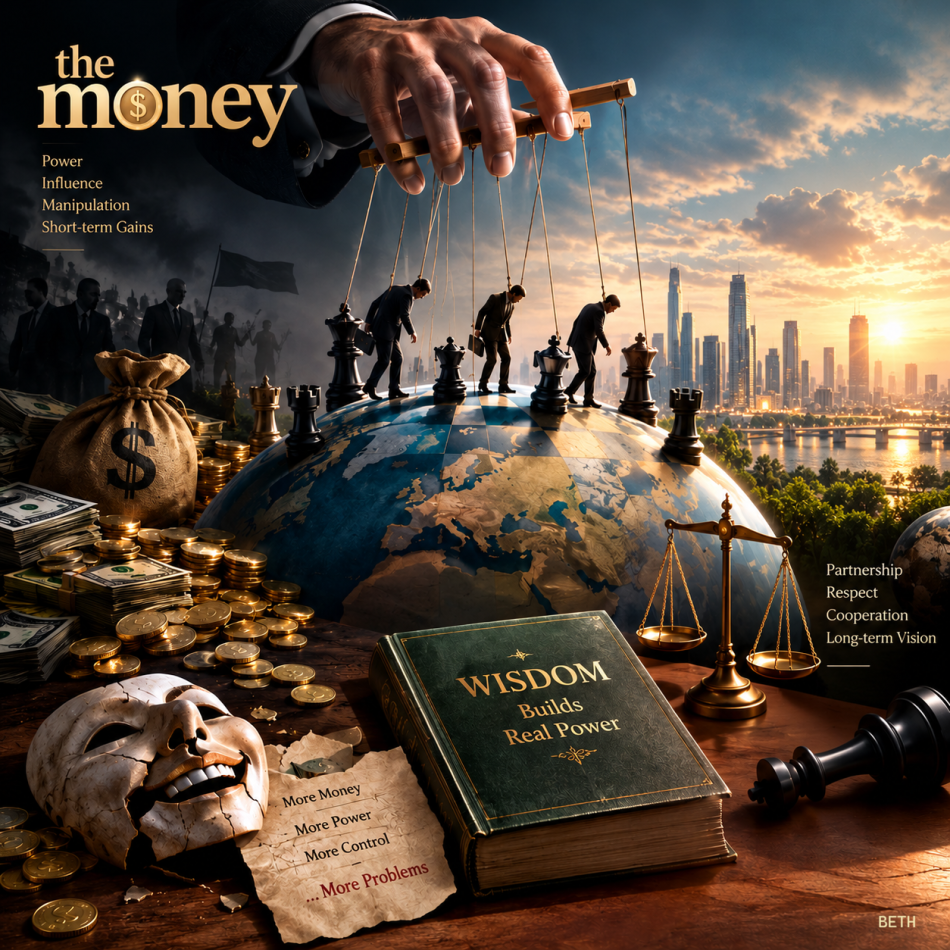
Do Values Have a Geography?

When religion is one in its source but different in its application, do East and West shape human values, or are they shaped by power, history, and interest?
Prepared and Analyzed by | Strategic Media Department – BETH Agency
Supervised by: Abdullah Al-Omairah
When “Western values” and “Eastern values” are mentioned, it seems as though the world is morally divided into two halves.
A West that believes in freedom, the individual, and human rights.
And an East that believes in family, community, religion, and traditions.
But is this division real?
Do values originate from geography?
Or from religion?
Or are what we call Western and Eastern values merely the product of centuries of history, conflict, power, interests, and customs?
The question becomes more complicated when we remember that the three monotheistic religions—Judaism, Christianity, and Islam—all originated in this region of the world.
The divine messages emerged from the East, and from there they spread to other nations, peoples, and continents.
How, then, did Christianity, which originated in the East, become one of the most prominent components of Western identity?
How did a Jew in Europe or the United States come to be described as Western, while a Jew who lived in Iraq, Yemen, or Morocco is described as Eastern?
And how can a Muslim in Indonesia be Asian, in Senegal African, and in France Western, when the religion is one?
Perhaps the problem lies in the question itself.
Religion has no fixed geography, and values carry no passport.
Are Values Based on Religion?
Religion is one of the most important sources of values, but it is not the only source.
Religions have provided humanity with major systems that define the meanings of good and evil, justice and injustice, mercy and cruelty, honesty and betrayal, and truth and falsehood.
But a person does not receive values from religious texts alone. They also receive them from their family, school, society, history, laws, political system, economic circumstances, and whatever their society has experienced in terms of war, prosperity, colonialism, or isolation.
In Islam, values are closely connected to faith, derive their foundations from the Holy Qur’an and the Prophetic Sunnah, and are based on instilling noble character in human conduct and relationships with others.
Abu Hurairah, may Allah be pleased with him, narrated that the Prophet ﷺ said: “I was sent only to perfect noble character.”
Part of the tolerance of Islam, the final divine message, and its recognition of universal human values is that it did not present morality as a rupture with what came before. Rather, it affirmed the virtues brought by earlier divine laws and acknowledged the noble character that human beings reached through their natural disposition, reason, and experience.
The Prophet ﷺ therefore explained that his message came to complete the moral structure, not to begin it from nothing; affirming what previous messages had established, correcting what had deviated, and completing what human life required.
Should we not embody these morals so that they become a common denominator among people and a driving force for peace, love, and human fraternity?
Nevertheless, two people may follow the same religion and read the same text, yet differ in how they understand and apply it.
Not because the religion has changed, but because the environment through which each of them reads it is different.
Religion gives people their frame of reference, but culture influences interpretation, power determines the scope of application, interest may select the values that serve it, and history leaves its effects on consciousness even after centuries have passed.
It is therefore not enough to ask: What is the religion of this society?
We must also ask:
How did this society understand its religion?
Who undertook its interpretation?
How did power use it?
What did customs add to it?
And what was removed from it when it conflicted with interests?
From East to West
Judaism, Christianity, and Islam originated in the East, and each message came within a specific historical and human context, affirming belief in God and the principles of justice, mercy, and moral responsibility.
God concluded the divine messages with Islam and made it a universal message for all people, based on the perfection and comprehensiveness of the religion, its suitability for every time and place, and the preservation of the Holy Qur’an from distortion and alteration.
Among the wisdoms scholars mention regarding the finality of prophethood is that humanity had reached a stage that enabled it to carry a complete and enduring message that required neither a new prophet nor renewal, and that Islam came with a comprehensive approach governing faith, worship, morality, and human dealings, while meeting humanity’s evolving needs through fixed principles and a broad scope for independent reasoning.
Nevertheless, one question always requires an answer:
Why did people remain followers of the two earlier religions? Why did they not unite under one religion?
From the Islamic perspective, Islam came to confirm the original truth of the previous divine messages and to stand as the final authority over them. It called upon all people to follow it, but it did not make faith a matter of compulsion, because guidance is based on choice, and life is, in essence, a realm of trial. Over time, religions also ceased to be beliefs alone and became historical, cultural, and social identities inherited by peoples. Religious difference therefore continued and will remain as long as human beings differ in faith, understanding, and choice.
Why Were We Not One Nation?
God is capable of making all people follow one religion, but He created human beings with will and the ability to choose, and made life a field of trial between guidance and error.
The Almighty said:
﴿Had Allah willed, He could have made them one nation, but He admits whom He wills into His mercy. And the wrongdoers will have neither a protector nor a helper.﴾
Divine wisdom required faith to be a choice, because obedience that cannot be refused is not a test, and imposed faith does not reveal a person’s sincerity.
Someone may say: If Islam is the final religion and the message of Muhammad ﷺ is directed to all people, are human beings not required to follow it?
Yes. From the Islamic perspective, Islam came to complete the previous divine messages and to stand as the final authority over them, and it called upon all human beings to follow it. But the universality of the message does not abolish freedom of choice, and the obligation to believe in it does not mean imposing it by force. The Muslim’s duty is to convey the message with wisdom and good example, while guidance and judgement belong to God alone.
As for those who benefit from turning difference into conflict and hostility, they are everyone seeking power, influence, or interest, because it is easier to unite people through fear of an enemy than to unite them around a shared value.
There is no contradiction between God’s will and human will. God willed that human beings possess a genuine ability to choose, but through their choices, they do not go beyond God’s knowledge, power, and will.
Human will does not grant people the right to object to God’s wisdom or reject His decree. Rather, it gives them the space to choose for which they will be held accountable. Difference occurred through God’s universal will, but it does not permit human beings to choose error or injustice or to turn difference into hostility, because God showed them the path of guidance and then held them responsible for what they chose.
God willed, in the universal sense, that choice and difference should exist, but He did not command, in the religious sense, disbelief, injustice, or hostility.
Human will is therefore part of the trial God willed, not a will independent of Him.
Religions then spread through caravans, migrations, conquests, wars, trade, missionary activity, and civilizational interaction.
When Christianity spread to Europe, it did not remain merely a message arriving from the East. It entered the fabric of European societies and was influenced by their languages, philosophies, conflicts, and empires.
Over time, the West no longer merely embraced Christianity, but reshaped its religious experience according to its own history.
Then came the conflicts between the Church and monarchs, religious wars, the Reformation, the Enlightenment, and the rise of the nation-state, producing what later came to be called “Western values.”
But these values did not emerge from Christianity alone.
They were shaped by Christianity, Greek philosophy, Roman law, the European experience, political revolutions, scientific progress, colonialism, capitalism, and the long struggle between the individual and authority.
Likewise, Eastern values are not the exclusive product of Islam, Judaism, or Christianity.
They are a combination of religion, the extended family, tribal traditions, imperial heritage, the economic environment, systems of government, local customs, and experiences of colonialism and resistance.
Therefore, what we call “Western” or “Eastern” values is not an independent religion.
It is a complex historical and cultural composition.
Religion Is One... Environments Differ
What is the difference between an Eastern Christian and a Western Christian?
Both believe in Christ, but they may differ in language, church, rituals, their relationship with society and authority, and their understanding of the roles of the family, the individual, and the state.
What is the difference between an Eastern Jew and a Western Jew?
Faith may unite them, but cultural memory, social history, and the experience of living among different societies may create wide differences between them.
What is the difference between an Eastern Muslim and a Western Muslim?
Islam is one in its foundations, but a Muslim in the East may live within a society whose customs were shaped around Islam’s historical presence, while a Muslim in the West lives within a social and legal system that arose in a different context.
A Western Muslim may be more committed to certain Islamic values than a Muslim living in a Muslim country.
An Eastern Christian may be more conservative than a Western Christian.
A Jew from an Eastern environment may be closer in social customs to their Eastern Muslim and Christian neighbours than to a Jew raised in Europe.
Here, the truth ignored by this simplistic division becomes apparent:
The influence of a neighbour on daily behaviour may be stronger than the influence of a distant fellow believer.
A person is not shaped by religion alone, but also by language, place, memory, and society.
But if proximity is capable of creating this similarity, why do some people turn religious or cultural difference into hostility and wars?
Because they do not see difference as human diversity, but as a threat to their identity, status, and interests. When leaders or groups seeking influence exploit fear, the person who is different is transformed from a neighbour who can be understood and lived alongside into an enemy who must be confronted.
Wars, therefore, do not begin with religious or cultural difference, but with the exploitation of difference to create fear and hatred and to advance interests.
Is the West More Liberal?
The West presents itself as a space of freedom, equality, and human rights—great values that the modern Western experience contributed to developing through its institutions and laws.
But possessing the discourse does not always mean fully adhering to it.
Western history itself witnessed slavery, colonialism, racist wars, genocide, and religious discrimination.
The effects of these experiences remain present in some ideas and attitudes, even in the age of openness and global communication.
You may therefore hear a Westerner speak about freedom, then reject the differences of others.
They may defend equality, then look upon other peoples from a position of superiority.
They may demand the separation of religion from politics, then use their religious and cultural background to justify a political position.
This contradiction is not exclusive to the West.
The East may also speak of mercy, then practise cruelty.
It may uphold the value of dignity, then accept humiliation.
It may celebrate religious tolerance in its history, then become intolerant of a minor difference within its society.
The problem is not that the West has no values, or that the East is more moral.
The problem is that all societies tend to present the most beautiful aspects of their principles while concealing what contradicts them in their practices.
When Values Become an Instrument of Superiority
The most dangerous thing that can happen to values is their transformation from human principles into a means of classifying people.
When a society says that its values are inherently superior to those of others, it is no longer defending morality. Instead, it begins constructing a civilizational hierarchy that places itself at the top.
This is where cultural racism emerges.
The bigot no longer openly says that their race is superior. They may instead say that their “values” are superior and that others remain unqualified for freedom, democracy, or progress.
The words change, but the old idea remains.
Racial superiority becomes civilizational superiority.
Colonial arrogance becomes moral discourse.
Discrimination against human beings becomes an alleged defence of values.
But a value that does not include the person who is different is not a universal value.
Freedom granted to those who resemble us and withheld from those who differ from us is not freedom.
Human rights that change according to nationality, religion, or political interest are not rights, but privileges granted by power to whomever it chooses.
Are There Universal Values?
Despite the differences among societies, there is a shared moral space among human beings.
Hardly any society declares betrayal to be a virtue, injustice to be a goal, the killing of innocent people to be a value, or lying to be the foundation of trust.
Societies differ in how they define certain concepts, their boundaries, and the ways they are applied, but they converge around major principles such as justice, mercy, honesty, dignity, and the protection of the weak.
These principles were not created by the East alone, nor were they monopolised by the West.
Religions affirmed them, philosophies discussed them, human experiences developed them, and modern societies transformed them into laws and institutions.
It is therefore more accurate not to speak of Eastern and Western values as two opposing worlds, but of human values that societies differ in understanding, prioritising, and fulfilling.
One society may prioritise the individual, while another prioritises the family.
One society may focus on freedom, while another focuses on stability.
But the imbalance begins when freedom is used to destroy responsibility, stability is used to suppress human beings, the family is used to erase the individual, or individualism is used to dismantle society.
A value is not measured by its name, but by its effect on human beings.
The Human Being Before Directions
There is not merely an Eastern Jew and a Western Jew in the essence of faith; rather, there are two different historical and cultural experiences.
There is not an Eastern Christian and a Western Christian because Christ belongs to a different geography each time, but because societies reshaped their relationship with religion according to their history.
Nor is there an Eastern Islam and a Western Islam in the foundations of the religion. Rather, there are Muslims living in different environments and influenced by different systems, education, cultures, and experiences.
East and West do not create two different consciences for the human being.
They create two different contexts for their life.
Racism, insularity, and arrogance do not become Western values merely because a Westerner practises them, just as cruelty and intolerance do not become Eastern values merely because they appear in the East.
These are human diseases that wear, in every society, the language that allows them to survive.
The Moral Test
Values are not the product of religion alone, nor are they the product of geography alone.
They are the product of religion, culture, history, family, education, law, power, interest, and human experience.
Therefore, the real question is not:
Is this an Eastern or a Western value?
Rather:
Does it preserve human dignity or violate it?
Does it achieve justice or merely use it as a slogan?
Does it accept those who are different, or grant them rights only when they resemble it?
The monotheistic religions emerged from the East, but they did not remain the property of the East.
They spread to the West, but they did not become Western property.
Divine messages are not measured by the place in which they originated or the place to which they spread, but by what they create within the human conscience.
East and West may differ in language, customs, and history, but the moral test is one:
What does a person do with values when they possess power?
When they are weak, it is easy for them to speak about justice.
But when they become powerful, their true values appear.
When Conduct Speaks
Islam did not reach all parts of the world through direct speech alone, nor through force or armies everywhere.
In Indonesia, Muslim merchants, alongside scholars and preachers, helped introduce people to Islam through refined human interaction manifested in honesty, trustworthiness, good conduct, and the fulfilment of promises.
Who are these people?
What makes them behave with such morals?
And from which religion did these values come?
People saw the effect of the message in those who carried it before they heard its details. When they asked about it, they were not under the pressure of preaching or coercion, but before a human model that led them towards knowledge and then left them free to choose.
Here, one of the deepest laws of influence and media becomes apparent:
A disciplined indirect message may achieve what direct messages cannot, even when the latter are supported by authority, force, and constant repetition.
People may resist someone who tells them, “Be like me,” but they draw closer to someone whose conduct prompts them to ask, “How did this person become like this?”
True media does not begin by demanding that others believe the message, but by building what makes it worthy of belief.
To be first, and then say to people:
Here I am.
In this context, a story is told of an Al-Azhar sheikh who was invited to an American university to deliver a lecture about the morals of Islam, honesty in Islam, cleanliness in Islam, and mercy in Islam.
At the airport, his companion noticed that the sheikh had lowered his head and was deep in thought, so he asked him what was troubling him.
The sheikh said:
“I fear that after I finish speaking about the beauty of Islamic morals, a non-Muslim American student may ask me: If Islam is like this, why are you like this?”
That question does not confront Muslims alone. It confronts every religion, culture, institution, and state that proclaims values not reflected in its conduct.
The most powerful media message is not the one that describes our morals, but the one that enables others to see them in us.
The most dangerous thing that weakens any value is not an attack upon it, but its contradiction by those who claim to represent it.
Before asking how to deliver your message to the world, ask: What does the world see when it looks at you?