



Crown Prince Receives Call from Pakistan’s Prime Minister
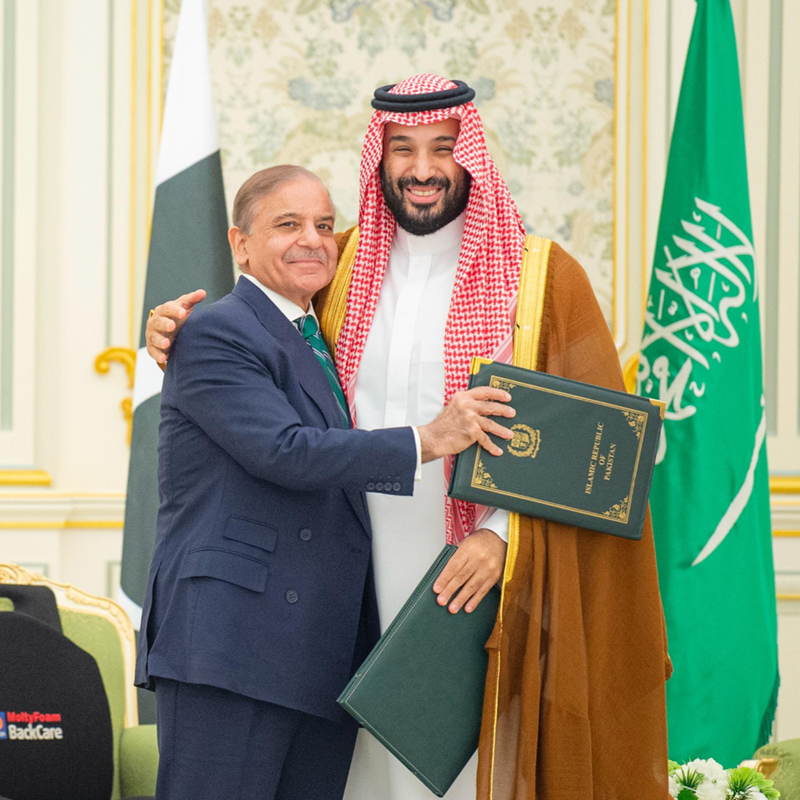
Shehbaz Sharif condemns the Houthi attack on a Saudi vessel and reaffirms Pakistan’s support for the Kingdom’s security and sovereignty
Jeddah | BETH
His Royal Highness Prince Mohammed bin Salman bin Abdulaziz Al Saud, Crown Prince and Prime Minister, received a telephone call today from Pakistani Prime Minister Muhammad Shehbaz Sharif.
During the call, Sharif renewed Pakistan’s condemnation of the Houthi militia’s attack on a Saudi vessel and its threat to freedom of navigation in the Red Sea. He reaffirmed his country’s firm and unwavering support for the Kingdom’s security and sovereignty.
The two leaders also reviewed the latest regional developments and the ongoing efforts to reduce escalation and strengthen security and stability across the region.
Analysis
The Attack Extends Beyond the Vessel
The targeting of a Saudi vessel cannot be viewed merely as an attack on a single maritime asset. It constitutes a threat to the Kingdom’s security and to the safety of one of the world’s most important trade corridors.
The Red Sea carries significant flows of energy, trade, and global supply chains. Any attack in these waters increases shipping and insurance risks and threatens the interests of countries not directly involved in the confrontation.
Pakistan’s position therefore linked its condemnation of the attack on the Saudi vessel with its rejection of threats to freedom of navigation. The incident has both a Saudi sovereign dimension and an international dimension related to Red Sea security.
Why Does Pakistan’s Position Matter?
The strategic relationship between Riyadh and Islamabad gives the call significance beyond routine diplomatic solidarity.
Pakistan is a pivotal country in the Islamic world, with considerable political and military weight. It also shares a longstanding partnership with Saudi Arabia across security, defense, and economic fields.
When the Pakistani prime minister describes his country’s support for the Kingdom’s security and sovereignty as “firm and unwavering,” he sends a broader message: attacks against Saudi Arabia will not remain confined to their immediate context but will face clear regional and international opposition.
Resolve and De-escalation
The call brought together two complementary positions: an unequivocal condemnation of the attack and discussions on efforts to reduce escalation.
This balance is essential. De-escalation that ignores the source of the threat may encourage further attacks, while uncontrolled responses could widen the conflict.
Saudi Arabia is therefore pursuing both tracks: building a political position that rejects aggression and protects sovereignty, while working to prevent the Red Sea and the wider region from sliding into a broader confrontation.
Conclusion
The call underscored that the Houthi attack does not affect a Saudi vessel alone; it threatens maritime security and regional stability.
It also demonstrated that protecting the Red Sea is no longer solely the responsibility of its coastal states. It is an international interest requiring a clear position against any party seeking to turn its trade routes into an arena for pressure and conflict.