



Custodian of the Two Holy Mosques Chairs Cabinet Session
Saudi Arabia reiterates its full solidarity with Kuwait, Bahrain, and Jordan in confronting Iranian attacks and calls for an immediate halt to military escalation
Saudi Arabia rises to 13th place globally in attracting foreign direct investment, with net inflows reaching $32.6 billion
Inflation remains stable at 1.8%, while Saudi ports expand logistics hubs to support trade and supply chains
International cooperation in space, museums, security, and anti-money laundering, alongside approval of unified GCC rules for jointly owned properties
BETH | B
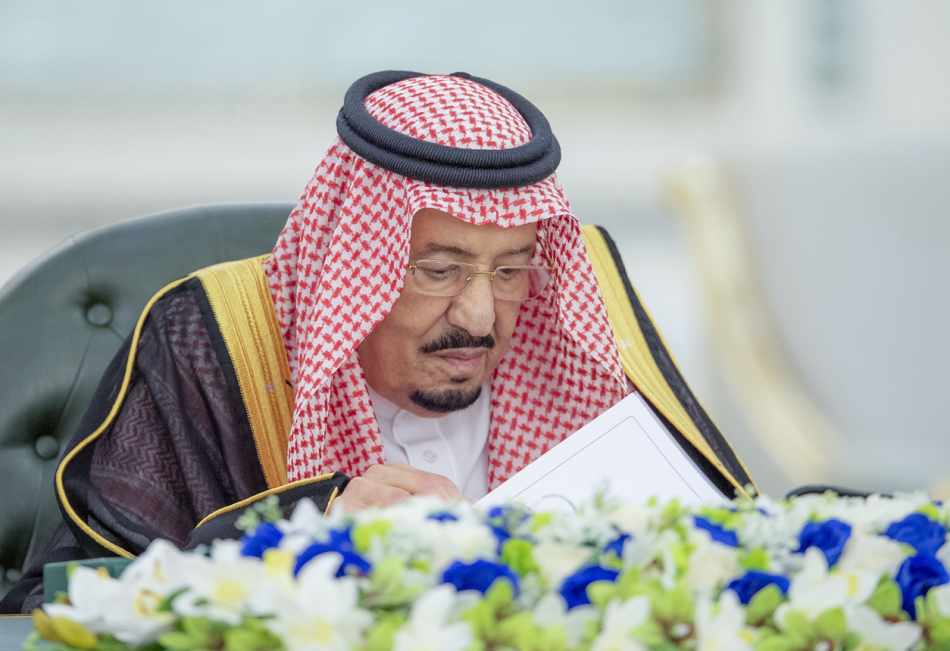
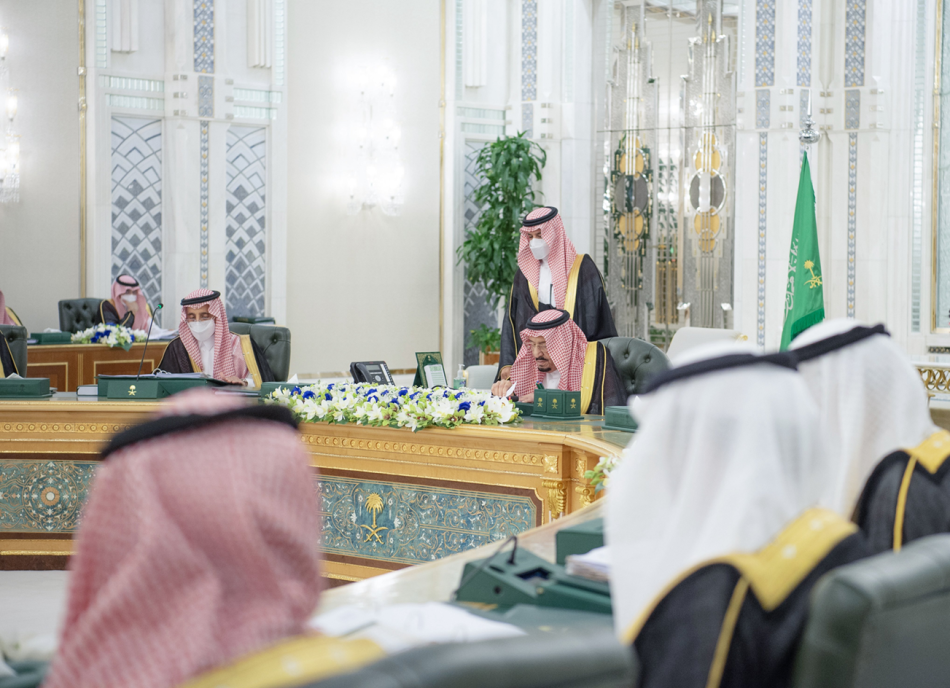
The Custodian of the Two Holy Mosques, King Salman bin Abdulaziz Al Saud, chaired the Cabinet session held today in Jeddah.
At the outset of the session, the Cabinet reviewed the telephone call received by His Royal Highness Prince Mohammed bin Salman bin Abdulaziz Al Saud, Crown Prince and Prime Minister, from Lebanese President Joseph Aoun.
During the call, President Aoun expressed appreciation for Saudi Arabia’s supportive positions toward Lebanon and its efforts to promote stability and peace in the region.
Solidarity With Regional States
The Cabinet reviewed the latest regional developments and their implications for international peace and security.
It reiterated Saudi Arabia’s full solidarity with the State of Kuwait, the Kingdom of Bahrain, and the Hashemite Kingdom of Jordan, and its support for the measures they are taking in response to the blatant Iranian attacks that violate international law and the principles of good neighborliness.
The Cabinet also stressed the importance of an immediate halt to all forms of military escalation to safeguard the stability of the region and the security of its peoples.
Active International Presence
The Cabinet reviewed the outcomes of Saudi Arabia’s active participation in international meetings and forums.
It praised the joint national efforts that contributed to the Kingdom’s successful participation in the 2026 United Nations High-Level Political Forum.
The Cabinet also highlighted the progress reflected in Saudi Arabia’s Third Voluntary National Review toward achieving the Sustainable Development Goals, particularly in:
- Supporting water security.
- Expanding renewable energy.
- Improving access to healthcare services.
- Developing digital government.
- Advancing industrial development.
- Promoting inclusive economic growth.
More Sustainable Cities
The Cabinet discussed the High-Level Meeting of the United Nations General Assembly on the urban agenda and the presentation of Saudi Arabia’s achievements in building more sustainable cities and improving quality of life.
These achievements include increasing homeownership among Saudi families, expanding per capita access to public spaces, developing mobility systems, and broadening community participation in the development process.
Inflation at 1.8%
The Cabinet reviewed reports, statistics, and indicators related to the national economy and the positive impact of Saudi Arabia’s reforms and policies on economic growth.
It noted that annual inflation remained stable at 1.8% during the recent period, continuing to register a low level compared with many advanced and emerging economies.
Thirteenth Globally
The Cabinet commended Saudi Arabia’s rise to 13th place globally among the largest economies attracting foreign direct investment in 2025, according to a report by the United Nations Conference on Trade and Development.
It affirmed that this achievement reflects the advanced position Saudi Arabia has established as a global investment destination, the effectiveness of its economic reforms, and growing investor confidence in the Kingdom’s business environment.
The advancement was supported by a 53% increase in net foreign direct investment inflows, which reached $32.6 billion, as well as the growing competitiveness of strategic sectors, particularly:
- Energy.
- Infrastructure.
- Technology.
- Advanced industries.
- Logistics services.
Logistics Expansion in Jeddah
The Cabinet reviewed the role of Saudi ports in supporting regional and international trade, alongside the launch and expansion of logistics hubs at Jeddah Islamic Port.
These projects are intended to strengthen the integration of supply chains with multiple modes of transportation and with economic and industrial zones through an interconnected network supporting the National Transport and Logistics Strategy and Saudi Vision 2030.
Cabinet Decisions
First
The Cabinet authorized the Minister of Interior, or a deputy, to discuss and sign with the Maldivian side a draft memorandum of understanding between the Ministry of Interior of the Kingdom of Saudi Arabia and the Maldives Police Service concerning scientific, training, and research activities.
Second
The Cabinet authorized the Minister of Foreign Affairs, or a deputy, to discuss and sign with the Australian side a draft memorandum of understanding on political consultations between the Ministry of Foreign Affairs of the Kingdom of Saudi Arabia and the Department of Foreign Affairs of the Commonwealth of Australia.
Third
The Cabinet authorized the Minister of Culture and Chairman of the Museums Commission, or a deputy, to discuss and sign with the Jordanian side a draft memorandum of understanding between the Museums Commission and the Department of Antiquities of the Hashemite Kingdom of Jordan for cooperation in the museum sector.
Fourth
The Cabinet authorized the Minister of Commerce and Chairman of the Saudi Standards, Metrology and Quality Organization, or a deputy, to discuss and sign with the Chinese side a draft memorandum of understanding between the organization and the State Administration for Market Regulation of the People’s Republic of China for cooperation concerning technical barriers to trade.
Fifth
The Cabinet approved a memorandum of understanding between the General Directorate of Financial Intelligence at the Presidency of State Security in the Kingdom of Saudi Arabia and the Financial Intelligence Service of the Federal Democratic Republic of Ethiopia.
The memorandum concerns cooperation in exchanging information related to combating money laundering, associated crimes, and terrorist financing.
Sixth
The Cabinet approved a memorandum of understanding between the Saudi Space Agency and the United Nations for cooperation in the peaceful uses of outer space.
Seventh
The Cabinet approved a memorandum of understanding between the National Center for Non-Profit Sector Development in the Kingdom of Saudi Arabia and the Regulatory Authority for Charitable Activities in the State of Qatar for cooperation in the non-profit sector.
Eighth
The Cabinet approved the unified rules governing owners of jointly owned properties in the Gulf Cooperation Council states.
Ninth
The Cabinet approved the transfer of responsibility for issuing permits for the import, export, re-export, and clearance of chemicals traded in local markets, as stipulated in the Chemicals Management Law, from the Ministry of Commerce to:
- The Ministry of Interior and the High Commission for Industrial Security.
- The Ministry of Industry and Mineral Resources.
- The Saudi Food and Drug Authority.
Tenth
The Cabinet approved a mechanism for integrating the roles of the Nuclear and Radiological Regulatory Commission and the National Cancer Center at the Saudi Health Council to fulfill nuclear and radiological regulatory requirements.
Eleventh
The Cabinet appointed the following individuals as members of the Board of Directors of the National Center for Wildlife Development:
- Dr. Abdullah bin Hussein Al-Qadi.
- Dr. Mohammed bin Hamdi Al-Jahdali.
- Dr. Sultan bin Mansour Al-Sharif.
Twelfth
The Cabinet approved the final accounts of the General Authority for Survey and Geospatial Information, the former National Competitiveness Center, and the following universities for previous fiscal years:
- Umm Al-Qura University.
- King Abdulaziz University.
- Imam Abdulrahman Bin Faisal University.
- University of Hafr Al-Batin.
- University of Jeddah.
Thirteenth
The Cabinet issued the necessary directives concerning several items on its agenda, including annual reports submitted by the Mohammed bin Salman Foundation for Parks and the following universities:
- Imam Abdulrahman Bin Faisal University.
- Qassim University.
- University of Tabuk.
- Saudi Electronic University.
Fourteenth
The Cabinet approved:
- The promotion of Mohammed bin Hudaiban Al-Mukhlafi to the position of Senior Business Adviser at Grade 15 at the Ministry of Human Resources and Social Development.
- The promotion of Ali bin Murei bin Murei Ali to the position of Investment Adviser at Grade 14 at the Asir Region Municipality.
Analysis
A State Protecting Stability and Building the Future
The Cabinet session reveals two parallel tracks in Saudi Arabia’s statecraft: protecting regional stability at a moment of acute military tension and continuing to build the economic and developmental strength that enhances the Kingdom’s long-term position.
Saudi Arabia’s response to the Iranian attacks went beyond a political expression of concern. It combined full solidarity with Kuwait, Bahrain, and Jordan with a call for the immediate cessation of military escalation.
This combination is significant because the Kingdom draws a clear distinction between the right of states to protect their security and sovereignty and the danger of an expanding confrontation turning into an open regional crisis threatening societies, trade, energy, and international navigation.
Solidarity as a Security Message
Specifically naming the three states subjected to the attacks carries a significance that extends beyond diplomatic support. It affirms that the security of the Gulf states and Jordan forms part of an interconnected regional security structure and that an attack against one state cannot remain confined within its borders.
The Saudi position conveys three principal messages:
- Rejecting attempts to transfer the confrontation onto the territories of neighboring states.
- Affirming the right of targeted states to take measures to protect their security.
- Preventing such attacks from becoming a normalized consequence of war.
At the same time, the call for an immediate halt to escalation reflects an understanding that continued exchanges of attacks could widen losses, disrupt supply chains, place pressure on energy markets and maritime routes, and make a return to diplomacy more difficult.
The Economy Confronts Regional Disruption
Against the backdrop of regional tension, Saudi economic indicators present the image of an economy maintaining stability while continuing to attract international capital.
Inflation remaining at 1.8% is not merely a consumer indicator. It gives businesses greater capacity to plan and limits volatility in operating, financing, and consumption costs.
Saudi Arabia’s rise to 13th place globally in attracting foreign direct investment, together with the 53% increase in net inflows to $32.6 billion, indicates that the Kingdom’s economic reforms have moved from the stage of establishing regulatory frameworks to producing measurable results.
International investors do not base their decisions on market size alone. They also consider policy stability, regulatory clarity, ease of doing business, infrastructure, and the economy’s ability to generate long-term opportunities.
The flow of investment into energy, technology, advanced industries, infrastructure, and logistics therefore shows that Saudi Arabia’s appeal is no longer associated with a single sector. It is increasingly distributed across a broader and more diversified economic base.
Ports as a Gateway to the New Economy
The launch and expansion of logistics hubs at Jeddah Islamic Port represent one component of a broader economic project.
The port is no longer merely a point where goods arrive and depart. It is becoming a platform connecting maritime transport, roads, railways, industrial zones, and economic zones within a single network.
The true value of these logistics hubs lies in their ability to shorten transit times, reduce storage and transportation costs, and attract global companies to manage their regional operations from inside Saudi Arabia.
This transforms the Kingdom’s geographic position from a location between continents into an investable economic advantage.
Development Enters the Measurement Stage
Saudi Arabia’s Third Voluntary National Review carries a significance beyond presenting the Kingdom’s achievements before the United Nations. It reflects the transition of development from announcing objectives to measuring outcomes.
Water security, renewable energy, healthcare, digital government, industrial development, housing, transportation, and public spaces are not separate files. They are components of a unified approach aimed at improving quality of life and strengthening the sustainability of cities, society, and the economy.
The expansion of community participation also shows that citizens are moving from being beneficiaries of development to becoming partners in shaping it and assessing its impact.
Decisions Build a Network of Cooperation
The 14 decisions reveal the breadth and diversity of government activity, extending from security cooperation with the Maldives, political consultations with Australia, museum cooperation with Jordan, and trade cooperation with China, to anti-money laundering cooperation with Ethiopia, space cooperation with the United Nations, and non-profit sector development with Qatar.
These memoranda do not appear to be isolated files. Together, they build a network of Saudi interests spanning security, politics, culture, trade, space, and community development.
The transfer of responsibilities for chemical management to the relevant specialized authorities also reflects a move toward more efficient regulation and the distribution of responsibilities according to the nature, risks, and uses of chemical materials.
The mechanism integrating the Nuclear and Radiological Regulatory Commission with the National Cancer Center links medical applications with regulatory oversight, helping protect patients and workers while ensuring compliance with safety requirements.
Beyond the Session
The broader picture presented by the Cabinet session is that Saudi Arabia is managing the challenges of the present without allowing them to disrupt its project for the future.
While military risks escalate around the Kingdom, Saudi Arabia continues to consolidate economic stability, attract investment, expand its ports, develop its cities, and build international partnerships.
The strength of a state is not demonstrated solely by its ability to confront danger, but also by its ability to keep development moving while confronting it.
The stability Saudi Arabia advocates abroad is the same foundation upon which it is building growth at home.