



From the Palm Tree to the World.. Saudi Arabia Launches “Our Date Seasons”
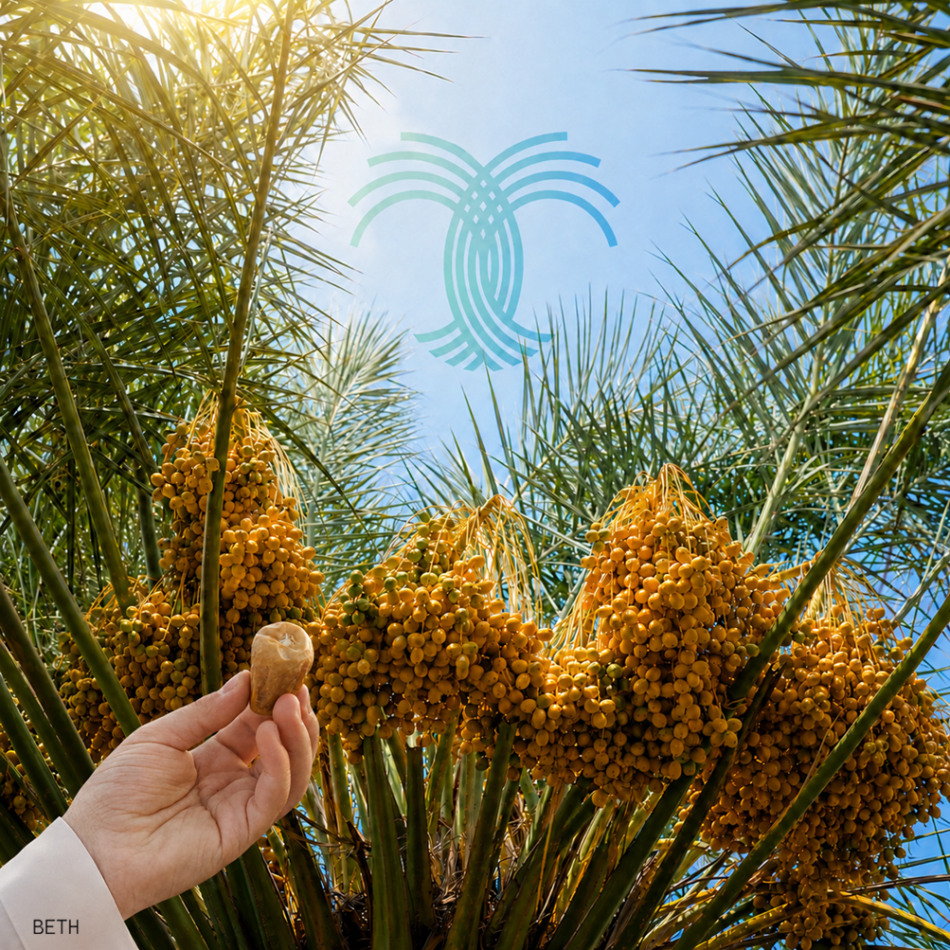
37.6 million palm trees and production approaching two million tonnes.. Seasonal markets and a digital platform strengthen the presence of Saudi dates in 133 countries
BETH | B
The National Center for Palms and Dates announced the launch of seasonal date markets across the Kingdom under the slogan “Our Date Seasons,” with the aim of highlighting the quality of Saudi dates, regulating buying and selling operations, and enhancing economic returns for farmers and marketers.
The seasons include Atiqah Date Market in Riyadh, Buraidah Date Carnival, Unaizah International Date Season, Madinah Date Season, Jeddah Date Season, and Al-Ahsa Date Harvest Season, alongside agricultural and marketing activities targeting visitors, traders, and importers.
Trading operations are managed through the Seasonal Markets Platform, which was launched by the Center in 2023. It enables the electronic documentation of contracts and agreements and provides data on quantities, prices, and varieties, thereby protecting the rights of those involved and raising the level of transparency and reliability. Registration on the platform is a prerequisite for conducting sales within the covered markets.
37.6 Million Palm Trees
The number of palm trees in the Kingdom exceeds 37.6 million, including more than 32 million fruit-bearing palm trees, while date production reached approximately 1.923 million tonnes in 2024, an increase of 1% over the previous year.
Qassim leads the Kingdom’s regions with approximately 10.8 million palm trees and production of nearly 584,000 tonnes, while Khalas ranks first among varieties in terms of the number of trees, with production reaching approximately 616,000 tonnes.
The Kingdom produces hundreds of varieties, most notably Sukkari, Khalas, Ajwa, Sagai, and Safri, giving the sector marketing diversity that allows products to be directed toward different segments and markets.
First in Exports
Saudi dates are exported to 133 countries, and the value of their exports has reached approximately SAR 1.7 billion, placing the Kingdom first globally in date exports by value.
This means that dates are no longer a local crop associated only with the harvest season, but have become an export product that enters the food and processing industries, packaging, logistics services, and e-commerce.
The sector also generates income for farmers, marketers, manufacturers, transporters, and retailers, and opens opportunities to produce higher-value derivatives such as date molasses, natural sugar, nutritional powders, animal feed, cosmetics, and products extracted from palm waste.
From Dates to Industry
The economic value of dates does not stop at selling them in their traditional form, but extends to a wide range of processing industries that increase the value of the crop, extend its shelf life, and open new markets for it.
These industries include the production of date paste, molasses, concentrated syrup, date powder, natural sugar, vinegar, sweets and baked goods, energy bars, and healthy food products, in addition to using dates to develop natural alternatives to artificial sweeteners.
Dates that do not meet direct-marketing specifications can also be used in the production of animal feed and food ingredients, instead of losing their value or becoming agricultural waste.
The industry also extends to palm waste itself. Date seeds can be converted into oils, powders, cosmetic products, and animal feed, while palm fronds, trunks, and fibres can be used in the manufacture of paper, composite wood, organic fertilisers, packaging materials, and traditional handicraft products.
Here, the economic value of the palm tree multiplies. The farmer does not sell only the fruit, and the factory does not produce only a package of dates. Instead, an industrial chain is formed that includes sorting, packaging, food processing, transport, marketing, and research and development.
Expanding these industries represents the next step for the Saudi sector, because global competition is not based on production volume alone, but on the amount of value a country can extract from every part of the palm tree and on transforming a seasonal crop into products that can be traded throughout the year.
Palm Trees Around the World
The date palm is one of the oldest agricultural trees known to humanity, and its cultivation is concentrated mainly in the Middle East and North Africa, while the Arab region contributes more than 75% of global date production.
Its importance is not limited to food alone. Historically, it contributed to the establishment of human settlements around oases, provided fruit and shade, and its trunks, fronds, and fibres were used in construction and traditional industries.
For this reason, the palm tree has been associated in Arab memory with life and stability. Where the palm tree appears in the desert environment, water, agriculture, and the possibility of establishing a community appear with it.
Why the Palm Tree?
The emblem of the Kingdom of Saudi Arabia consists of two crossed swords topped by a palm tree. According to the official symbolism, the two swords represent strength, resilience, and sacrifice, while the palm tree represents vitality, growth, and prosperity.
The choice of the palm tree carries a meaning that goes beyond its agricultural form. It is a tree deeply rooted in the history of the Arabian Peninsula, one that has endured its harsh environment and provided people with food, shade, and means of living.
The palm tree was therefore not placed in the emblem merely because it is a famous crop, but because it encapsulates the relationship between the land and its people: deep roots, the ability to endure, and fruit that turns into life and prosperity.
Beyond the Season
The importance of “Our Date Seasons” lies in moving date markets from traditional seasonal trading to a more organised system based on documentation, data, and transparency.
The initiative does not merely regulate the sale of dates. It establishes a market that can be measured and developed, helps farmers understand prices, enables buyers to verify transactions, and allows the relevant authorities to assess production volumes and demand movements.
The season thus transforms from a temporary post-harvest market into a link within an integrated economy that begins with the palm tree, passes through the farm, factory, and digital platform, and ends with a Saudi product reaching consumers in more than 130 countries.
Global competition is not based solely on the number of palm trees or the size of the crop, but on the amount of value that can be produced from every date, every seed, and every part of the palm tree.