



Saudi Arabia Moves Closer to Possessing the Nuclear Fuel Cycle
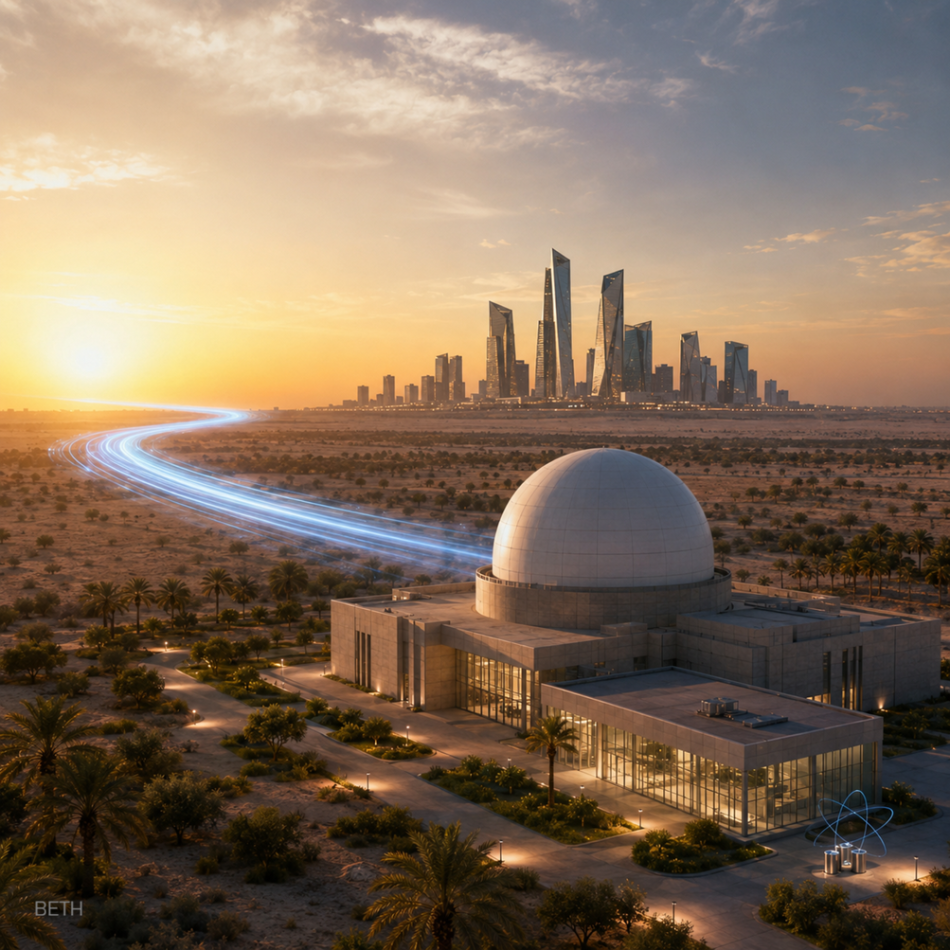
A Long-Term Partnership with Washington Opens the Door to American Technology and Domestic Enrichment
Bth | B
The administration of U.S. President Donald Trump has preliminarily approved a draft agreement for civil nuclear cooperation with Saudi Arabia, opening the way for the Kingdom to enrich uranium within its territory, in a potential shift from the restrictions Washington has long adopted in its nuclear agreements with countries in the region.
The agreement is still awaiting President Trump’s signature and has not yet been sent to Congress for review. No official U.S. or Saudi announcement has been issued confirming final approval or clarifying the permitted limits of enrichment.
Saudi-U.S. negotiations on the framework for nuclear cooperation were completed in October 2025, while Washington announced that the agreement aims to introduce American nuclear technology into the Kingdom and establish a long-term partnership committed to nuclear nonproliferation.
The draft falls under what is known as a “123 Agreement,” named after Section 123 of the U.S. Atomic Energy Act. It provides the legal framework required to enable American companies to export nuclear reactors, technologies, and materials to another country.
Even if signed, the agreement does not mean that enrichment technology will automatically be transferred to the Kingdom. It establishes the general legal framework, while the transfer of sensitive materials, equipment, and technologies remains subject to procedures.
Enrichment: The Core of the Negotiations
The Kingdom’s right to possess a domestic nuclear fuel cycle, including the production of low-enriched uranium, constituted the central issue in negotiations with Washington.
In January 2023, Saudi Energy Minister Prince Abdulaziz bin Salman affirmed the Kingdom’s intention to utilize its domestic resources across all stages of the nuclear fuel cycle, from uranium extraction and the production of “yellowcake” to enrichment. In January 2025, he reiterated the Kingdom’s plan to enrich and sell uranium.
Saudi Arabia has not yet announced the establishment of an enrichment facility. However, the Kingdom possesses domestic uranium resources and has worked in recent years on exploration, training, and building the expertise required to develop an integrated nuclear program.
What Is Causing the Debate?
Uranium enrichment is a dual-use technology. At low levels, it can produce fuel for civilian nuclear reactors, while at higher levels it can produce material used in the manufacture of nuclear weapons.
According to available information, the draft Saudi agreement does not, so far, require the Kingdom to join the International Atomic Energy Agency’s Additional Protocol, which grants the agency broader powers to inspect and access undeclared sites.
A letter from the U.S. State Department indicates that Washington and Riyadh will instead conclude a bilateral safeguards agreement, whose details and oversight mechanisms have not been disclosed.
The Saudi Nuclear Program
The Kingdom seeks to introduce nuclear energy into its national energy mix to generate electricity, desalinate water, reduce domestic oil and gas consumption, and make larger quantities available for export and higher-value industries.
Saudi Arabia plans to build its first large nuclear power plant, comprising two reactors with a capacity of approximately 1.4 gigawatts each.
What Remains Before the Agreement Takes Effect?
The agreement must still pass through several key stages:
- President Trump must sign the final text.
- It must be submitted to Congress together with a nonproliferation assessment.
- It must undergo a review lasting 90 days of continuous session.
- The House of Representatives and the Senate must not adopt a joint resolution rejecting it.
- Subsequent approvals must be obtained for the transfer of equipment, materials, and technologies.
Accordingly, preliminary approval within the U.S. administration does not mean that Saudi Arabia has begun enrichment, nor that the agreement has entered into force.
Analysis
From Importing Fuel to Possessing the Cycle
If the final agreement preserves Saudi Arabia’s right to enrich uranium, the transformation will extend far beyond the construction of reactors to generate electricity.
The Kingdom will not merely consume nuclear technology; it will build part of its nuclear industry and supply chain domestically, beginning with mineral resources, moving through fuel production, and extending to reactor operation and the development of national expertise.
This is where the strategic value lies: possessing knowledge and industrial infrastructure, rather than merely purchasing nuclear-generated electricity.
Why Might Washington Agree?
The United States recognizes that rejecting Saudi demands would not necessarily halt the program. Instead, it could push Riyadh toward companies and countries that possess nuclear technologies and the ability to construct reactors.
Washington therefore faces a choice between maintaining strict conditions and losing both the market and its influence, or granting Saudi Arabia its demands.
Conclusion
The most important development is not that Saudi Arabia will build nuclear reactors; that direction has been publicly declared for years.
What is new is that Washington may be prepared to recognize the Kingdom’s right to move from importing technology and fuel to possessing a sensitive part of the nuclear fuel cycle within its own territory.
However, the matter remains at the stage of preliminary approval of the draft. The decisive word will come with Trump’s signature, the terms of the safeguards, the limits of enrichment, and the anticipated battle in Congress.
If the agreement passes through these stages while preserving the right to enrichment, it will not merely be an energy contract. It will represent a strategic transformation in Saudi Arabia’s nuclear standing and in the rules governing international cooperation and the balance of power in the region.