



Day 213: The War Shifts Between the Two Straits
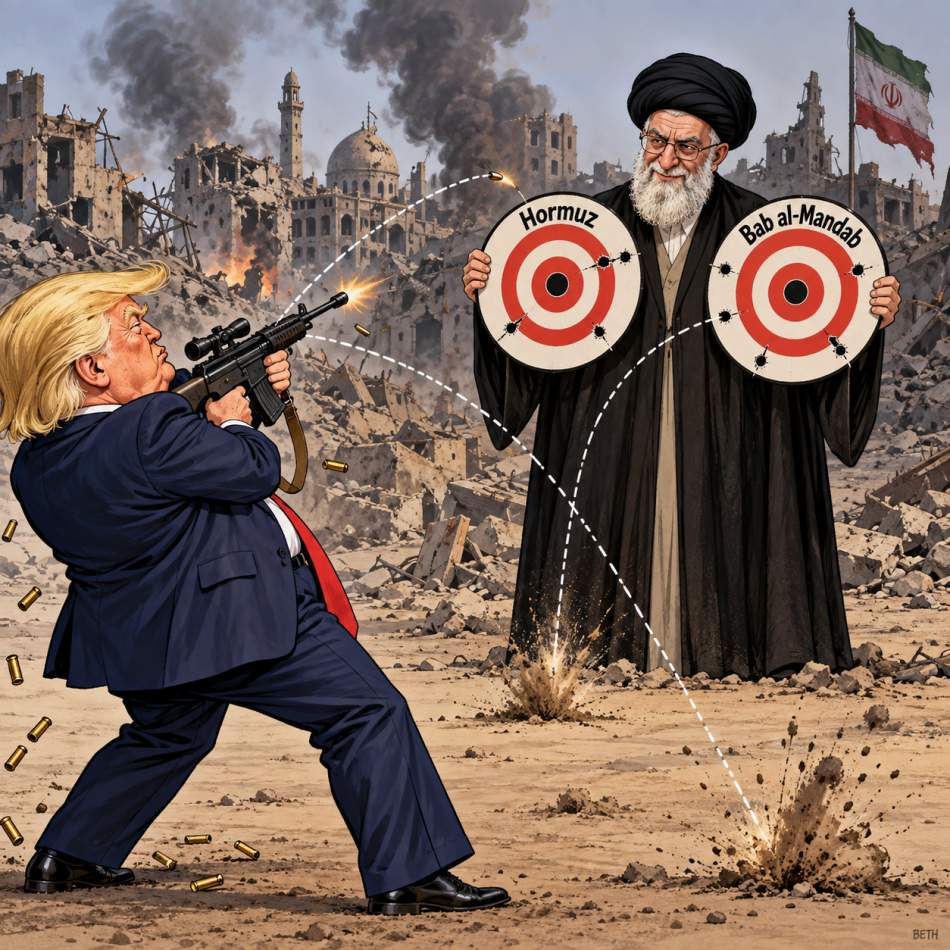
U.S.-Iranian deadlock over Hormuz is met by escalation in Yemen; Washington keeps the military option open, Tehran holds to its conditions, while Bab al-Mandab emerges as a parallel front that could reshape the course of the war
Prepared and Analyzed by | Strategic Media Department – BETH Agency
The war entered its 213th day without a political breakthrough between Washington and Tehran, while some of its most serious repercussions shifted toward Yemen and Bab al-Mandab.
Iran has affirmed that it will not reopen the Strait of Hormuz before the United States meets the conditions it has set, while continuing to offer a negotiating path that would allow the strait to reopen if Washington responds. In parallel, President Donald Trump has kept the possibility of renewed strikes on the table after rejecting Iran’s latest offer.
But the most significant change is taking place to the south.
Yemen is no longer merely a secondary front. The Iran-aligned Houthis have become a direct factor in the security of the Red Sea and Bab al-Mandab, following the expansion of their control and threats to navigation, prompting Yemeni forces to move to retake strategic positions along the western coast. Reports indicate that options are being considered for a large-scale operation aimed at breaking Houthi control over the maritime corridor and securing trade routes.
This is where the two fronts connect.
If Iran is using Hormuz as a negotiating card with Washington, the Houthis give Tehran’s camp the ability to exert influence over Bab al-Mandab as well. This makes developments in Yemen part of the U.S.-Iran war, rather than a separate file.
Outlook:
Day 213 shows that the center of the war is no longer confined to Iran and the Gulf.
Hormuz remains Tehran’s main bargaining card, but Bab al-Mandab has become the front that may determine how far Iran and its allies can expand the cost of the war.
The question now is:
Will the war remain suspended over Hormuz.. or will its center of gravity shift to Bab al-Mandab?
Tanker Hit in Strait of Hormuz
A tanker was struck by an unidentified projectile while transiting the Strait of Hormuz on Sunday, causing damage to the engine room. All crew members were reported safe, and no environmental impact had been recorded at the time the maritime warning was issued. The party responsible for the attack and the type of projectile remain unidentified.
The incident comes amid a series of attacks on tankers in and around the strait in recent days. Other incidents were recorded on September 30 and October 1 and 2, including a tanker struck while exiting the strait, where a limited fire broke out and power was lost, and another vessel hit near the Omani coast.
BETH Analysis:
The incident alone does not alter the balance of maritime traffic, but it confirms that Hormuz remains an active military front despite the recovery of a significant share of energy export flows. It also raises the cost of risk for shipping and insurance, making it difficult to view the improvement in tanker traffic as a full return to normal conditions.
The significance of the incident is heightened by the fact that it occurred at a time when both the United States and Iran claim control over the strait, making every new security breach a direct test of how effective that control is on the ground.