

World Press Today, September 19 | BETH Eyes
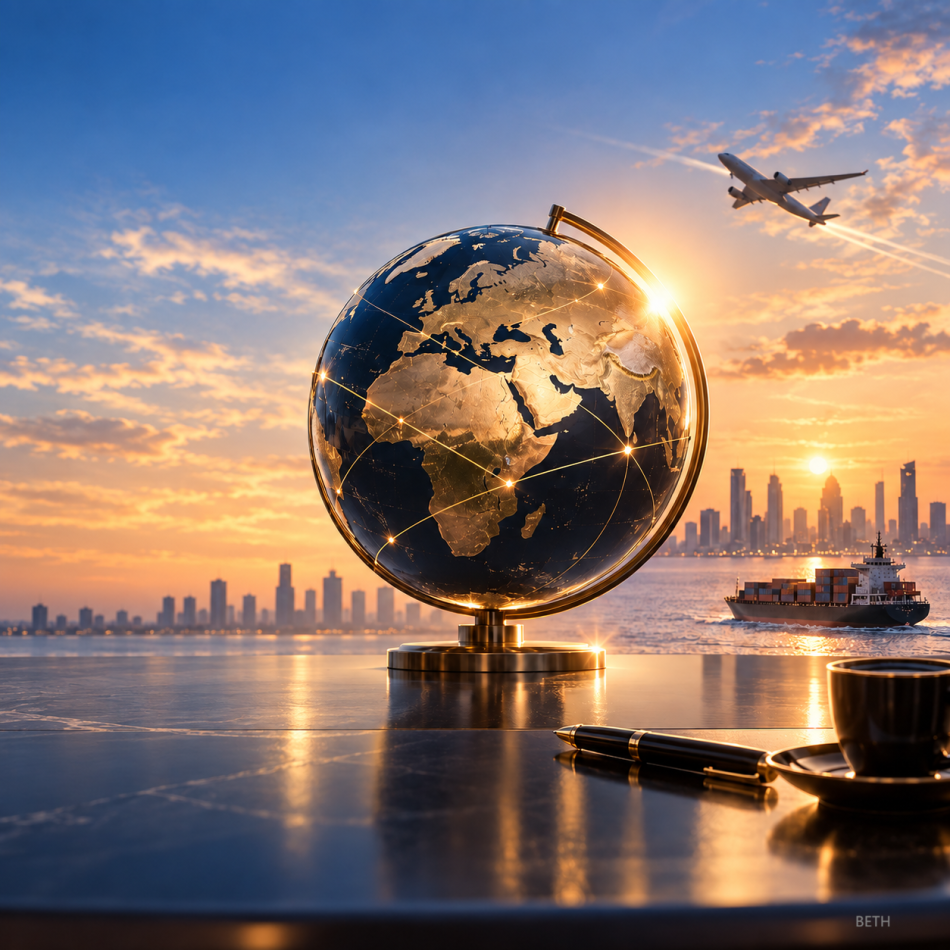
Saudi Arabia leads coverage after the air alerts and the widening Yemen front, while Red Sea security is becoming an international issue; oil and interest rates are pressuring the global economy, as Washington prepares to receive Xi for a summit bringing together trade, artificial intelligence and rare earths
September 19, 2026
Monitoring and Analysis | Strategic Media Department – BETH Agency
Supervision: Abdullah Al-Omira
War and maritime corridors topped the global press today, but the picture has broadened more than in previous days.
Alongside Saudi Arabia, Yemen and Iran, the economy returned strongly to the forefront: oil above $100, central banks leaning toward tightening, China using its reserves to soften the shock, and Europe searching for more independent financial and security tools.
In the background, Washington is preparing for the Trump–Xi summit, which is beginning to shift from a political meeting into a trade, technology and artificial intelligence summit.
Saudi Arabia in the International Position
Saudi Arabia has moved in international coverage from merely being the subject of air alerts to becoming an issue of regional security and international navigation before the Security Council.
In its latest session on Yemen, the United Nations condemned Houthi cross-border attacks on civilians and energy facilities in the Kingdom, and linked the Houthi advance toward Bab al-Mandab, their attacks on the Kingdom, and the growing threat to international navigation. The United Nations also affirmed Saudi Arabia’s right to defend itself.
The Council session witnessed clearer positions: the United States said it stands firmly with Saudi Arabia in confronting the Houthi threat, and called for an end to attacks on countries in the region and on navigation; while Britain described Houthi attacks on Saudi Arabia as reckless and unacceptable, and affirmed its solidarity with the Kingdom’s security.
The Red Sea Takes the Lead
Coverage of Bab al-Mandab expanded after the Italian defense minister called for strengthening the European naval presence and not waiting for slow collective action if threats to navigation continue.
This coincided with moves by Asian countries to consider broader roles in protecting energy and shipping routes.
In Saudi Arabia, the fourth planning meeting of the defensive maritime coalition was held with broad participation from countries, reflecting the widening view of maritime security as an international issue, not merely a local one.
Here, the nature of the crisis is changing:
Hormuz and Bab al-Mandab are no longer merely two straits through which ships pass; they have become two nodes in the security of the global economy.
Oil Does Not Tell the Whole Story
The Financial Times focused on the fact that the current shock does not come from crude oil alone, but from shortages of refined fuels, disruption to refining and shipping, and higher diesel prices.
This explains why the effects of the war have begun to appear in places far from the Middle East.
Energy moves directly into transport, then prices, then inflation, then interest rates.
The chain has become clear:
War → maritime corridors → energy → inflation → interest rates → growth.
Central Banks Return to Tightening
The economic press is following the renewed move by central banks toward monetary tightening.
The U.S. Federal Reserve raised interest rates, and the Bank of Japan raised its rates to the highest level in more than three decades, while talk is increasing in Britain and Europe about additional increases if energy pressure on prices continues.
Here, the war becomes economically far-reaching:
A missile in the Middle East may end up as a higher interest rate on a loan in London or Tokyo.
China Absorbs Part of the Shock
Some U.S. media outlets highlighted China’s massive oil reserves accumulated over years, estimated at around 1.4 billion barrels, considering that these reserves helped Beijing reduce its immediate need for imports and prevented prices from rising to even higher levels.
The importance of this development goes beyond China.
It provides a clear model of the value of strategic reserves:
Economic security begins before a crisis, not during it.
Trump and Xi: More Than Trade
Washington is preparing to receive Chinese President Xi Jinping on September 24.
What is notable is that Trump intends to personally receive him at Andrews Air Force Base, in a rare protocol gesture, while senior executives from U.S. technology companies will take part in the official dinner, including leaders of major artificial intelligence, semiconductor and technology firms.
Before the summit, U.S. Treasury Secretary Scott Bessent will meet Chinese Vice Premier He Lifeng in New York to discuss trade, artificial intelligence and rare earths.
So the summit is no longer merely about tariffs and duties.
Oil, semiconductors, rare earths and artificial intelligence have all become national security issues.
Artificial Intelligence Enters Politics
The American and British press has devoted growing space to the U.S.–China dispute over artificial intelligence.
The two sides broadly agree that the technology needs safeguards, but they differ fundamentally over how to define the risk and how regulation should work.
China continues to expand its use of artificial intelligence despite U.S. restrictions on advanced chips, while the Western question remains: is leadership measured by innovation, by speed of implementation, or by scale of use?
Europe Searches for Scale
In Europe, the question of competitiveness has returned to the forefront.
European officials have called for larger banks and deeper capital markets so Europe can compete with U.S. institutions, especially as the cost of investing in artificial intelligence and financial technologies rises.
The European message has become repetitive:
Internal fragmentation has become a strategic cost.
And this does not concern banks alone; it also concerns defense, energy and technology.
Ukraine Has Not Disappeared
Despite the dominance of the Iran war in the headlines, Ukraine remained present.
Zelensky hosted leaders from Central and Eastern Europe in a new initiative for security, energy and trade cooperation, alongside continuing Russian and Ukrainian strikes and new U.S. sanctions on Moscow.
This reveals a global paradox:
The world is not living through one crisis, but multiple crises competing for money, weapons and political attention at the same time.
Saudi Arabia Away from the War
Away from the military file, the Saudi press and institutions continue to highlight movement in industry and the domestic economy.
The Saudi Industry Forum showed continued focus on financing, exports and supply chains, with broad participation from industrial and financial bodies, while the new national strategy for small and medium-sized enterprises included 13 initiatives related to financing, markets, innovation and expansion.
This picture matters because it presents two parallel scenes:
Abroad: a state facing growing security pressure.
At home: an economy continuing to build and expand.
From Today’s Global Press Editorials
The most prominent editorials and analyses in the global press today intersect around four main issues:
Energy is no longer only an oil story.
The Financial Times sees the current shock as having moved from crude oil to refined fuels, refining and transport, then to inflation, interest rates and growth; meaning that the cost of the war has become broader than the price of a barrel itself.
Yemen is turning into an international file.
Other analyses place the Houthis and Bab al-Mandab at the center of energy and global trade security, after the impact of the confrontation moved beyond Yemen’s borders to maritime corridors and markets. But descriptions of the parties’ motives remain the newspaper’s interpretation, not an independent fact.
Artificial intelligence is entering the heart of U.S.–China competition.
The Wall Street Journal sees Washington and Beijing as agreeing that there are risks requiring safeguards, but differing in how the danger should be defined and how it should be handled; making artificial intelligence as much a national security issue as a technological one.
The technology boom may be hiding broader weakness.
The Financial Times, citing the World Trade Organization, warns that strong growth in the trade of semiconductors and artificial intelligence equipment may be masking a slowdown in other sectors of global trade under pressure from wars, tariffs and geopolitical tensions.
BETH Analysis:
The editorials appear to deal with separate files, but they converge on one question:
How is the world rebuilding its ability to withstand shocks?
In energy, through reserves and alternatives.
At sea, through protecting maritime corridors.
In the economy, through adapting to interest rates and inflation.
And in technology, through controlling artificial intelligence before superiority in it turns into a long-term strategic imbalance.
Inside the Capitals | Each Country Has Its Concern
In Washington: the war with Iran, the Xi summit, interest rates and sanctions on Russia.
In Beijing: energy protection ahead of the Washington visit, artificial intelligence and rare earths.
In London: inflation and the possibility of renewed interest-rate increases.
In Brussels: Red Sea security, banks, and the ability to act with greater independence.
In Moscow and Kyiv: the war continues despite a large part of international attention shifting toward the Middle East.
And in Riyadh: security and deterrence abroad, and the continuation of the economy and projects at home.
BETH Eyes
If we bring today’s headlines together, a broader picture emerges:
War pressures the sea.
The sea pressures energy.
Energy pressures prices.
Prices push interest rates higher.
Interest rates pressure the economy.
And the economy reshapes politics and alliances.
At the same time, artificial intelligence, rare earths and energy are becoming instruments of power no less important than traditional weapons.
That is why the world press today appears to be speaking about different files.
But in reality, it is speaking about one subject:
Who has the ability to withstand pressure and keep moving when multiple crises occur at the same time?
And here Saudi Arabia appears in a striking dual image:
A state confronting security threats on its borders and maritime routes, and an economy continuing to work and build at home.