



Day 165: Waterways Under Fire
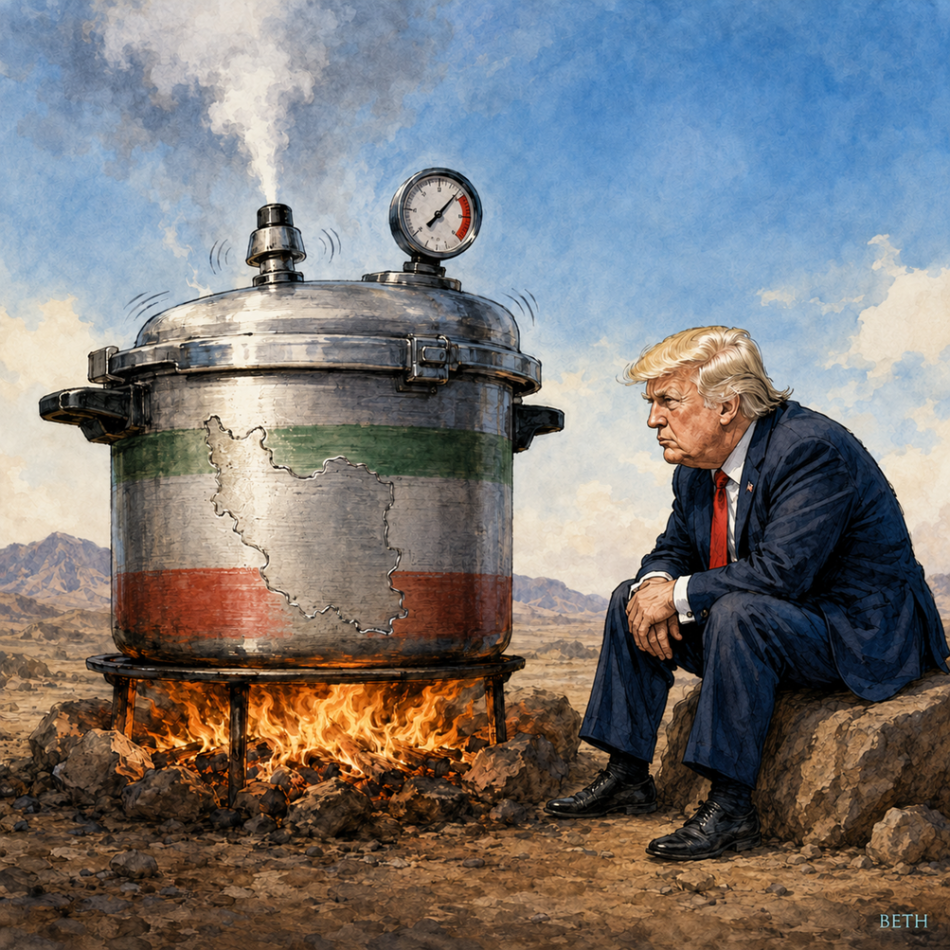
The calm over Iran conceals an expanding war stretching from Hormuz to Bab el-Mandeb and southern Lebanon, while Iraqi factions retain their weapons and the shutdown of Mokha Port reveals that the battle has shifted to the gateways of trade
Monitoring and Analysis | Strategic Media Department – BETH News Agency
Supervision: Abdullah Al-Omairah
The United States-Israeli war with Iran entered its 165th day without a return to large-scale airstrikes inside Iranian territory, but the map of confrontation has expanded along the periphery.
In the Strait of Hormuz, shipping has nearly ground to a halt under the pressure of attacks, Iranian transit conditions and the United States blockade. At Bab el-Mandeb, the Houthis have escalated from targeting vessels to disabling Mokha Port itself. In southern Lebanon, Israeli strikes have produced one of the highest death tolls since the June ceasefire.
Iraq, meanwhile, has not entered a newly declared round of attacks, but it is witnessing a decisive struggle over the weapons held by Iran-aligned factions, keeping the Gulf’s northern front vulnerable to ignition.
The war no longer moves along a single front. It now operates through a chain of waterways and regional arms, each capable of raising the cost of the crisis without declaring a new full-scale war.
Hormuz Nears a Standstill
Shipping through the Strait of Hormuz has remained severely restricted after new attacks on vessels during the past week, including three ships linked to ADNOC, according to the United Arab Emirates, which held Iran responsible.
Ship-tracking data recorded only two vessels transiting the strait on Friday, compared with more than 130 ships a day before the war. Other vessels may have crossed with their tracking devices switched off, but traffic remains far below normal levels.
Iran continues to negotiate with Oman over the designation of a maritime route and rules governing vessel transit, while maintaining a distinction between this technical arrangement, the full reopening of the strait and the resumption of political negotiations with the United States.
Iranian Foreign Minister Abbas Araghchi said the full reopening of the passage depends on Washington honouring the memorandum of understanding signed in June and responding to Iranian conditions. The United States, meanwhile, continues to demand freedom of navigation first, before discussing the blockade, sanctions and compensation.
The dispute is therefore no longer limited to drawing a maritime route. It concerns the authority that grants permission to pass.
If vessels accept coordination with Iran, Tehran can claim that it has imposed practical authority over the strait. If ships enter under United States protection and without Iranian approval, every passage becomes a military test that could end in an attack or confrontation.
Washington Prepares for a Long War
United States Defense Secretary Pete Hegseth said the United States Navy could maintain the blockade on Iranian ports indefinitely by rotating vessels and forces operating in the region.
Admiral Brad Cooper, commander of United States Central Command, also concluded a ten-day regional tour that included Saudi Arabia, Bahrain, Iraq, Israel, Jordan and the United Arab Emirates. He ended the tour with a visit to the aircraft carrier USS Abraham Lincoln in the Arabian Sea.
These movements do not necessarily indicate that a major strike is imminent. They do, however, show that Washington is reorganising its ability to sustain operations, protect its deployment and coordinate allied responses, rather than treating the crisis as a short military round.
The United States is not preparing its forces solely for an attack, but for the more difficult possibility: a prolonged war of pressure with no clear end date for either side.
Lebanon: The Truce Erodes
At least 11 people were killed in Israeli strikes on southern Lebanon, in one of the most intense waves of bombardment since the June ceasefire. The Israeli military said the strikes targeted Hezbollah infrastructure in response to an attack that wounded three Israeli soldiers.
This round demonstrates that the truce has not developed into a stable settlement. Israel links its withdrawal to Hezbollah’s disarmament, while the group retains its capabilities and considers the continued Israeli presence justification for resistance.
Through its strikes, Israel seeks to prevent Hezbollah from regaining the initiative or once again becoming a broad Iranian pressure front. Yet the more Israel intensifies its attacks, the greater the likelihood of retaliation and the weaker the Lebanese government’s ability to implement arrangements concerning weapons and deployment in the south.
The Lebanese front is not currently the closest to a full-scale war, but it is the most vulnerable to rapid escalation because of direct friction between Israeli forces and Hezbollah, and the absence of clear limits defining which violations require retaliation.
Iraq: Weapons in Waiting
Until Sunday morning, Iraqi activity remained within the bounds of military readiness and political pressure without advancing into a new round of attacks. Operational calm, however, does not mean that the front has been closed.
Baghdad recently witnessed an unannounced visit by Esmail Qaani, commander of Iran’s Quds Force, who discussed with political leaders and armed factions the Iraqi government’s plan to place all weapons under state control before the end of September.
According to information from Baghdad, Qaani carried an Iranian message opposing the surrender of factional weapons at this stage, while advocating a political settlement to prevent a confrontation between the factions and the government. This reflects Tehran’s desire to retain an Iraqi card ready for use if strikes resume.
The Iraqi factions face a difficult equation. They want to retain their weapons and influence, but they understand that launching major attacks from Iraqi territory could draw new United States or Saudi strikes and place them in direct confrontation with the Iraqi state.
Their near-term activity is therefore likely to remain within three areas:
- Keeping missile and drone launch platforms in a state of readiness.
- Applying political pressure to prevent disarmament.
- Avoiding a major attack unless Tehran is struck heavily or they are instructed to open the front.
Iraq is not a dormant front. It is a postponed one.
Yemen: The Port Shuts Down
Mokha Port Director Abdulmalik al-Sharabi announced the complete suspension of commercial and maritime activity at the port after it was struck by more than 25 missiles and drones over several days.
According to the port administration, the attacks killed seven people and wounded ten others, causing an estimated $16 million in direct losses. Damage affected the old quay, warehouses, workshops, employee housing, a marine vessel, six wooden trading ships and a dredger being used to expand the port.
The escalation began on August 4, when an Indian vessel carrying civilian goods from Djibouti to Mokha was attacked. The vessel Tihamah was later struck by missiles after leaving the port, causing casualties among its crew and rescue teams.
The Houthis said in earlier statements that their attacks targeted military concentrations, weapons depots and forces linked to Saudi Arabia. The Yemeni government and port administration maintain that the strikes hit civilian and commercial facilities, vessels and workers.
The dispute over how the targets are described does not alter the operational result:
The port is out of service, and approaching it has become dangerous for commercial vessels and their crews.
Why Are the Houthis Attacking Mokha?
The choice of Mokha is not random. The port brings together five overlapping Houthi objectives in a single location.
The Gateway to Bab el-Mandeb
Mokha lies near the Bab el-Mandeb Strait, the Red Sea’s gateway to the Gulf of Aden and the Indian Ocean. Whoever threatens the port can widen the zone of danger surrounding the strait without formally closing it.
With Hormuz approaching a standstill, pressure on Bab el-Mandeb gives Iran and its regional arms the ability to threaten the two most important maritime passages surrounding the Arabian Peninsula simultaneously.
The Houthi escalation represents a field extension of Iran’s strategy to distribute pressure across multiple maritime corridors. It connects the threat to Bab el-Mandeb with the Hormuz crisis and makes routes intended to bypass the strait less secure.
A Port Beyond Houthi Control
Mokha is controlled by forces aligned with Yemen’s internationally recognised government and lies within the National Resistance’s zone of influence along the western coast. The Houthis, meanwhile, control Hodeidah Port farther north.
Mokha therefore represents an economic and commercial gateway beyond Houthi control. It could be developed to receive some of the traffic seeking alternatives to ports under the group’s influence.
Targeting it does more than disrupt a military rival. It prevents the emergence of a competing port capable of reducing dependence on Hodeidah.
Halting Expansion Before Completion
The port’s dredger was deepening the navigation channel and expanding operational capacity when it was attacked.
This detail is important because it indicates that the purpose was not merely to send a temporary warning, but to obstruct the port’s ability to receive larger vessels and increase its future activity.
The Houthis are not attacking only what the port does today, but what it could become tomorrow.
Economically Strangling the Government
The Yemeni government depends on the ports it controls to generate revenue, bring in goods and support the areas under its authority.
When shipping stops at Mokha, the government loses an economic resource, insurance and transport costs rise, and vessels remain reluctant to return even after the infrastructure has been repaired.
A missile may destroy part of a quay once, but fear can keep ships away for months.
Weakening the Western Coast
Mokha is a political and military centre for anti-Houthi forces on Yemen’s western coast. Striking the port and city places these forces under security and economic pressure and compels them to divide their capabilities between protecting land fronts, maintaining air defence and securing maritime traffic.
The attack therefore combines Yemen’s internal war with the regional confrontation. Its local objective is to weaken the Houthis’ opponents, while its wider purpose is to turn Bab el-Mandeb into a pressure card parallel to Hormuz.
The Battle of Two Straits
The attacks on Mokha show that Tehran and its regional arms do not need complete control of the Red Sea to achieve a strategic effect.
It is enough to raise the level of danger until shipping companies hesitate, insurance premiums increase, vessels divert to longer routes and governments assign additional forces to protect ports and waterways.
A new equation is taking shape:
- Iran applies pressure from Hormuz.
- The Houthis apply pressure from Bab el-Mandeb.
- Iraqi factions keep the threat active from the north.
- Hezbollah occupies Israel on the Lebanese front.
These fronts are not equally active and do not move at the same pace, but they operate within Iran’s network of influence through a differentiated distribution of roles. From Iraq, Lebanon, Yemen and Hormuz, they generate regional pressure whose effects converge even when the timing and instruments of their operations differ.
When one passage closes in the east, the threat to the western passage becomes more severe because the alternative itself enters the danger zone.
What Does Iran Want?
Tehran wants to prevent the United States from turning the blockade into a prolonged, low-cost operation.
If the confrontation remains confined to Iranian ports, Iran will bear the greater economic burden. But if the cost spreads to Gulf tankers, Mokha Port, Bab el-Mandeb and southern Lebanon, additional countries will pay the price of the war, increasing pressure on Washington to accept a settlement.
This does not mean that Iran has prevailed or succeeded in lifting the blockade. It remains under intense economic and military pressure and cannot conduct its maritime trade normally.
But Tehran is attempting to change the question from:
How long can Iran endure?
To:
How long can the world tolerate disrupted waterways?
Expected Outcomes
Most Likely: Distributed Escalation
The most likely scenario is a continuation of relative calm inside Iran, accompanied by intermittent attacks on vessels and ports and through regional proxies.
Omani mediation may achieve progress in defining a route for some ships through Hormuz, but this is unlikely to lead quickly to the strait’s full reopening or the end of the United States blockade.
Yemen is likely to remain the most active front, Lebanon the most vulnerable to eruption and Iraq an armed reserve.
Most Likely in Yemen: Port Protection or Retaliation
The Yemeni government and the forces controlling the western coast are unlikely to accept the continued shutdown of Mokha. They are therefore expected to strengthen air defences, secure the maritime route and possibly strike Houthi launch sites and unmanned boat positions.
This could lead to a resumption of ground fighting along the western coast, particularly if the attacks continue and prevent repairs and the restoration of operations.
Most Dangerous: A Strike That Changes the Rules of Retaliation
If a new attack sinks a large tanker, kills a significant number of sailors or strikes a United States military vessel, Washington may move from blockade and economic pressure to attacks on Iranian naval facilities, Houthi positions or Iraqi factions.
In Lebanon, an attack causing a high number of Israeli deaths could prompt Israel to expand its operations beyond the border zone, threatening the collapse of the truce.
Most Distant: A Comprehensive Deal
A major settlement remains remote because the dispute now extends beyond the nuclear programme to sanctions, the blockade, compensation, freedom of navigation, proxy influence and the definition of sovereignty over Hormuz.
Mediators may succeed in arranging partial transit or halting specific attacks, but bringing all fronts into a single agreement would require concessions that the parties do not yet appear prepared to make.
Assessment
Day 165 reveals the war’s transition from striking central targets to managing pressure through the periphery.
Iran cannot break the United States blockade directly, so it is working to make that blockade costly for others. The United States does not want to return to a prolonged air campaign, so it is attempting to let time and economic pressure perform the task.
The targeting of Mokha represents a development extending beyond Yemen. It connects the security of Bab el-Mandeb to the battle over Hormuz, threatens a port that should form part of the region’s maritime alternatives and transforms a commercial gateway into a target within the war’s network.
This expansion, however, also carries risks for Iran and its regional arms. The greater the threat to ports and civilian shipping, the higher the likelihood of a broader regional response, and the more difficult it becomes for proxy operations to remain beneath the threshold of limited war.
Iran wants to encircle the blockade through the waterways, but the proliferation of fires around those waterways may summon a greater force to extinguish them.
On Day 165, the war has not moved closer to peace. Instead, it is searching for an ending across two straits, three regional arms and vessels that no longer know which route remains safe.