



Alliance Enters Operational Phase
Thirteen countries formally complete accession as a Saudi-led command, with a Pakistani deputy commander, begins establishing operations and intelligence centers and integrating maritime capabilities
Riyadh | BETH
The Multinational Maritime Defensive Coalition has moved from the political and organizational establishment phase into institutional and operational activation, after 13 countries completed their national procedures, signed the Coalition Charter, and formally announced their accession. Fifteen countries have signed the joint statement.
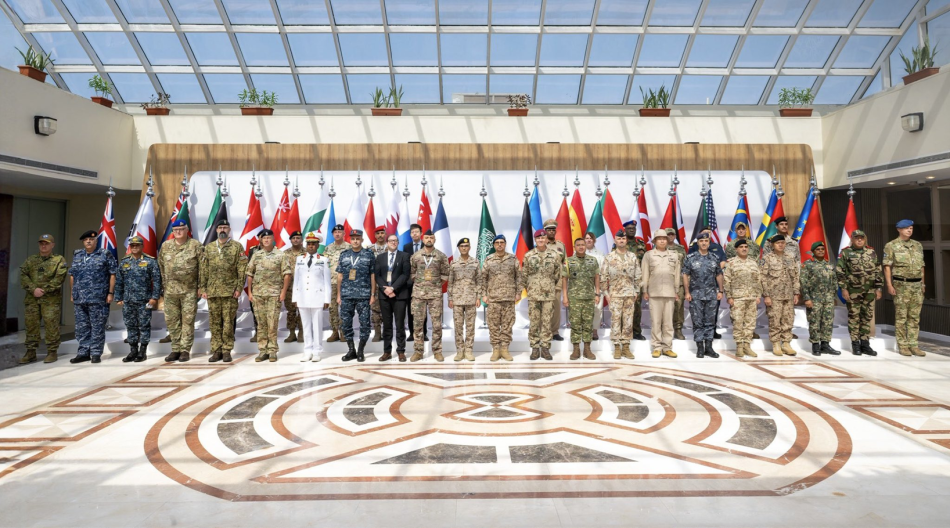
The development came during the Coalition’s third planning meeting, held at the Western Fleet Command in Jeddah with representatives from 39 brotherly and friendly countries. The remaining countries are continuing the national procedures required for accession.
The Ministry of Defense announced that consensus had been reached for the Coalition’s commander to be appointed from the Kingdom of Saudi Arabia, with the deputy commander for its inaugural term appointed from the Islamic Republic of Pakistan.
A dedicated headquarters for the Coalition’s command has also been designated, its emblem approved, and the organizational and planning frameworks and reference manuals required to commence operations completed.
The meeting also finalized the practical arrangements for activating the Coalition’s various bodies and multinational command, paving the way for officers and personnel from member states to be integrated into the joint command and staff structure.
The bodies now being activated include the Joint Maritime Operations and Coordination Center and the Coalition Intelligence Center. Together, they will facilitate intelligence sharing, unify threat assessments, accelerate decision-making, and strengthen coordination among participating naval forces and capabilities.
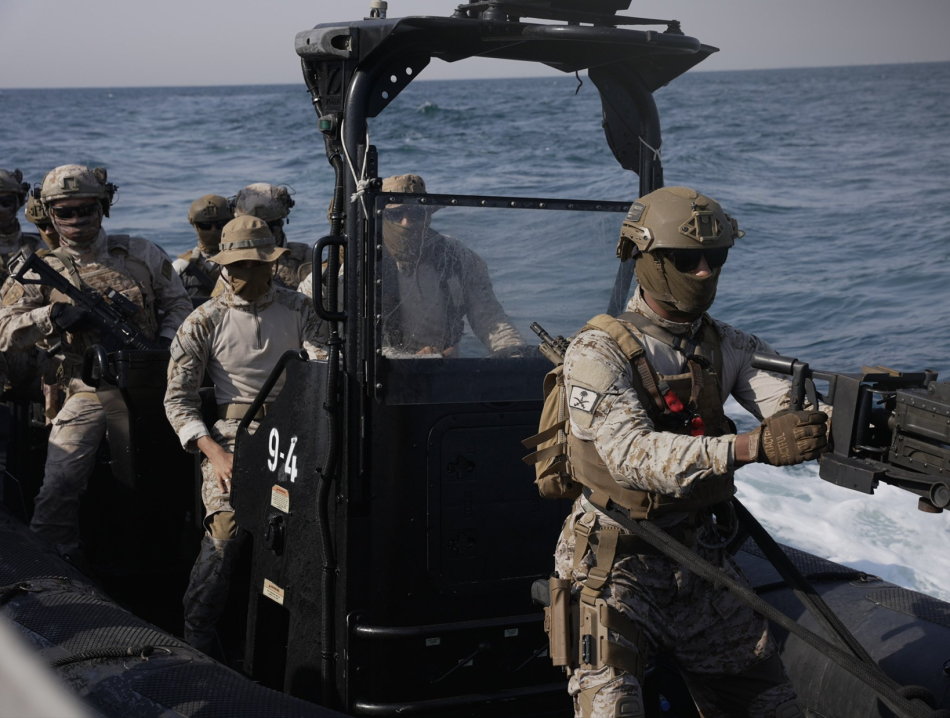
The Coalition is now entering the stage of integrating member states’ capabilities and building a unified command-and-control structure, with the aim of achieving operational readiness and carrying out its assigned defensive missions. Foremost among these are safeguarding freedom of navigation and protecting maritime corridors and straits, international trade, and global supply chains.
The Coalition is being established at a time of growing threats to commercial vessels, energy tankers, and maritime infrastructure, making the security of international waterways a collective responsibility that exceeds the capabilities of any single state.
BETH Perspective | From Consensus to Power
The significance of the announcement lies not merely in the growing number of participating countries, but in the nature of the steps already completed. Selecting the command, designating the headquarters, establishing the operations and intelligence centers, and preparing to receive participating officers mean that the Coalition is no longer a political declaration. It has begun building the machinery capable of planning, making decisions, and executing missions.
Saudi leadership of the Coalition demonstrates that the Kingdom is not merely calling for the protection of maritime corridors; it is stepping forward to assume responsibility for organizing and leading a collective force.
The selection of Pakistan for the deputy command provides the Coalition with military depth and operational expertise, while confirming that the Saudi-Pakistani partnership has become a practical component of the region’s emerging security architecture.
The real test, however, will begin with the transition from integrating officers and organizational structures to integrating vessels, surveillance systems, intelligence, and rules of engagement. The number of participating states gives the Coalition legitimacy and breadth, but the speed of its decision-making and the unity of its command will determine its actual deterrent power.
This time, the Coalition is not merely announcing its existence; it is building its eyes, its mind, and its arm at sea.