



Day 160: The War Changes Direction
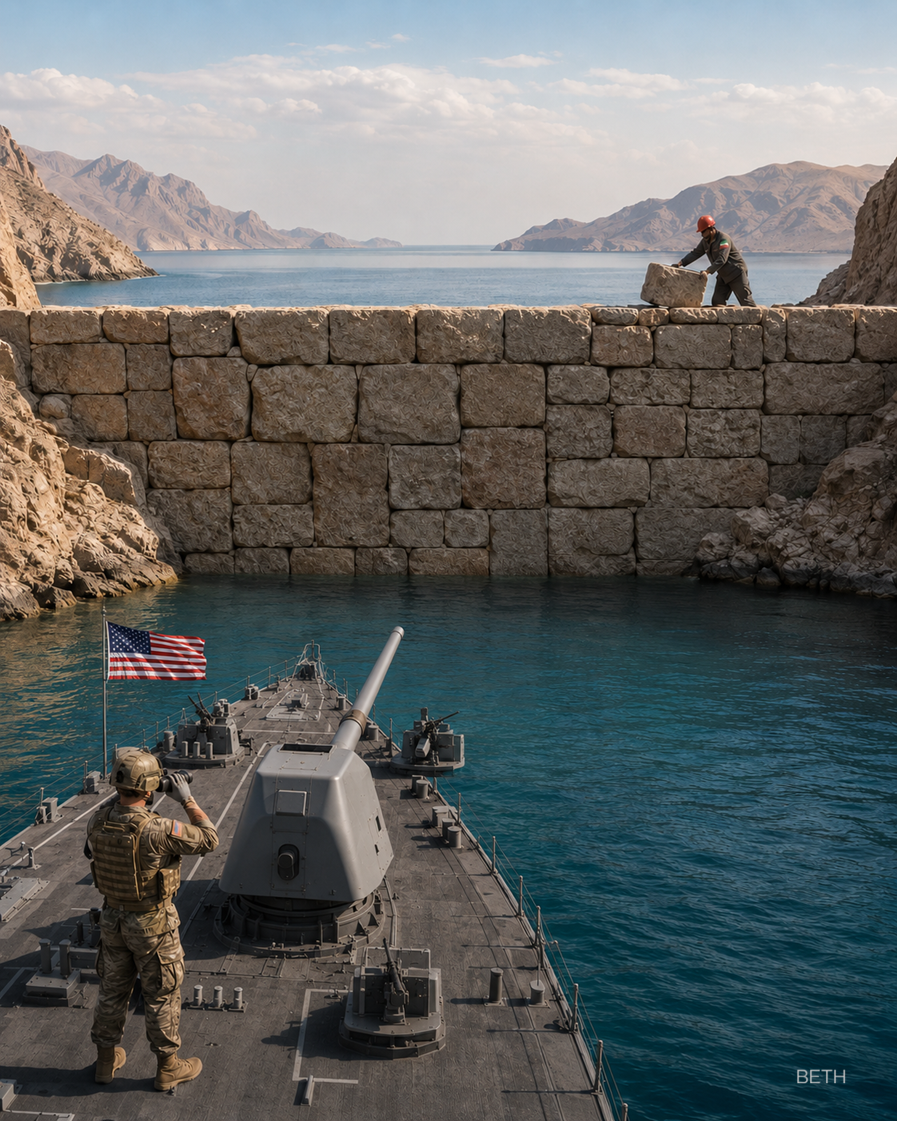
Day 160: The Aircraft Fall Silent, and Iran Tests the Limits of American Patience.. as the Confrontation Moves from the Skies of Tehran to Corridors, Energy, and Alliances
Follow-up and Analysis | BETH
The war in the region entered its 160th day, without the aerial calm turning into a political or security truce.
The aircraft whose sounds have receded over Iran have given way to a less noisy but more complex confrontation; a confrontation revolving around the Strait of Hormuz, the blockade of ports, the movement of ships, energy facilities, and Iran’s arms in the region.
While Oman moves between Tehran and Washington in search of a way out, Iran expands its demands, and the United States separates the opening of the strait from settling the war, while Israel watches the course from outside the negotiation room, retaining its ability to overturn the table with a single strike.
The war has not stopped; rather, it has changed direction, moving from a battle of fire to a battle of time.
Iran Buys Time
Tehran realizes that restoring navigation through Hormuz is a priority for the world, and therefore it no longer treats the strait as a limited security card, but as a key that could open the files of sanctions, the blockade, frozen funds, compensation, and political guarantees.
Iran announced that the technical arrangements with Oman regarding the new navigation routes have entered their final stages, following agreement on a route for inbound ships through Iranian waters and another for outbound ships through Omani waters.
But agreement on the transit coordinates does not mean opening the strait.
Tehran has linked implementation to ending military operations and threats, lifting sanctions, releasing its frozen funds, compensating it for the damage caused by American and Israeli strikes, and ending what it considers aggression against Iran and its allies.
In doing so, Iran has shifted the negotiations from a specific equation:
Opening Hormuz in Exchange for Lifting the Blockade of the Ports
To a broader equation:
Opening Hormuz in Exchange for Changing U.S. Policy Toward Iran and the Region.
The continuation of indirect negotiations also allows Tehran to rearrange its internal and military conditions, test the cohesion of the position between the United States and Israel, and give its arms time to redistribute pressure across multiple fronts.
But time is not working in Iran’s interest alone; multiple directions and projects have begun to emerge to reduce dependence on the Strait of Hormuz by developing pipelines, ports, and alternative export routes that bypass the strait or reduce the need for it.
These moves do not mean that Hormuz can be replaced quickly or entirely, but they reveal that the affected countries have begun to treat its closure as a permanent strategic threat to energy flows and trade movement.
Iran uses Hormuz to raise the price of an agreement, but it may discover that the excessive use of this card is what accelerates its burning; the strait it threatens to close today may gradually lose its importance, until in the future it becomes a passage for fish, after having been an artery for global energy and trade.
Why Is America Waiting?
The U.S. Central Command has not announced the execution of new strikes inside Iran since July 29, following a series of operations that targeted sites belonging to the Revolutionary Guard and Iranian military facilities and capabilities.
This halt raises a fundamental question:
Why does Washington allow Tehran to prolong the negotiations, raise its conditions, and leave Oman to move within a space whose boundaries Iran draws?
The scene may appear to be American laxity, but behind it are five main calculations:
Opening the Strait by Force Is Not Enough
The Capability Exists.. and the Cost Is Deferred
Iran does not constitute a military force superior to the United States, nor does liberating the Strait of Hormuz appear beyond the capability of the U.S. military if the decision is taken to use the necessary force; Washington can target missile launchers, destroy boats and command centers, remove mines, and impose aerial and naval protection over the passage.
But the issue is not the United States’ ability to open the strait, but rather the choice of timing, the scale of the military operation required, and how to transform a field resolution into lasting navigational stability.
The operation would not be limited to a single military strike; rather, it might require a broad and sustained campaign encompassing the Iranian coasts, Revolutionary Guard sites, surveillance and launch facilities, and mine-laying teams, while simultaneously protecting ships and securing the passage until the confidence of shipping and insurance companies is restored.
Therefore, the United States is not waiting because it is incapable of defeating Iran or liberating Hormuz; rather, it has not yet decided that the moment to use its full force has arrived.
The balance of power clearly favors the United States; what delays a resolution is not Iran’s strength, but the American decision.
Holding Iran Responsible for Failure
Washington wants to give the Omani mediation sufficient opportunity, not because time has no value, but because it wants the party that derailed the settlement to appear clearly.
If Iran refuses to open the strait after the technical arrangements have been fulfilled, or continues to add demands that are not directly connected to navigation, the United States can build broader political cover to tighten the blockade or return to force.
In this sense, American patience may be an attempt to move Iran from the position of a state that was attacked to the position of a state that disrupts the global passage and rejects solutions.
Restraining Israel
The United States is currently seeking a way out that begins with opening Hormuz and reduces the cost of the war, while Israel may see continued military pressure as an opportunity to eliminate the Revolutionary Guard, the missile program, and Iran’s nuclear infrastructure.
Washington fears that a new Israeli strike could bring down the mediation, return missiles and aircraft to the confrontation, and make the United States appear incapable of restraining its closest ally.
Testing the Alternatives
When U.S. Treasury Secretary Scott Bessent downplays the future importance of Hormuz and speaks about the possibility of redirecting oil through pipelines, he is not announcing the end of the strait’s importance, but is sending a message to Iran:
The longer the closure continues, the more investment in alternative routes will increase, and the value of the Iranian card will decline over the long term.
But this message carries a degree of political pressure greater than what it reflects of the current reality; the strait remains a passage that is difficult to replace quickly, particularly for energy exports heading to Asia.
Deliberation or Laxity?
Despite these calculations, U.S. policy cannot be absolved of signs of laxity.
Extending the deadline gives Iran time to raise its demands, reorganize its capabilities, mobilize its arms, and turn the mediation from a route for opening the strait into a platform for negotiating the future of sanctions, the war, and regional influence.
The absence of an announced deadline, or a clear price for procrastination, may also lead Tehran to believe that Washington needs the agreement more, and that American military threats have receded in the face of fear that the war could expand.
Herein lies the danger:
If Iran interprets American deliberation as weakness, it may push its conditions to a point at which patience turns into a response greater than it expects.
Oman.. a Mediator Under Pressure
Oman is not negotiating on behalf of the United States, nor does it adopt the Iranian conditions; rather, it is trying first to build a part on which agreement can be reached: organizing inbound and outbound routes and preventing direct friction in the strait.
But Muscat’s success in drawing the maritime lines does not guarantee that ships will move.
The obstacle is no longer in determining the transit route, but in arranging the steps:
Does Iran open the strait first?
Or does the United States lift the blockade of the ports?
Does navigation begin before sanctions are eased?
And who guarantees that Iran will not return to closure, or that Washington will not return to the blockade, after the other party fulfills its commitment?
Therefore, the mediation may reach a complete technical agreement without reaching an implementable political agreement.
A Change in the Decision-Making Room
The appointment of Mohsen Rezaei as secretary of the Supreme National Security Council added a new dimension to the Iranian scene.
Rezaei is not merely a political official; he is a former commander of the Revolutionary Guard and one of the most prominent figures in Iran’s security establishment, and his appointment at this stage gives the military wing a greater presence in managing the files of war, negotiations, and Hormuz.
This does not mean that Tehran has closed the door to a settlement, but it means that the settlement, if it happens, will be managed with a security mindset that links navigation to balances of power, not solely to the requirements of trade.
The appointment may also reflect the Iranian leadership’s desire to unify decision-making between the state and the Guard, and to prevent a contradiction from emerging between what the diplomats negotiate and what the military implements in the strait.
Israel.. a Finger on the Trigger
Israel does not sit at the Hormuz negotiating table, but it possesses a considerable ability to obstruct it.
Any new Israeli strike inside Iran could give Tehran a justification to halt the Omani track, tighten the closure, mobilize its arms, and resume direct attacks.
At the same time, a dispute is emerging between Washington and Tel Aviv over the management of the region’s fronts, particularly with Prime Minister Benjamin Netanyahu’s rejection of an American plan for a phased withdrawal from Gaza in exchange for disarming Hamas.
This reveals that the United States is not only trying to reach an understanding with its Iranian adversary; it is also trying to restrain an ally that may believe its military objectives have not yet been completed.
The Arms.. Distributed Pressure
Iran’s arms are moving today within a delicate equation: exerting enough pressure to raise the cost of the blockade without carrying out a major strike that would invite a broad American or regional response.
In Yemen, confrontations between government forces and the Houthis have escalated, with continuing threats to navigation near Bab al-Mandab, placing the region’s trade before two sources of disruption: Hormuz to the east and the Red Sea to the south.
In Iraq, the factions linked to Iran retain the ability to threaten bases and supply lines, but they face internal calculations and military pressure that make their transition to an open confrontation more costly.
As for Hezbollah, it appears more cautious, because expanding the Lebanese front could give Israel a justification for more severe operations without guaranteeing Iran a direct gain in Hormuz.
The question here is not only whether Tehran is mobilizing its arms, but also:
Can it still guarantee its ability to stop them when the time for an agreement comes?
Alliances Recalculate the Equation
The joint defense agreement among the Kingdom of Saudi Arabia, Türkiye, and Pakistan has added a new deterrent force to the scene, at a time when threats to navigation, energy, and regional stability are increasing.
The agreement does not mean that the three countries will automatically enter a joint war, but it changes the calculations of any party considering targeting one of them; because an attack will no longer be read as an isolated confrontation, but rather as a test of a system that combines Saudi political and economic centrality, Turkish military capability and defense industries, and Pakistani military and missile depth.
In parallel, the maritime coalition led by the Kingdom is working to protect navigation and reduce risks, but its success will not be measured only by the number of supporting countries, but by its ability to bring ships back, reduce insurance costs, and prevent the threat from moving from Hormuz to the Red Sea.
Hormuz.. Three Keys
The Strait of Hormuz is no longer awaiting one agreement, but three interconnected agreements:
- A technical agreement between Iran and Oman on transit routes.
- A political agreement between Iran and the United States on the sequence of steps.
- An unwritten security agreement guaranteeing that ships will not be obstructed and that there will be no return to the blockade and attacks.
If the first agreement is completed while the other two falter, the strait may be opened in a limited and selective manner without navigation returning to its normal state.
A genuine opening is not achieved through a political statement or lines drawn on a map; rather, it is achieved when ships pass through, insurance companies agree to cover them, the cost of risk declines, and the market trusts that the passage will not be closed the following day.
BETH Analysis
The United States does not appear incapable of striking Iran, but it is hesitant to push the war into a stage in which it cannot control its fronts or guarantee its outcomes.
Iran, meanwhile, treats this hesitation—intended or unintended—as an opportunity to raise the price of opening Hormuz and to link the maritime passage to the future of sanctions, the blockade, and the war.
However, Tehran risks overestimating Washington’s need for an agreement; because continued procrastination, in conjunction with the movements of its arms, could turn American patience from a means of managing the crisis into a justification for a broader operation.
Therefore, the question is no longer: Will the aircraft return to Iran?
Rather:
When will Washington decide that Iran is using the mediation to manage the war, not to end it?
What Comes Next?
The scenario closest to the situation before us is the announcement of an Omani-Iranian understanding regarding the routes, followed by a limited and experimental opening of the strait to some ships, without fully ending the closure or immediately lifting the American blockade.
Markets and insurance companies will monitor the passage of the first ships, because the practical success of the experiment is more important than the political wording of the agreement.
The greatest danger, however, lies in a new attack on a Saudi energy facility, the targeting of a ship in the Gulf or the Red Sea, or the execution of an Israeli strike inside Iran; any of these developments could bring back the aerial war and turn the negotiations from a door for exiting the war into merely a brief pause between two rounds.
Consequently, the response against Iran and its arms may be greater than imagined, particularly if it is confirmed that Tehran exploited the calm to redistribute fire and expand the scope of targeting.
Iran is gaining time, but it is approaching a test of the limits of patience. The war has not yet come close to peace; rather, it is searching for a passage that prevents it from exploding again.