



Security Council Condemns Houthi Attacks: Political Support or the Beginning of Deterrence?
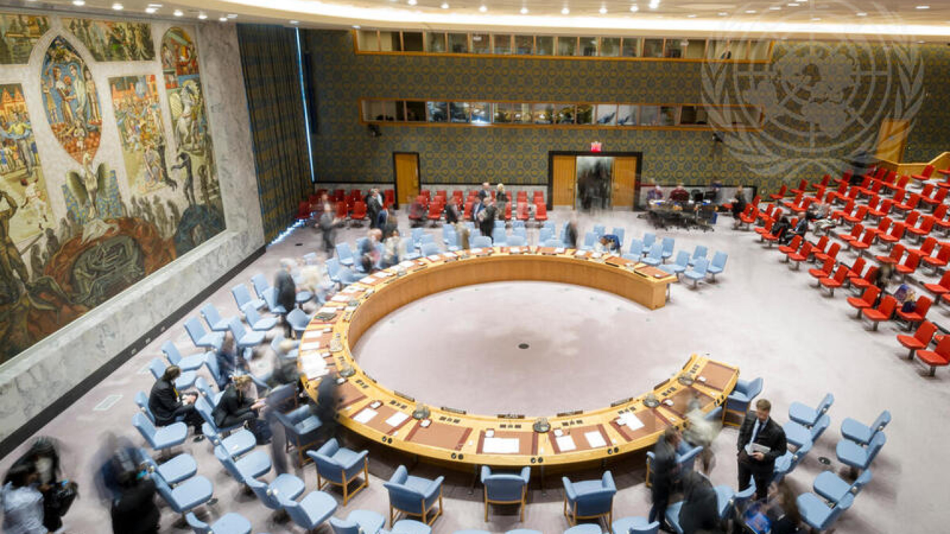
A unanimous international statement holds the Houthis responsible for the escalation against Saudi Arabia and maritime navigation, but includes no new sanctions or binding military action
Monitoring and Analysis | BETH
The members of the United Nations Security Council issued a press statement condemning the missile attacks launched by the Houthis against the Kingdom of Saudi Arabia since July 13, as well as their attacks on commercial vessels since July 22. They warned that these actions threaten regional security and freedom of navigation and undermine peace efforts in Yemen.
The statement derives its significance from having been issued by consensus among all 15 Council members. This means that none of the major powers, including the United States, Russia and China, objected to condemning the Houthis and holding them responsible for the escalation.
Nevertheless, the statement is not a binding resolution and contains neither new sanctions nor authorization for the use of force. It therefore represents political deterrence and a message of international support for the Kingdom, rather than an operational instrument capable of stopping missiles and drones.
Text of the Statement
The following is an English rendering of the substance of the press statement issued by the members of the Security Council:
The members of the Security Council expressed their deep concern over the heightened tensions in Yemen and stressed the critical importance of refraining from any actions that undermine the prospects for peace or threaten international peace and security.
The Council members condemned the missile attacks launched by the Houthis against the Kingdom of Saudi Arabia since July 13, as well as the attacks targeting commercial vessels since July 22.
They also condemned the landing of aircraft at Sana’a Airport on July 3 and Hodeidah Airport on July 13 without prior coordination with or authorization from the Yemeni government, and in violation of international civil aviation regulations.
The Council members reaffirmed their strong commitment to Yemen’s unity, sovereignty, independence and territorial integrity. They stressed that all flights to Yemeni airports must be subject to prior coordination with and approval from the Yemeni government.
They emphasized the need to maintain safe and sustained air access for humanitarian and civilian purposes, in accordance with international law and civil aviation regulations.
The Council members stressed the need to comply with international law and Security Council resolutions, particularly Resolution 2216, which prohibits the transfer of arms or provision of military assistance to sanctioned individuals and entities, including the Houthis.
They warned that these actions threaten regional security and the rights and freedoms of navigation, risk further escalation and undermine peace efforts.
They called on the Houthis to refrain from escalation and to use existing channels of dialogue to address outstanding issues.
The members of the Security Council reiterated their full support for the United Nations Special Envoy for Yemen, Hans Grundberg, and for reaching an inclusive, negotiated, Yemeni-led political settlement based on the relevant Security Council resolutions.
What Kind of Statement Is This?
This is a press statement issued by the members of the Security Council, not a new Council resolution or a presidential statement.
The distinction is important. The statement:
- Reflects a consensual political position among the Council members.
- Formally documents international attribution of responsibility for the attacks to the Houthis.
- Is based on existing resolutions, foremost among them Resolution 2216.
- Does not impose new sanctions.
- Sets no deadline for ending the attacks.
- Does not authorize the use of force.
- Contains no mechanism for enforcing its provisions or punishing those who violate them.
It is a strong international position in its significance, but limited in its instruments.
What Does It Mean for the Kingdom?
The statement gives the Kingdom three direct gains.
First, it establishes the legal and political position that the Kingdom is facing cross-border attacks, rather than a legitimate component of Yemen’s internal conflict.
Second, it connects the targeting of Saudi territory with attacks on commercial vessels and threats to civil aviation. This transforms the issue from a Saudi-Houthi dispute into a threat to regional security and international navigation.
Third, it reinforces the legitimacy of the Kingdom’s right to protect its territory, citizens and facilities, while the nature and timing of any response remain subject to its own decision and assessment.
The Saudi Ministry of Foreign Affairs therefore welcomed the statement and reaffirmed its support for Yemen’s legitimate government, the efforts of the UN special envoy and the implementation of international resolutions.
The statement does not defend the Kingdom on its behalf, but it prevents the aggressor from being placed on the same political footing as the country under attack. It clearly identifies who is committing the aggression and who is exercising the right of defence.
Will It Deter the Houthis?
The direct answer is: not by itself.
The statement can isolate the Houthis politically, but it cannot disable a missile launcher, sever a smuggling route or automatically freeze a financial account.
The practical evidence came quickly. After the statement was issued, the Houthis announced that they had targeted a facility belonging to the Saudi Aramco refinery in Jazan with a drone. The Ministry of Energy announced that a fire at the facility had been extinguished without casualties, but did not officially identify its cause.
This means the condemnation did not produce immediate deterrence. The Houthis apparently sought to demonstrate that they would not alter their operations in response to an international statement.
The absence of immediate deterrence, however, does not render the statement meaningless. It could become part of a deterrent framework if followed by practical measures, including tighter enforcement of the arms embargo, tracking financial and smuggling networks, holding accountable those supplying the Houthis with equipment and expertise, and raising the cost of attacks for both the group and its backers.
The statement raises the Houthis’ political cost, but deterrence requires raising the cost of the attack itself.
The Aircraft Are Not a Minor Detail
The condemnation of unauthorized aircraft landings in Sana’a and Hodeidah is among the statement’s most significant provisions, although it may appear less dramatic than the missile attacks.
By doing so, the Council affirms that the Houthis do not possess the status of a state and have no right to operate international airports or receive foreign flights as an independent sovereign authority.
It also connects unauthorized flights with the possibility of transporting personnel, equipment and military assistance in violation of Resolution 2216.
The Council is therefore not merely defending an administrative procedure related to aviation. It is preventing the consolidation of a reality that could grant the Houthis international legitimacy through the airports under their control.
International Reactions
The governments of Yemen, Saudi Arabia, Qatar and Jordan welcomed the statement, viewing it as support for Yemen’s legitimate government and an unequivocal condemnation of the Houthi escalation.
The European Union also condemned the attacks against the Kingdom and civilian facilities in Marib. It expressed solidarity with Saudi Arabia and the Yemeni government and warned that the escalation undermines stability and prospects for peace.
The United States, Britain, France, Russia and China did not all issue separate new positions. However, their approval of the statement as members of the Security Council means they participated in and endorsed its substance.
No detailed political response from the Houthis had emerged by the time this report was prepared, while the continuation of their attacks provided the clearest response on the ground.
Most importantly, international reactions have so far remained within the realm of welcome, condemnation and solidarity. They have not progressed to the announcement of new collective sanctions or a direct international enforcement mechanism.
Analysis | BETH
The statement is not merely verbal support for the Kingdom, but neither is it an international military shield.
Its first value is that it removes any ambiguity surrounding the characterization of the events: the Houthis are the party attacking the territory of a United Nations member state, targeting commercial navigation and bypassing the authority of the Yemeni government at the country’s airports.
Its second value is that it was issued by consensus. This means the Houthis found no major power within the Council prepared to block their condemnation. Yet such consensus was also possible because the statement stopped short of sanctions or the use of force—the point at which disagreements among the major powers usually begin.
Its third value is cumulative. If the attacks continue, any subsequent international action will not begin from zero. There is now an official record documenting the pattern of escalation and connecting missile attacks, maritime navigation, aviation and violations of the arms embargo.
The statement can therefore be described as political and legal support for the Kingdom and pressure on the Houthis, but it has not yet risen to the level of operational deterrence.
Deterrence is not achieved when an attacker knows that the world will condemn it. It is achieved when the attacker knows that its assault will fail to reach its objective and that its cost will rebound against both the attacker and those who arm and finance it.
The Security Council statement will not stop the missile, but it identifies who launched it, who stands behind it and who possesses the legitimacy to intercept it.