



Day 159 | Who Will Open the Strait?
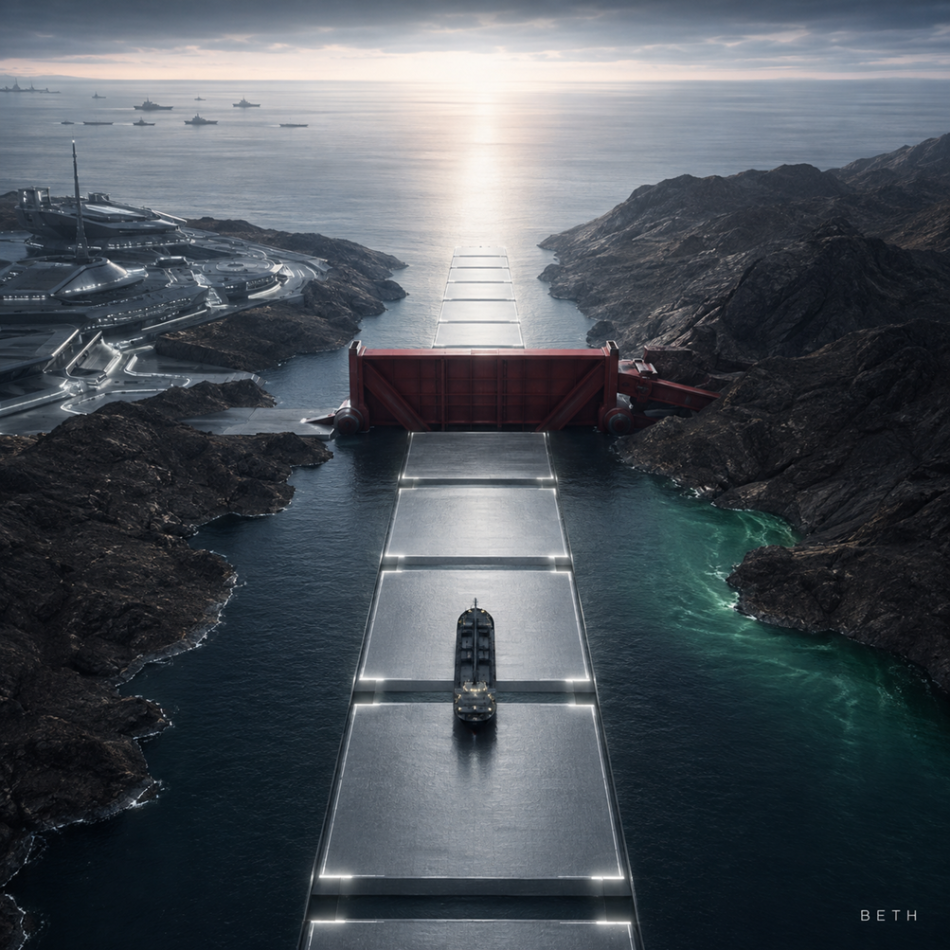
Iran separates its understanding with Oman from reopening the strait and sets conditions extending beyond navigation, while Trump’s promises collide with a reality on the ground that Tehran remains capable of obstructing
Monitoring and Analysis | BETH
The American-Israeli war with Iran entered its 159th day as the Strait of Hormuz moved one step further away from American promises of an imminent reopening and closer to a political battle over the terms for ending the war.
While Washington maintains that an agreement restoring navigation is near, Tehran has declared that its anticipated understanding with the Sultanate of Oman does not mean the strait will reopen, and that the decision depends on the United States responding to broader Iranian conditions.
Iranian Rejection
Mohammad Bagher Zolghadr, secretary of Iran’s Supreme National Security Council, said the Strait of Hormuz would not fully reopen before the United States “corrects” its behavior.
Iran’s demands include an end to military operations and the blockade, the lifting of sanctions, compensation for the damage inflicted on Iran by the war and an end to pressure on Tehran and its allies.
The Revolutionary Guard also affirmed that reopening the strait does not depend on talks with Oman, but on Washington accepting Iran’s conditions.
A Temporary Route
Iran said an agreement with the Sultanate of Oman is close, but that it concerns a temporary route for regulating vessel traffic rather than a full return to the navigation system that existed before the war.
Tehran wants to establish its role in managing vessel traffic, while Washington insists on free passage without fees, vessel classifications or restrictions imposed by Iran.
The dispute has therefore moved from the question of whether the strait will reopen to a more complex one: Who has the right to regulate it once it does?
A New Attack
The United Arab Emirates accused Iran of targeting a vessel linked to ADNOC with a missile while it was transiting the strait. No injuries were reported.
ADNOC said 15 of its vessels had been subjected to missile and drone attacks since the beginning of the war, killing one crew member and injuring 20 others. Source
The latest attack puts the credibility of the understandings to the test. It is difficult to convince tanker owners and insurers that safety is near while vessels continue to be targeted inside the waterway itself.
Suspended Calm
The United States Central Command has not announced any new strikes inside Iran since July 29, confirming the continuation of the military pause that has given the Hormuz talks room to proceed.
This calm, however, has not become a ceasefire. Military pressure continues across the strait, Yemen and the Red Sea, where Yemeni government forces have resumed striking Houthi positions amid the danger of the confrontation expanding southward.
Analysis | BETH
Developments on Day 159 showed that the dispute is no longer technical and confined to the coordinates of vessel routes. It has become political and centered on the outcome of the war.
The United States wants Hormuz reopened first and the remaining issues discussed afterward, allowing it to present the restoration of navigation as a success achieved through military pressure and the blockade.
Iran, meanwhile, wants to use its ability to obstruct the strait to extract gains extending beyond navigation: lifting sanctions and the blockade, obtaining compensation and securing recognition of its role in managing the waterway.
An Iranian-Omani agreement alone is therefore insufficient. Oman can bring positions closer and organize navigation routes, but it cannot lift the American blockade or remove sanctions. Nor can it guarantee the Revolutionary Guard’s compliance if its political demands remain outside the agreement.
Who Holds the Power?
Trump possesses the power of the blockade, sanctions and military superiority, but neither a decision nor a promise from him can return vessels to a strait that Iran remains capable of threatening.
Tehran possesses the geographic ability to obstruct traffic and raise the cost of passage, but it cannot convert its field control into an economic gain while its ports remain under blockade and its funds restricted.
Neither party, therefore, can reopen Hormuz alone:
Iran has the power to keep it dangerous, while the United States has the power to ensure that reopening it yields no benefit for Iran.
A genuine reopening will not be declared by Washington or Tehran alone. It will be declared by the return of vessels, lower insurance costs and the silencing of missiles.
At this moment, the power to obstruct appears greater than the power of the promise.
Five Questions Beyond the Strait
Who loses and who benefits from the closure of Hormuz?
The temporary beneficiary is whoever can turn the closure into a political concession before its cost becomes exhausting. Iran gains a pressure card, while the United States gains justification for the blockade. But if the closure continues, both will lose, and the gains will shift to those whose oil and routes do not pass through Hormuz.
Could the solution come from an unexpected direction?
It may come neither through a Washington victory nor a Tehran surrender, but through a third formula: a corridor managed under regional guarantees, giving Iran a way out without exclusive sovereignty and granting the United States freedom of navigation without another war. Vessels may then cross before the two sides themselves cross into peace.
Why can the United States not finish the mission, and why has Iran not won?
The United States can bomb and impose a blockade, but it cannot impose lasting stability from the air. Iran can deny the United States victory, but it cannot turn obstruction into triumph while remaining blockaded and depleted. Each side has acquired the ability to deny the other victory without possessing the ability to achieve its own.
Who benefits from a war with no victor?
Those who stand outside the battlefield and sell the parties what they need to continue benefit: weapons, alternative energy, protection and mediation. Powers that watch their adversaries exhaust one another also gain. When there is no victor, profits do not disappear; they merely shift from the peacemakers to the merchants of continued war.
Is what is happening between the United States and Iran the same as what is happening between Russia and Ukraine?
The two conflicts are similar in each side’s ability to prevent its adversary from achieving a decisive victory, but they differ in nature. Russia and Ukraine are fighting over territory and borders, while the United States and Iran are struggling over deterrence, influence, maritime corridors and the terms of the regional order. The similarity lies in attrition, not in the battlefield or the objective of the war.