



Day 147 🇺🇸⚔️🇮🇷: The Truce Before Netanyahu
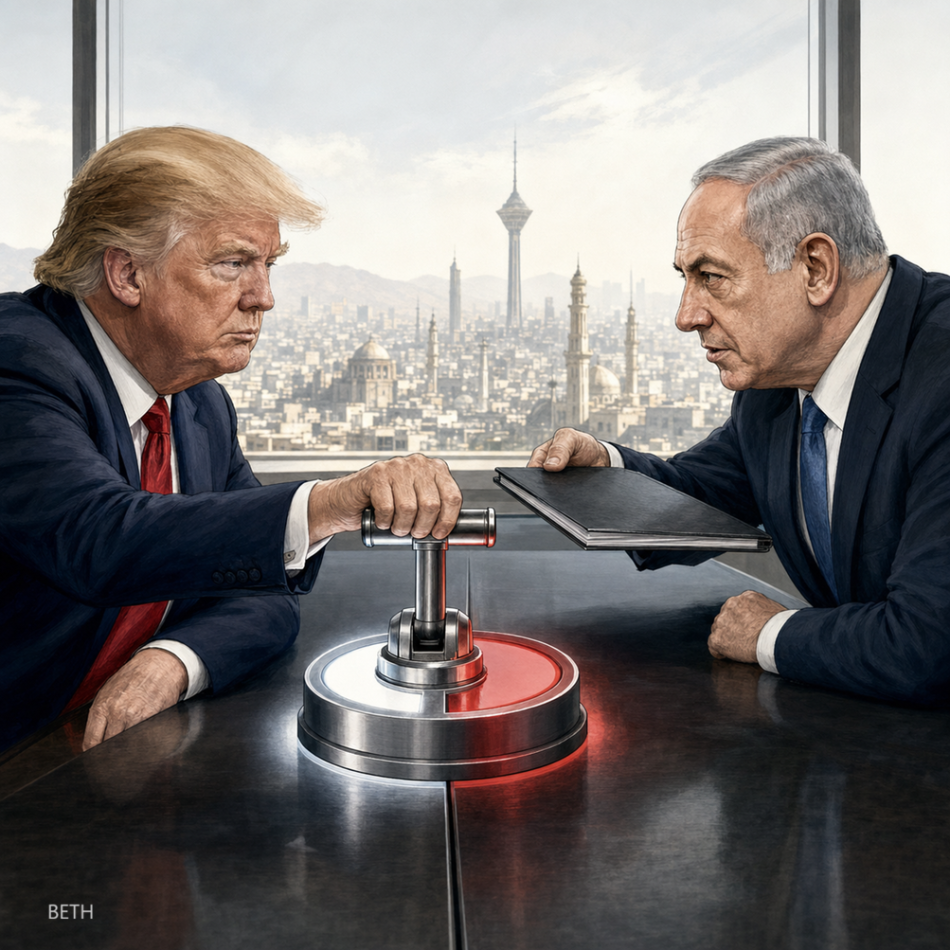
Trump receives the Israeli prime minister in their first meeting since the war began, as the prospect of diplomacy competes with pressure to resume the strikes at the White House table
BETH | B
United States President Donald Trump receives Israeli Prime Minister Benjamin Netanyahu on Tuesday in their first face-to-face meeting since the war with Iran began, at a moment that may determine whether the suspension of strikes develops into a negotiating process or becomes a pause preceding the resumption of operations.
The meeting is scheduled to take place at the White House at 11 a.m. Washington time, away from the media according to the announced schedule, suggesting that the discussions are too sensitive to begin with public statements. White House Meeting Schedule
The meeting comes after four nights without new United States strikes on Iran, following Trump’s decision to suspend the raids and give diplomatic contacts “some space.”
The United States president said “good” talks were taking place with Tehran, but kept the military option open, warning of a return to strong military action if the discussions did not produce a swift result.
Iran, meanwhile, denies conducting direct negotiations with the United States and says intermediaries are carrying messages between the two sides, while talks with Oman over managing navigation through the Strait of Hormuz move forward.
Netanyahu Carries the Iran File
Iran tops the meeting’s agenda, alongside Lebanon, Gaza, and the expansion of the Abraham Accords.
Netanyahu is expected to present intelligence relating to Iran’s nuclear program, its remaining military capabilities, and whether Tehran is exploiting the suspension of the raids to redeploy its weapons or restore part of its military infrastructure.
The Israeli prime minister believes that stopping the strikes before reaching a strict agreement may give Iran an opportunity to rebuild its capabilities, while Trump wants to test whether an agreement can be extracted from Tehran after nearly two weeks of continuous bombing.
The two men are therefore not entering the meeting from the same position.
Trump wants to know whether the strikes produced negotiations that he can present as a political victory.
Netanyahu, meanwhile, wants to ensure that negotiations do not become protection for Iran’s remaining capabilities.
United States media coverage points to previous tension between them over the management of the war, with Trump seeking to open a diplomatic track while Netanyahu presses for continued operations against Iran and its allies.
An Incomplete Suspension
The suspension of the raids has not developed into a complete regional truce.
While direct attacks between the United States and Iran stopped, Saudi Arabia and Jordan were subjected to drone attacks and attempted strikes against oil facilities by Iranian proxies.
Navigation through the Strait of Hormuz has also not returned to normal, while the United States blockade on Iran’s exports and ports has not been lifted.
This reveals that stopping the attacks on Iranian territory did not stop the network of conflict Tehran built beyond its borders.
If Iran wants to demonstrate that it is serious about negotiations, stopping its direct attacks will not be sufficient. This must also be reflected in the behavior of the Guard and its proxies, the security of maritime routes, freedom of navigation, and an end to attacks against regional states.
What Does Trump Want?
Trump does not appear to have decided to end the war. Rather, he has temporarily changed the instrument of pressure.
He has moved from daily bombing to threatening its resumption, seeking to determine whether Iran’s losses will compel it to make concessions without the need for a broader campaign.
The suspension of the strikes also provides him with several benefits:
Testing the Omani track.
Reducing pressure on munitions stockpiles and United States forces.
Lowering oil prices and the war’s cost to the economy.
And demonstrating that the United States does not reject a diplomatic solution if Iran responds to its conditions.
Trump, however, does not want open-ended negotiations.
Every day that passes without progress allows Iran to reassess its losses, conceal its remaining capabilities, restore the cohesion of its leadership, and mobilize its proxies instead of engaging in direct confrontation.
This is why he continues repeating the threat: the suspension is a limited opportunity, not permanent protection for Iran.
What Does Netanyahu Want?
Netanyahu enters the meeting fearing that the war may end with an agreement that preserves the core of Iranian power.
Israel is not looking only at the Strait of Hormuz, but also at the nuclear program, ballistic missiles, the Revolutionary Guard, and the proxy network.
Netanyahu may believe that a maritime agreement, despite its importance to the global economy, addresses a consequence of the conflict rather than its source.
He will most likely seek to convince Trump of three points:
That Iran is negotiating not to change its project, but to gain time.
That stopping the raids allows it to rebuild what was damaged.
And that any agreement that does not include the nuclear program, missiles, and proxies will postpone the war rather than end it.
Netanyahu, however, does not possess the authority to decide on the resumption of United States strikes by himself.
The final decision belongs to Trump, who must balance Israeli intelligence, the assessments of his military commanders, the cost of the campaign, United States public opinion, energy prices, and the positions of United States allies.
A Moment of Testing
The meeting carries a clear paradox:
Netanyahu will present evidence that may drive a resumption of the war, while Trump is looking for an outcome that allows him to say the war achieved its objective.
If Israeli intelligence demonstrates that Iran is rebuilding its capabilities, concealing nuclear activity, or preparing new attacks, the space available for diplomacy may quickly shrink.
If genuine progress emerges in the negotiations, however, Trump may use the Israeli threat to increase pressure on Tehran and extract stronger conditions without immediately returning to the bombing.
The United States president may therefore not choose between Netanyahu and diplomacy.
He may use Netanyahu’s pressure within diplomacy itself.
Expectations
The next stage stands before three possible paths:
A Continued Conditional Suspension
Trump keeps the strikes suspended for several more days in exchange for progress in the Hormuz arrangements, an end to proxy attacks, and a transition toward broader negotiations.
This is the most likely path, because Washington suspended the raids to test negotiations and will not end the test before discovering what Tehran is prepared to offer.
A Return to Limited Strikes
Negotiations continue, but the United States resumes strikes against selected military targets if another attack occurs against its forces or allies, or if Iran is shown to be exploiting the suspension to rebuild its capabilities.
This path allows Trump to preserve diplomacy while re-establishing the credibility of his threat.
A Broader Military Operation
Netanyahu presents information Trump considers decisive, the Omani track fails, or Iran rejects the conditions related to navigation, its nuclear program, and its proxies, prompting the United States to return to a larger campaign.
This is the most dangerous path, because it may renew Iranian attacks against regional states and maritime routes, transforming the brief suspension into a prelude to a more severe round of conflict.
What Comes Next?
The most likely expectation is that the meeting will not produce an immediate announcement of a broad war or a final agreement.
Trump is more likely to give diplomacy a short additional period, but emerge from the meeting with tougher conditions and a nearer deadline for a decision, while keeping strike plans ready.
The real test after the meeting will appear in three signals:
Will the operations of Iran’s affiliated militias stop?
Will normal navigation return to the Strait of Hormuz?
Will the indirect messages become a written and enforceable agreement?
On Day 147, Netanyahu is not visiting Washington to discuss a war that has ended.
He is entering the White House to debate the meaning of its suspension:
Has the bombing achieved enough to begin an agreement?
Or does stopping it now give Iran an opportunity to survive?
The decision Trump makes will not determine only the timing of the next strike.
It will determine whether diplomacy is a stage for ending the war or a new instrument within it.