



International Meeting to Discuss Iranian Attacks
Riyadh | BETH – March 10, 2026
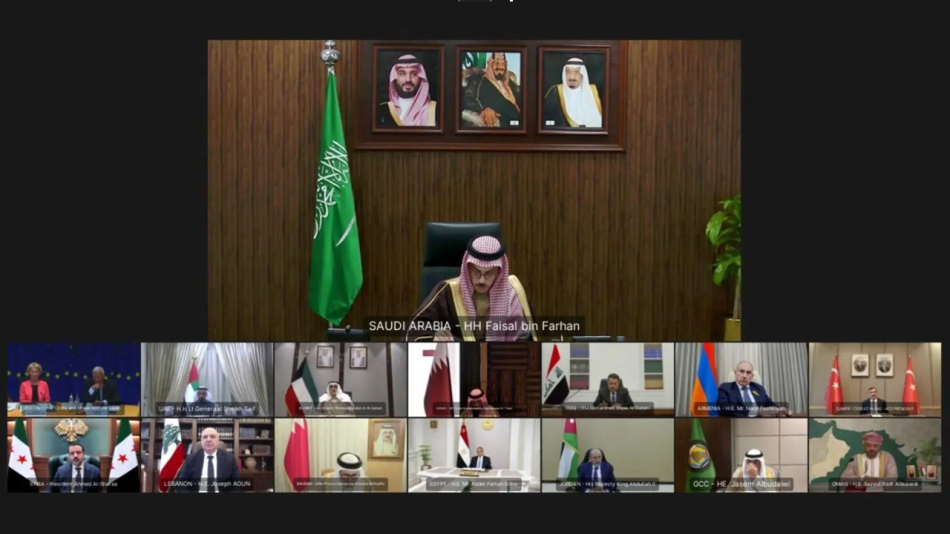
On behalf of His Royal Highness Prince Mohammed bin Salman bin Abdulaziz Al Saud, Crown Prince and Prime Minister, Foreign Minister Prince Faisal bin Farhan bin Abdullah participated on Monday in a virtual meeting that brought together leaders of the Gulf Cooperation Council states, Jordan, Egypt, Iraq, Syria, Lebanon, Turkey, and Armenia, in addition to the President of the European Council and the President of the European Commission.
Discussing the Recent Attacks
The meeting discussed the attacks that targeted a number of countries and resulted in the targeting of civilians, vital facilities, and diplomatic missions.
Participants also emphasized the importance of international coordination in addressing the security developments taking place in the region.
European Supportive Position
The European side affirmed during the meeting the strength of its strategic relations with the participating countries, expressing its full solidarity with them in facing the current challenges.
Participants also stressed the need for joint action to enhance security and stability at both the regional and international levels.
Protecting Civilians and Respecting International Law
The meeting also addressed the importance of:
Protecting civilians in conflict areas
Adhering to international law and international humanitarian law
Committing to the principles of the United Nations Charter
This comes as part of international efforts to limit escalation and safeguard regional stability.
Saudi Participation
The meeting was attended from the Saudi side by:
Deputy Minister for Multilateral International Affairs Dr. Abdulrahman Al-Rassi
Director General of the General Department for Asian Affairs Nasser Al-Ghanoum
Director of the European Union Department Talal Al-Anzi
BETH Insight
This meeting reflects broad diplomatic engagement led by Saudi Arabia amid accelerating regional tensions.
The gathering of Middle Eastern countries with European leadership indicates an effort to build a unified international stance aimed at containing tensions and strengthening stability.
It also highlights the Kingdom’s continued role in activating channels of dialogue and international coordination in addressing the security challenges facing the region.