



After Khamenei’s Death… Escalation Toward Regime Collapse
Monitoring | BETH
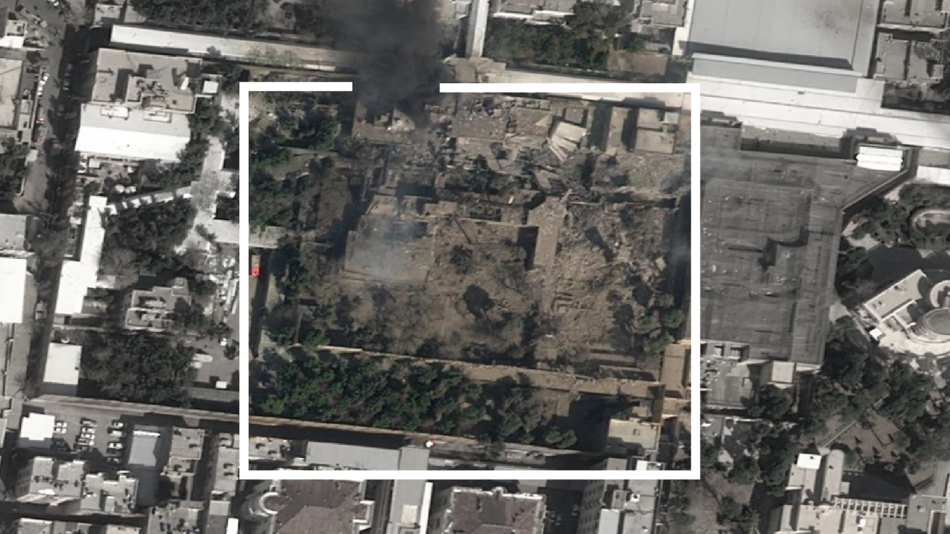
Tehran has officially confirmed the death of Iran’s Supreme Leader Ali Khamenei following the unprecedented strikes carried out by the United States and Israel against targets inside Iran, marking the most serious development since the establishment of the Islamic Republic in 1979.
Iranian authorities declared 40 days of national mourning after the official announcement, while Iranian media reported that several members of Khamenei’s family were also killed in the same attack.
Tehran further confirmed the deaths of Islamic Revolutionary Guard Corps Commander Mohammad Bagheri, senior adviser Ali Shamkhani, and several high-ranking security officials, including Iran’s police intelligence chief, as footage circulated showing extensive destruction at key regime command facilities in Tehran.
Mutual Escalation
In response, U.S. President Donald Trump warned Iran of an “unprecedented” military response should Tehran launch large-scale retaliatory attacks following the joint U.S.–Israeli strikes targeting Iran’s leadership infrastructure.
Iran retaliated by launching waves of missiles toward Israel, while explosions were reported across the airspace of several regional countries — including Qatar, the UAE, Bahrain, and Oman — linked to missile trajectories or interception operations amid the escalation.
The Iranian Revolutionary Guard declared that “sirens will not fall silent in Israel,” signaling the transition into a sustained retaliation phase.
Meanwhile, Israel mobilized approximately 20,000 reserve soldiers to reinforce civil defense and support internal emergency measures.
Direct Iranian Threats
Iranian President Masoud Pezeshkian stated that avenging the killing of the Supreme Leader and senior Iranian commanders constitutes a “legitimate duty and sovereign right,” affirming that Tehran would fulfill this responsibility using all available capabilities.
Senior Iranian officials, including Ali Larijani, also warned the United States and Israel of “unprecedented strikes” in the coming phase.
Day Two of the Operation
The confrontation has now entered its second day, shifting from a targeted leadership strike into a multi-front deterrence conflict, with repercussions expanding across regional airspace and security environments.
Escalation Expands
The Israeli military announced that ongoing operations aim to create the necessary conditions for the collapse of the Iranian regime, signaling a transition from military deterrence toward political transformation inside Iran.
In a significant development, Iranian attacks also reached the Sultanate of Oman, a country that has long served as a key mediator in regional and international negotiations.
Saudi Arabia condemned the attacks targeting Oman, reaffirming its rejection of any violations threatening the security of brotherly nations or regional stability.
BETH Commentary | Quick Reading
Targeting Oman carries implications beyond the military dimension, indicating that escalation is extending toward states of balance and mediation, reflecting a shift from direct confrontation to broader regional pressure dynamics.
With Israel openly speaking of creating conditions for regime collapse, the region appears to be moving from a cycle of retaliation toward a struggle over the future shape of the Iranian state itself.
Outlook (Brief)
Continued reciprocal strikes in the coming days.
Iranian attempts to reestablish deterrence through calibrated attacks.
Elevated regional and international security alert levels.
Growing risk of conflict expansion into indirect theaters.
BETH: The region has effectively entered the post-Khamenei phase, where the conflict is no longer about a single strike, but about redefining the balance of power in the Middle East.