



Comprehensive Strategic Report – Final Assessment of the Crown Prince’s Visit to the United States
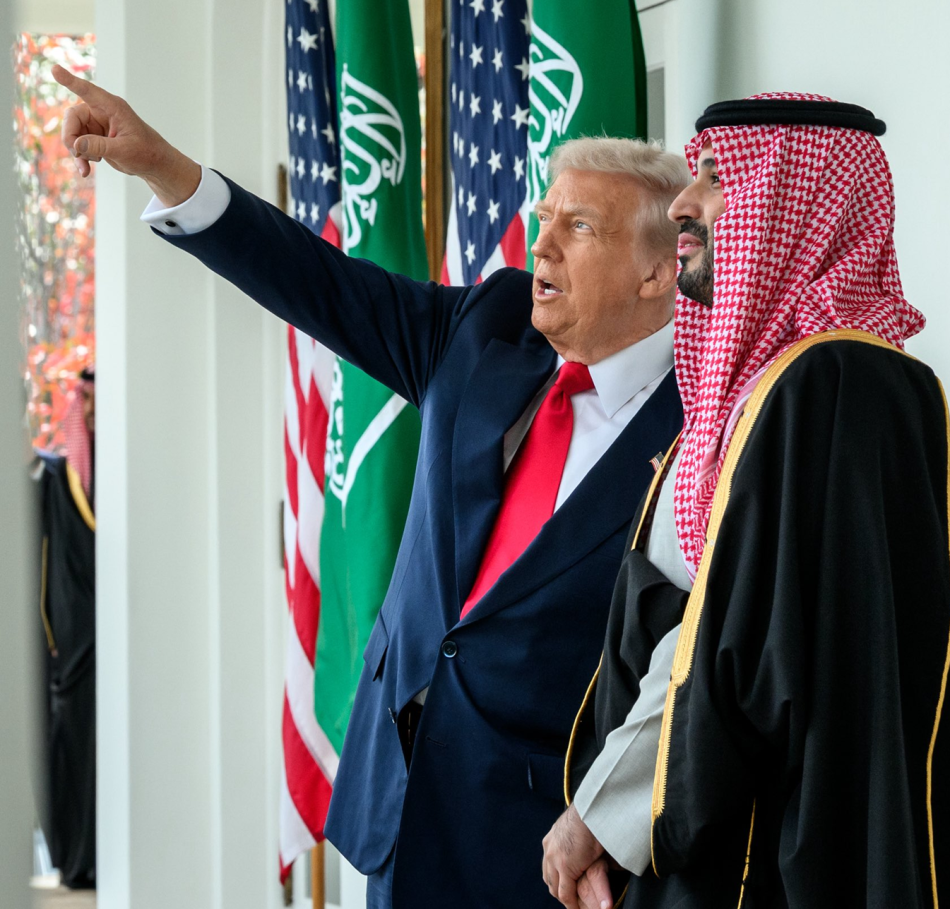
📊 Prepared and Analyzed by: Strategic Media Department – BETH Agency
Supervision: Abdullah Al-Omira
BETH Introduction – A Moment That Is No Longer Ordinary
This visit was neither ceremonial nor a “public relations tour.”
It became—once its full program concluded—a complete redefinition of the power equation between Riyadh and Washington, and a global message that will shape international dynamics in the years ahead.
After the visit concluded, the full picture became clear:
Washington shifted. Markets shifted. Media shifted. The global landscape was rearranged.
I. U.S. Decision-Making Circles – The Post-Hesitation Phase
1) The White House: Consolidating the New Partnership
Following the visit’s conclusion, three major shifts became evident:
A unified vision regarding energy, defense, and artificial intelligence.
A new tone in White House statements, describing the U.S.–Saudi relationship as a “pivotal partnership.”
A decline in the old critical rhetoric, replaced by a forward-looking, pragmatic approach.
The administration left the visit with a clear conclusion:
Saudi Arabia is not merely a partner… it is a necessity.
2) Congress: From “Listening” to “Co-Designing Policy”
The final stage of the visit featured:
Detailed discussions about long-term defense agreements.
Growing interest in accelerating cooperation on clean energy, petrochemicals, and critical minerals.
A new reading of Saudi Arabia’s role in regional stability—one that informs policy, not just opinion.
After the visit concluded, key congressional committees signaled that Washington is preparing for a strategic framework that could last a decade.
II. Impact on American Companies and Markets – A Sustained Positive Shock
1) Defense & Technology Companies
Following the conclusion, Wall Street analysis jumped to a new level:
Expectations of defense contracts extending over 10 years.
Direct talk of a major qualitative leap in air-defense and protective systems for Saudi Arabia.
Renewed confidence in long-term U.S. industrial presence in the Kingdom.
In the tech sector:
Silicon Valley commentators highlighted the accelerating U.S.–Saudi AI partnership.
Semiconductor firms began internal discussions about establishing production and operational footprints in the Kingdom.
Final outcome:
Saudi Arabia is now part of America’s technological future, not just a purchasing market.
III. U.S. Media Coverage – A Definitive Shift in Tone
1) Economic Media
Bloomberg – CNBC – The Wall Street Journal
Coverage shifted from “reporting deals” to “analyzing a new economic alliance.”
Final focus included:
Saudi Arabia’s position in reshaping global energy and markets.
The emerging dual Saudi–American AI ecosystem.
The new concept: “Riyadh–Washington: The Next Tech Axis.”
2) Political Media
CNN – Fox News – The New York Times
The tone converged into a notable alignment:
Framing the visit as “a redefinition of the relationship.”
Stating that the partnership is now indispensable for Middle East stability.
Highlighting the Crown Prince as a leader with vision and a global project.
A key editorial line emerged post-visit:
“This was not a visit… it was the beginning of a new equation in Washington.”
IV. International Reactions – The Shockwaves Beyond Washington
1) Europe: Recognizing Where the Balance Now Tilts
European analysis described the visit as:
A turning point for Saudi Arabia’s place in the global system.
A diplomatic success that reshapes Gulf–Western relations.
2) China: Quiet… Calculated… Reading Between the Lines
Chinese media emphasized:
Saudi Arabia’s ability to act as a bridge between East and West.
Riyadh’s rising role in the global technology balance between China and the U.S.
3) The Middle East: Reading the Regional Messages
Arab, Turkish, and Iranian analysts focused on:
A restructuring of the regional security landscape.
The rise of Saudi Arabia as the region’s reference power.
The unease of certain regional actors as Riyadh moves forward.
4) India: Betting on the Tri-Lateral Future
Indian outlets concluded that Riyadh is now:
A center for clean energy.
A pivotal partner in India’s tech-industrial future.
A strategic point linking Silicon Valley to the Indian industrial corridor.
V. BETH’s Final Post-Visit Assessment – Beyond the Headlines
After observing the full picture, BETH concludes:
1) Washington shifted from “engagement” to “strategic repositioning” toward Saudi Arabia.
The relationship is no longer tactical; it is long-term and structural.
**2) The Crown Prince presented a new Saudi identity to the American arena—
a nation of vision, not merely a nation of oil.**
This was unmistakable in the media, the markets, the politics, and the think-tank community.
3) The visit cemented Saudi Arabia as a global balancing force.
Between East and West, between legacy energy and AI, between regional security and global economics.
**4) U.S. companies treated the visit as a window into the future—
not a single-day announcement.**
Silicon Valley understood the message:
AI’s future will not be written without Riyadh.
**5) The world recognized that Riyadh has entered a phase of “designing alliances,”
not merely joining them.**
What This Visit Means – The Final Conclusion
The visit produced a full transformation across three fronts:
Politically: Washington now views Saudi Arabia as a central power.
Economically: The bilateral AI alliance opened an entirely new economic era.
Geopolitically: Global power dynamics shifted—Riyadh emerged as a global center of gravity.
History will record this visit as:
the moment when the international compass changed direction.
━━━━━━━━━━━━━━━━━━━
لمتابعة التغطية الشاملة لزيارة سمو ولي العهد إلى الولايات المتحدة الأميركية:
🔹 بث – النسخة العربية
https://bethpress.com/News/International
To follow BETH’s full coverage of the Crown Prince’s visit to the United States:
🔹 BETH – English Edition
https://bethpress.com/Main/index-En