



Day 146 🇺🇸⚔️🇮🇷: A Truce Without a Name
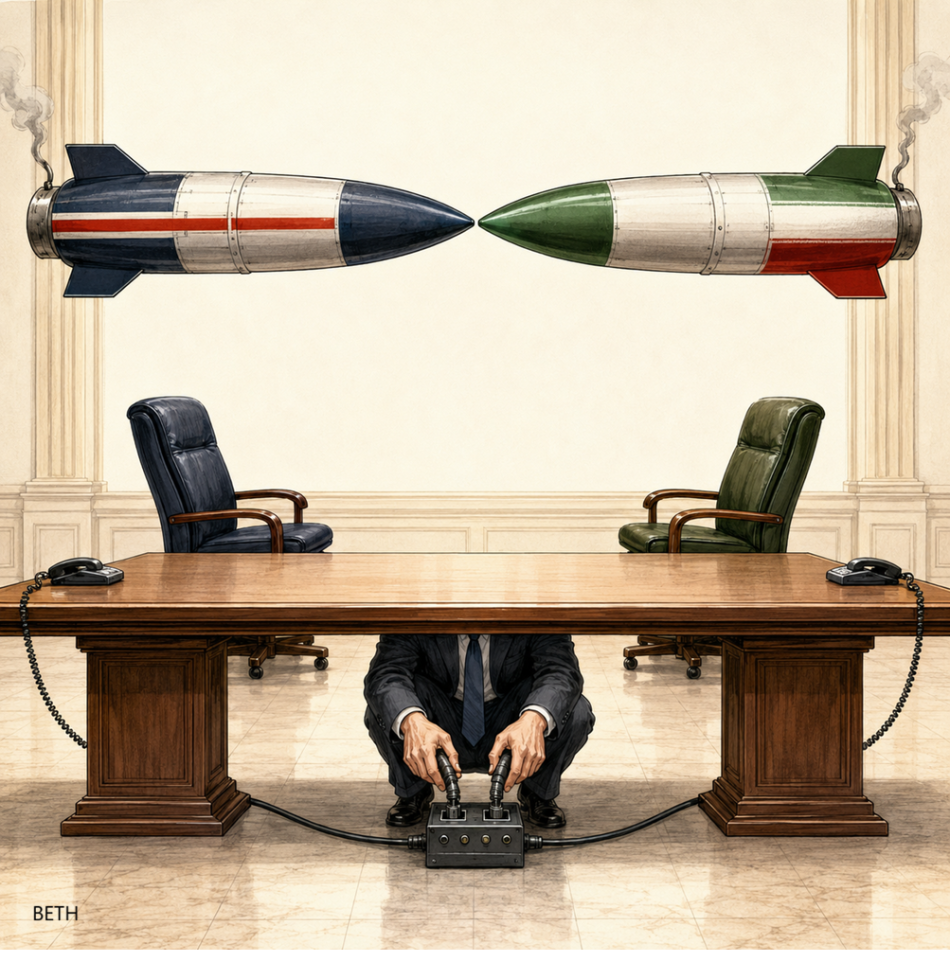
Three nights without strikes: Washington gives diplomacy room, while Tehran denies negotiating but receives American messages through mediators
BETH | B
Iran passed its third consecutive night without American strikes after Washington halted an air campaign that had continued for 13 nights, and Tehran responded by suspending its attacks on countries in the region.
Neither side announced an official ceasefire, but they have effectively entered a state of mutually suspended operations, based on a simple rule:
If the United States does not strike, Iran will not retaliate.
Iranian army spokesperson Mohammad Akraminia said his country’s strategy is based on “reciprocity,” and that the suspension of American attacks led Iran to halt its retaliatory operations.
Meanwhile, U.S. Ambassador to the United Nations Mike Waltz announced that President Donald Trump had decided to give talks with Iran “some room,” confirming that communications were continuing at various levels.
However, Iranian Foreign Ministry spokesperson Esmaeil Baghaei denied on Monday that Tehran had requested the resumption of talks, saying that doing so was “not in our nature.”
At the same time, he acknowledged that mediators were conveying American messages to Iran, adding that his country was not currently holding direct talks with Washington.
Negotiations That Are Not Called Negotiations
The American and Iranian accounts are not entirely contradictory. Rather, they differ in how they describe what is taking place.
Washington describes the exchange of messages through mediators as diplomatic talks.
Tehran, meanwhile, insists that negotiations begin only when the two sides engage through an agreed direct or indirect process, and refuses to acknowledge that it requested a return to them.
Baghaei’s statement that Iran did not request the resumption of talks therefore does not mean that communication has been cut off. Instead, it is an attempt to emphasize that Tehran did not approach Washington seeking an end to the war after the strikes.
The issue concerns preserving Iran’s image before its domestic audience as much as it concerns diplomacy.
Iran’s leadership wants to benefit from the halt in bombing, receive American proposals, and test the conditions without appearing to have returned to negotiations under military pressure.
Mediators Carry the De-escalation
Messages are moving through Oman, Qatar, and Pakistan in an effort to rebuild the interim understanding that collapsed after the confrontation resumed on July 7.
Communications are focused on two tracks:
Managing navigation in the Strait of Hormuz and preventing the resumption of reciprocal strikes.
However, the military calm has not yet changed the situation inside the strait.
Iran continues to assert its control over maritime traffic, the United States maintains its naval blockade, and shipping activity has not returned to normal levels.
This means the two sides have stopped firing, but they have not removed the causes of the war.
Why Did Washington Stop?
The U.S. administration presents the pause as a political decision intended to give diplomacy an opportunity.
Meanwhile, American assessments indicate that military considerations also influenced the decision, including a shrinking list of viable targets, the high consumption of defensive munitions, and concerns that the confrontation could expand into a regional war whose course would be difficult to control.
Waltz denied that the United States was experiencing shortages preventing it from continuing operations, affirming that it retained the ability to resume the attack.
It is likely that both factors came together:
The military campaign achieved part of its objectives, and it became preferable to test whether the pressure had changed Iran’s position before moving to a more severe and costly wave of attacks.
The suspension of strikes is therefore neither an American retreat nor an Iranian victory, but a moment for measuring the results.
What Does Iran Want?
Tehran wants to establish that the halt in American attacks was achieved without announcing surrender or publicly requesting negotiations.
It also wants to preserve its main bargaining card in the Strait of Hormuz and obtain something in return for restoring navigation, including an easing of the blockade and guarantees that the strikes will not resume.
However, its insistence that it still controls the strait reveals that the fundamental dispute remains unresolved.
Washington wants freedom of navigation that is not subject to Iranian permission.
Tehran wants any agreement to recognize its role and rights as a coastal state, and does not want the return of shipping to appear as a defeat imposed by American aircraft.
For this reason, the agreement may not begin with the word “peace,” but with a technical phrase such as:
Managing navigation, guaranteeing safe passage, or respecting the rights of coastal states.
The wording would provide Iran with a way out, while implementation would give Washington what it wants.
The Truce Could Collapse
Three quiet nights are an important indicator, but they are not enough to declare the end of the war.
The current truce has no name, no document, no timetable, and no declared mechanism for addressing violations.
It could collapse because of a single incident:
The targeting of a vessel in Hormuz or the Red Sea.
A Houthi attack on the Kingdom.
A confrontation between the Islamic Revolutionary Guard Corps and American forces.
Or an attack carried out by one of Tehran’s allied groups, followed by disagreement between the two sides over Iran’s responsibility.
The meeting between Trump and Israeli Prime Minister Benjamin Netanyahu could also affect the duration of the pause, particularly if Israel pushes for the resumption of military pressure or provides intelligence suggesting that Iran is rebuilding its capabilities during the calm.
Expectations
The coming stage faces three possible paths:
A Maritime Understanding First
The mediators reach a temporary mechanism for restoring safe navigation in the Strait of Hormuz in exchange for easing some blockade measures and maintaining the suspension of strikes.
This is the most likely path because it addresses the immediate cause of the renewed war and provides both sides with an outcome they can present domestically without announcing a comprehensive concession.
Extending the Silence
The exchange of messages continues without an agreement, while both sides maintain the suspension of attacks for several additional days to avoid undermining mediation.
This path reduces tensions, but leaves forces on alert and markets and maritime traffic exposed to the risk of a sudden return to war.
The Pause Collapses
A new attack occurs or the conditions governing navigation fail, prompting the resumption of American strikes and renewed Iranian attacks against bases and neighboring countries.
This time, the escalation would be more severe because Washington would consider Iran to have used the diplomatic opportunity to gain time, while Tehran would say that the United States was not serious about de-escalation.
What Comes Next?
The most likely outcome is that the de-escalation will continue over the next few days and that messages through Oman, Qatar, and Pakistan will intensify in pursuit of a limited understanding concerning the Strait of Hormuz.
But Iran will not call what is happening negotiations before it knows what it will receive in return, and it will not call the pause a truce before ensuring that it does not appear to be a direct response to the bombing.
Washington, meanwhile, will keep its weapons on the table to prevent Tehran from turning time into a means of reorganizing its capabilities.
On Day 146, Washington and Tehran are not speaking face to face.
But the aircraft are silent, the missiles have stopped, and the mediators are moving.
Sometimes, real negotiations begin before anyone dares to call them by their name.